
Real Time Data Processing: A Trader's Guide
Learn how real time data processing works, from core architecture to the tech stack. See how DeFi traders use it to find smart money signals instantly.
You spot the move after the chart already broke out. A wallet rotated into a small-cap token, volume followed, social accounts woke up, and by the time your dashboard refreshed the clean entry was gone.
That gap between event and action is where real time data processing matters. In trading, especially in DeFi, the difference between seeing a swap now and seeing it later changes whether you capture the move or end up studying it after the fact.
Most traders don't need a textbook definition. They need a system that catches on-chain events as they happen, filters noise, enriches raw transactions with context, and pushes a signal while the trade still matters. That's what real time pipelines do. They replace retrospective analysis with live decision support.
Why Speed Is Everything in Modern Data
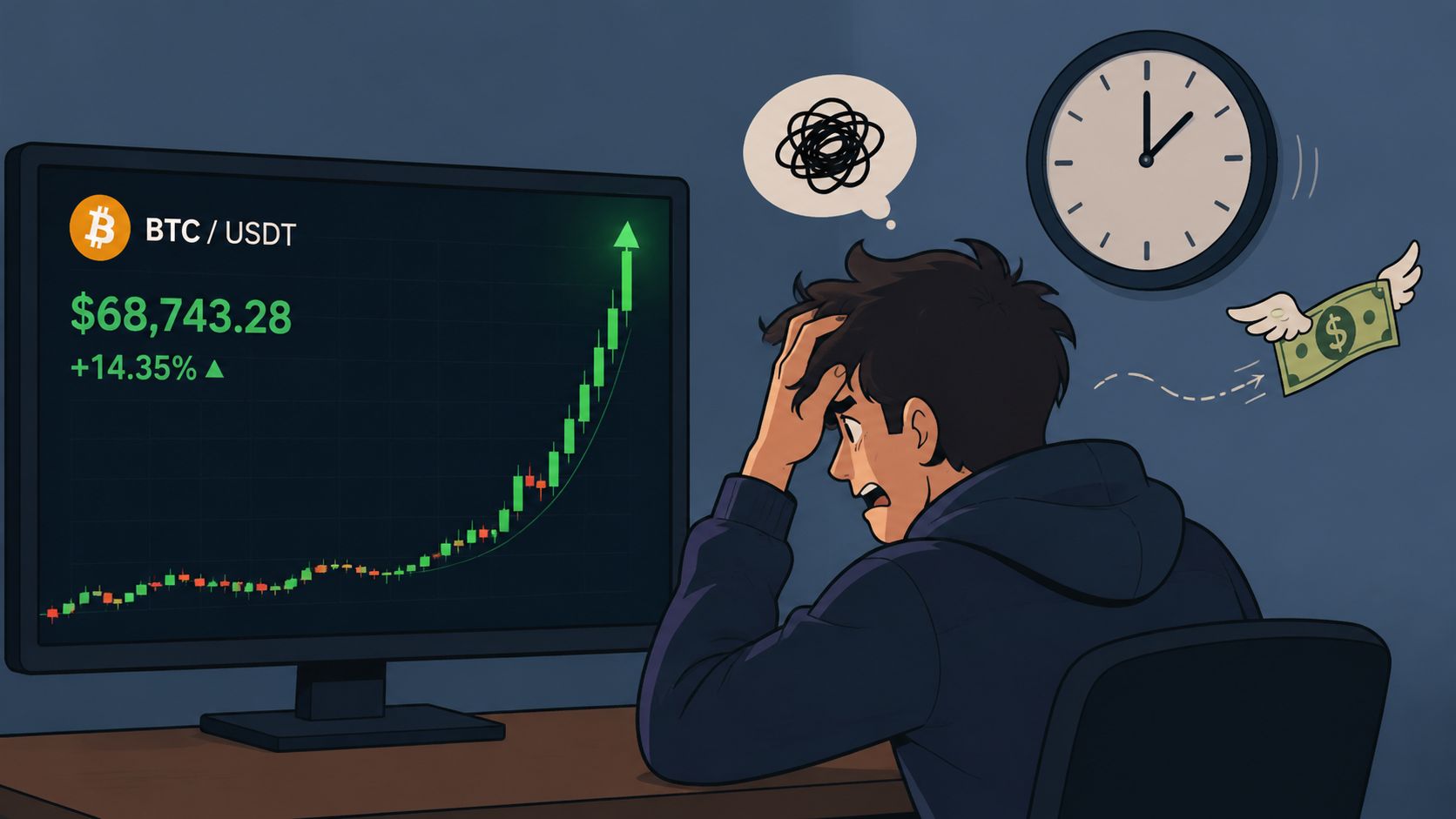
In older data stacks, teams collected records, stored them, and analyzed them later. That approach still works for compliance reporting, month-end finance, and long-range trend analysis. It fails when the value of the data decays within seconds.
Trading is the clearest example. A token buy from a high-conviction wallet is useful when you see it immediately. If the same event reaches you after the crowd piles in, the data may still be accurate, but it's no longer actionable.
Where latency starts to destroy value
According to IBM's summary of IDC enterprise survey findings and related industry analysis, 63% of real-time data use cases must process information within minutes to be considered useful. That number is important, but the bigger lesson for traders is the split inside the category. Some workflows can tolerate seconds or minutes. High-stakes workflows such as fraud detection, critical alerts, and trading signals need sub-second response to preserve their edge.
That distinction matters in DeFi because on-chain information is public. If many participants can see the same transaction, the winner is often the one whose pipeline detects, qualifies, and routes the signal first.
Practical rule: In markets, “real time” doesn't mean “fast sounding.” It means data arrives early enough to change a trade decision.
What changed in modern systems
The shift has been from batch snapshots to continuous event streams. Instead of waiting for a scheduled job, the system treats every new transaction, wallet movement, transfer, or contract interaction as an event that can trigger immediate processing.
For crypto desks and copy traders, that changes daily operations:
- Fresh signals: Wallet activity can be evaluated while the trade is still unfolding.
- Less manual monitoring: Traders don't need to babysit block explorers and social feeds.
- Faster reaction loops: Alerts can flow into Telegram, push notifications, dashboards, or execution logic without a human stitching data together.
The competitive edge comes from shortening the path from chain event to decision. That sounds simple. The engineering behind it isn't.
Processing Data Now vs Later
Real time data processing and batch processing solve different problems. Confusing them leads to bad architecture and worse trading systems.
A simple analogy helps. Batch processing is like developing a roll of film. You capture moments, wait, and review them later as a set. Real time processing is like a live video feed. You see events as they unfold and can act while the scene is still changing.
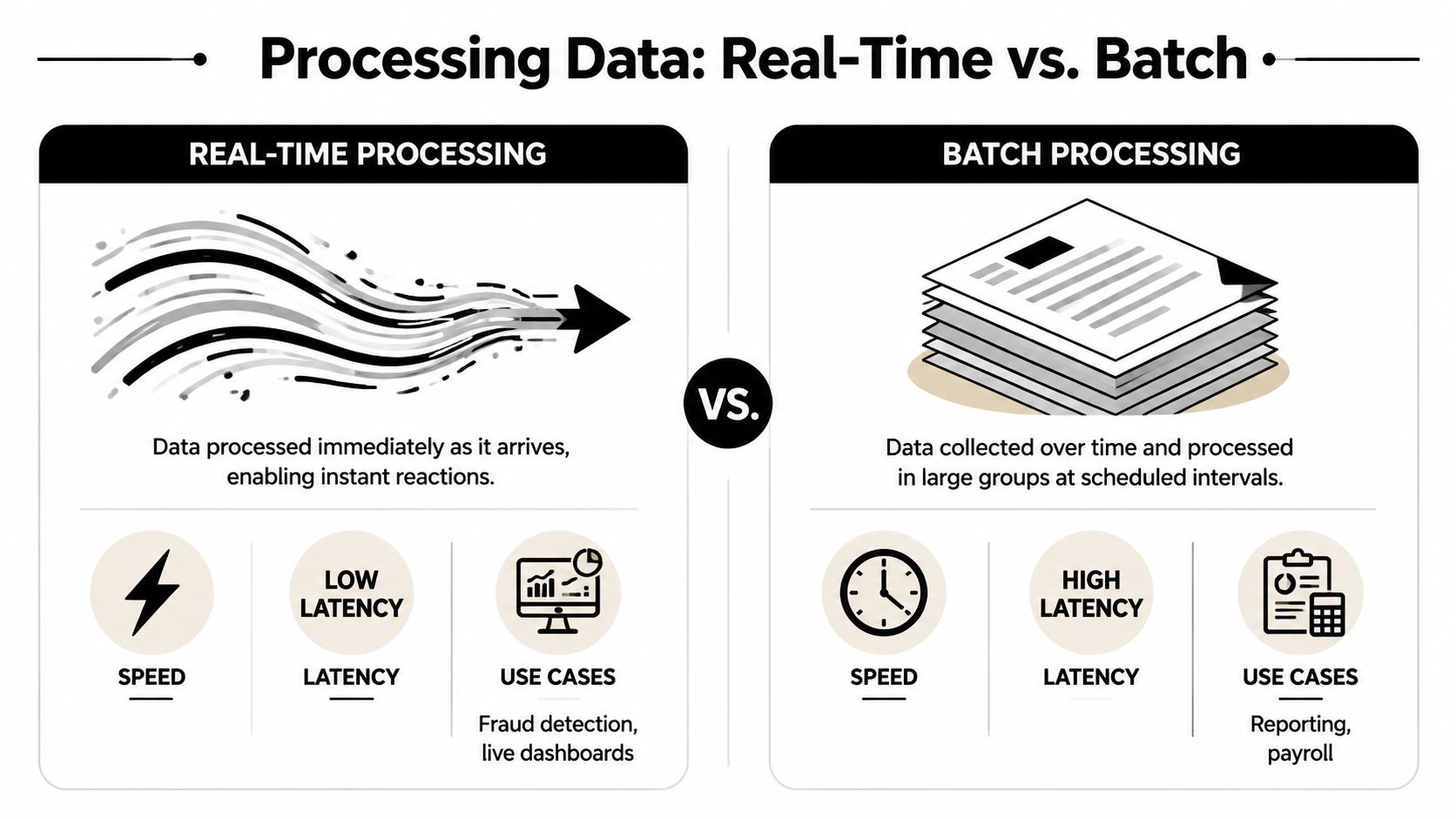
In practice, the line isn't philosophical. It's operational. CrateDB's definition of real-time data processing describes it as end-to-end latency in the milliseconds to seconds range, with continuous ingestion, incremental computation as events arrive, and immediate availability for downstream actions such as dashboards, alerts, or automated workflows.
Batch and streaming serve different jobs
Batch is still useful when you care more about completeness than immediacy. End-of-day PnL, historical research, tax exports, and portfolio reviews fit well there.
Streaming becomes the right model when delay changes the value of the outcome. In DeFi, that includes wallet tracking, risk alerts, liquidation monitoring, bridge flow changes, and rapid rotation into new pairs.
Here's the clean comparison.
| Characteristic | Batch Processing | Real-Time Processing |
|---|---|---|
| Data arrival | Collected over a period, then processed | Processed continuously as events arrive |
| Latency | Usually later, often minutes or longer | Milliseconds to seconds |
| Analysis model | Retrospective | In-motion, incremental |
| Best for | Reporting, audits, historical analysis | Alerts, monitoring, live trading signals |
| User experience | Static or delayed views | Live dashboards and immediate notifications |
| Trading value | Useful for review | Useful for action |
Start tracking smart money today
Join thousands of traders using WalletFinder.ai to find profitable wallets and copy their trades.
Start Free Trial →

