
OBO to USD Conversion: A Trader's 2026 Guide
Learn how to convert OBO to USD with step-by-step guides for DEXs and CEXs. Understand valuation, avoid common pitfalls like slippage, and calculate PnL.
You buy a small-cap token, watch the chart go vertical, and your wallet suddenly shows a gain that feels life-changing. Then an important question arises: can you successfully turn that OBO position into dollars without getting clipped by slippage, bad routing, stale pricing, or a dead market?
That's the gap between paper gains and real dollars.
With lesser-known tokens, the hard part usually isn't finding a quoted price. It's finding the executable price. A screen can show green while the pool is thin, the spread is ugly, and the route to cashing out takes three separate steps. If you rush the exit, you can give back a large part of the move.
Introduction From Paper Gains to Real Dollars
Most crypto traders already think in USD, even when they trade entirely on-chain. That's not arbitrary. The U.S. dollar remains the global benchmark for pricing and settlement, and the IMF reports it accounted for about 58% of global allocated foreign exchange reserves in 2024, according to the Federal Reserve H.10 reference page. That's why most crypto PnL gets measured in dollars, even when the trade path runs through tokens, stables, and multiple chains.
For OBO, that matters even more because smaller assets don't always have clean direct exits. You may see a token quote in a wallet or on an explorer, but that doesn't mean a real buyer is there at size. A practical OBO to USD process starts with identity, then liquidity, then execution.
Practical rule: Don't ask “What is OBO worth?” Ask “What can I sell right now, on this route, after fees?”
The cash-out process is usually one of two things. Either you have a direct exchange listing with enough depth, or you need to unwind in stages, usually from OBO into a stablecoin and then from the stablecoin into bank-withdrawable USD.
That sounds simple. In practice, it's where most mistakes happen:
- Wrong asset: Same ticker, different token.
- Wrong quote: Display price instead of executable price.
- Wrong timing: Selling into weak liquidity.
- Wrong path: Paying unnecessary fees across swaps, bridges, and withdrawals.
If you handle those four problems well, OBO to USD becomes manageable. If you ignore them, the chart can be right and the trade can still go wrong.
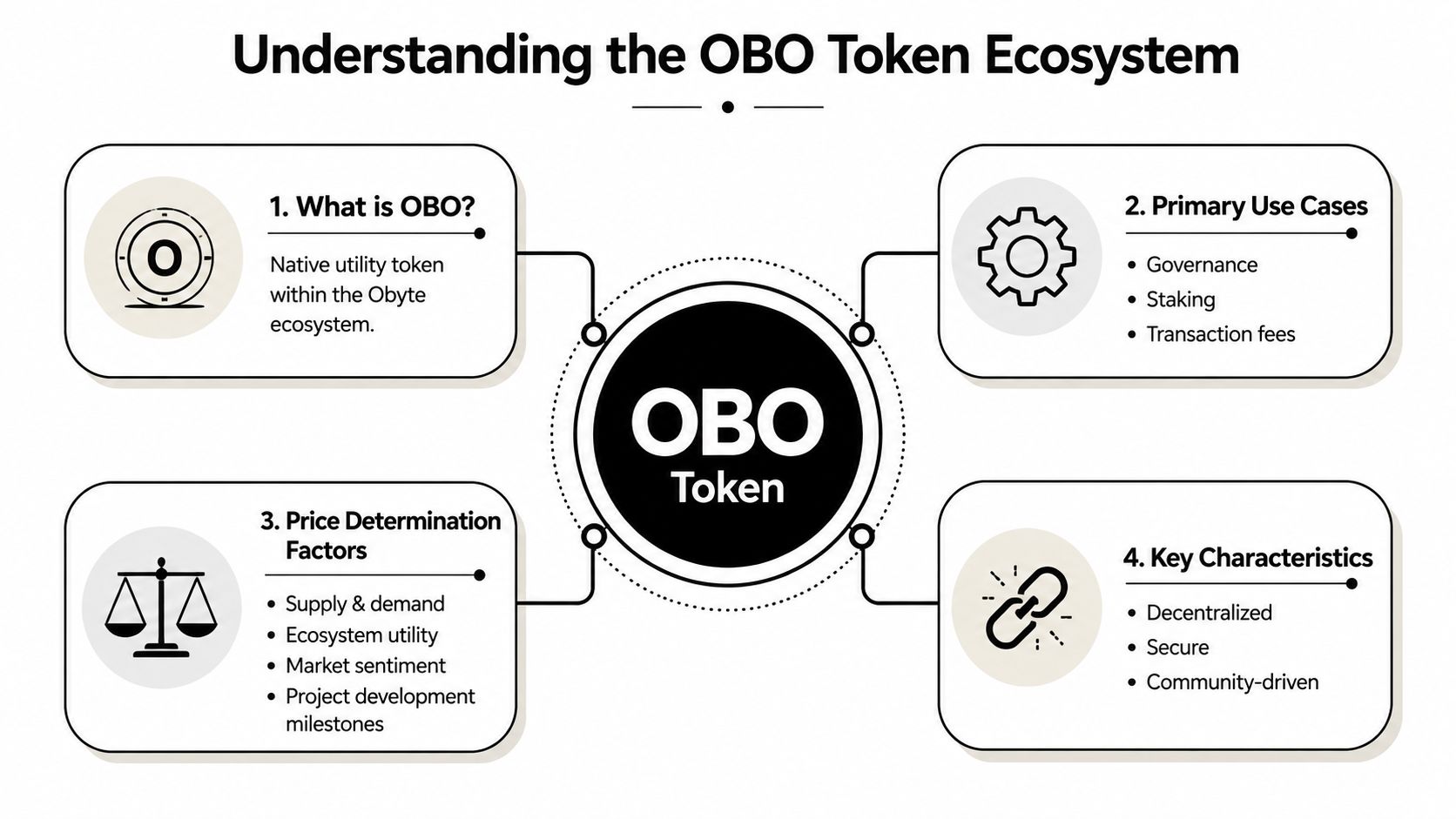
What Is the OBO Token and How Is Its Price Set
The first job is basic, but traders skip it all the time. You need to confirm which OBO you own or plan to trade. With obscure tickers, symbol matching is not enough. Contract address is what matters.
CoinBrain lists one OBO at $0.0051, while LiveCoinWatch lists Obolo at $0.000189 and notes the market data was last traded in 2023-02-17, which is why the CoinBrain OBO converter page is useful as a warning, not just a quote source. The same ticker can point to different assets or stale markets.
Verify the token before you touch the swap button
Before checking any OBO to USD quote, confirm these items:
- Contract address: Match the token in your wallet to the official address used by the pool or exchange.
- Chain: A token on one network is not the same asset as a lookalike on another.
- Recent trading activity: If the market is stale, the listed price may be misleading.
- Pool pair: See what OBO is paired against. A weak pair often leads to worse execution.
A lot of losses happen before the trade even starts. Traders search a ticker, click the first result, and route into the wrong asset. That's not market risk. That's process failure.
How the price actually gets formed
For smaller tokens, price depends less on “fair value” and more on where liquidity sits.
On a DEX, OBO is usually priced through an automated market maker pool. The quote changes as users buy or sell against the pool. If liquidity is shallow, your own sell order can push the price down while the trade is filling.
On a CEX, price comes from an order book. Buyers and sellers place bids and asks. If there's enough depth, you get cleaner execution. If depth is weak, the book can look tradable until your order starts eating through levels.
Thin markets punish certainty. The quote looks precise, but the execution often isn't.
What works and what doesn't
What works:
- Checking the contract first.
- Looking at the actual pool or market where you'll sell.
- Estimating whether your trade size is small relative to available liquidity.
What doesn't:
- Trusting a wallet's display value.
- Assuming every OBO ticker is the same asset.
- Using a stale market to estimate your cash-out amount.
If you only remember one thing here, remember this: for OBO to USD, token identity comes before token price.
How to Find the Real-Time OBO to USD Value
A useful OBO to USD quote has two layers. First, the reference price. Second, the executable price. Most traders look at the first and ignore the second.
Reference price is fine for orientation. Executable price is what matters when you're about to sell.
Start with a reference quote, then move to routing
A practical workflow looks like this:
- Check an aggregator or token page for a general spot quote.
- Open a DEX aggregator and simulate the actual swap size.
- Compare the output across routes.
- Review the impact of fees, slippage, and route complexity.
- Decide whether the quote is good enough to execute now.
If the token is thinly traded, the quote you want is the one tied to your intended size, not the smallest visible trade.
A clean way to think about it is this:
| Check Type | What It Tells You | What It Misses |
|---|---|---|
| Listed token price | General market reference | Slippage, route quality, stale liquidity |
| Wallet portfolio value | Rough mark-to-market value | Real exit amount |
| DEX aggregator quote | Estimated executable output | Final result can still change before confirmation |
| CEX order book | Immediate tradable levels | Transfer delays and withdrawal frictions |
Start tracking smart money today
Join thousands of traders using WalletFinder.ai to find profitable wallets and copy their trades.
Start Free Trial →

