
Is Trust Wallet Decentralized? An Honest Guide
Is Trust Wallet decentralized? This guide explains its non-custodial design, the centralized services it uses, and what it means for your crypto security.
Is Trust Wallet truly decentralized? The short answer is yes, in the way that matters most. At its core, Trust Wallet is a non-custodial wallet, which means you and only you hold the private keys to your crypto. No one else can access your funds.
However, to provide a smooth, all-in-one user experience, the app does connect to some centralized services for functions like displaying real-time token prices.
Breaking Down Trust Wallet's Hybrid Model
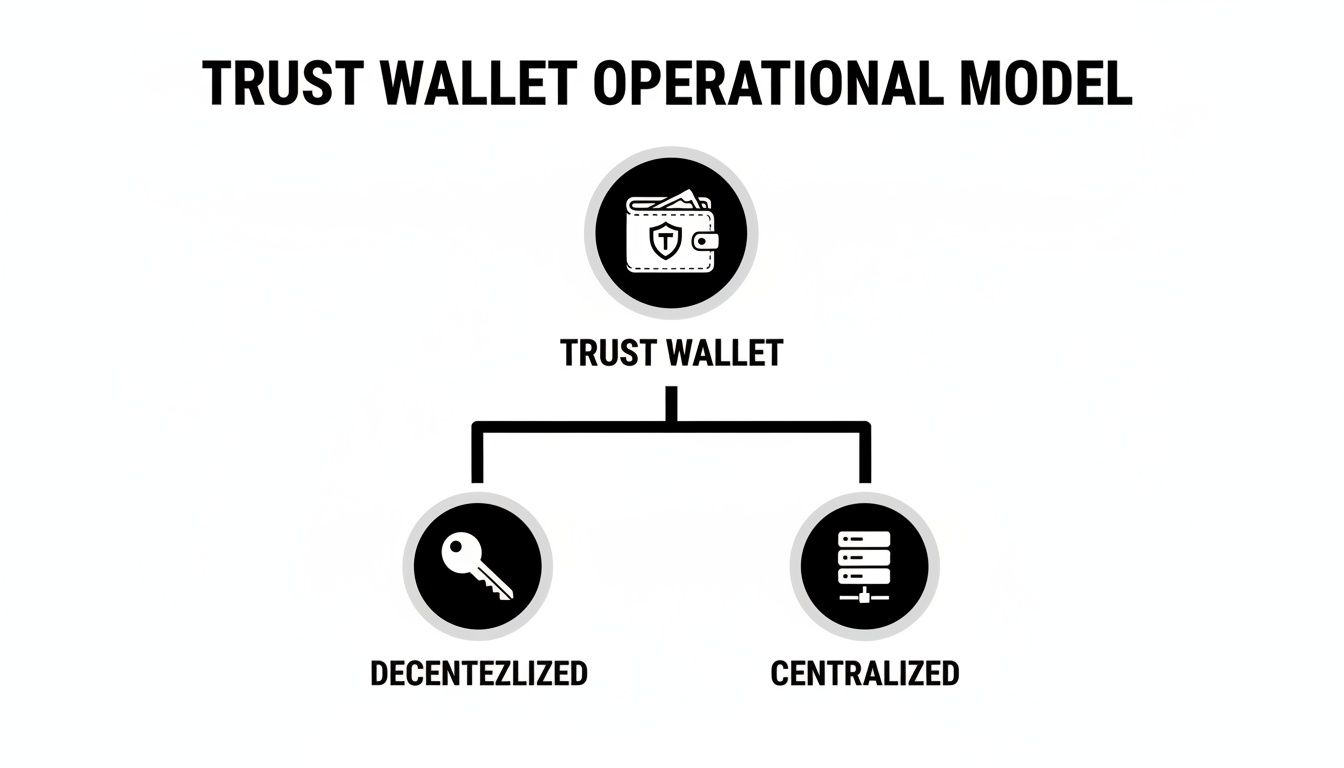
Think of it like this: you own your house outright, but you still use the city's power grid. You have total control over your home (your crypto and private keys are 100% yours). That's the decentralized part, and it's the most critical for security.
This self-custody model is a major reason for the wallet's explosive growth, with over 210 million installations. By March 2026, it had already captured a market-leading 35% share of all crypto wallet downloads. It’s clear that users want control, and you can read more about this on the official Trust Wallet blog.
To give you a better idea of how this works, check out the diagram below.
Start tracking smart money today
Join thousands of traders using WalletFinder.ai to find profitable wallets and copy their trades.
Start Free Trial →

