
Is Coinbase Wallet Decentralized? A Trader's Guide
Is Coinbase Wallet decentralized? We dive into its self-custody model, key management, and reliance on centralized services to see how it stacks up for traders.
Most advice on this topic is too simplistic. People say Coinbase Wallet is decentralized, then stop there.
That answer is incomplete.
If you're a trader, the better question is this: decentralized in what way, and enough for what job? A wallet can give you self-custody while still leaning on centralized rails for distribution, user experience, or network access. That matters if you're tracking wallets, copying trades, protecting size, or trying to reduce identity leakage.
The phrase is coinbase wallet decentralized deserves a nuanced answer. Coinbase Wallet is not the same thing as the Coinbase exchange, and that distinction changes who controls assets, how transactions get submitted, and what other traders can infer from on-chain behavior.
The Critical Difference Between Coinbase and Coinbase Wallet
The biggest mistake traders make is treating Coinbase and Coinbase Wallet like one product.
They aren't.
Coinbase.com is a centralized exchange. Coinbase Wallet is a separate self-custodial wallet. That difference isn't branding. It's the line between the company controlling your keys and you controlling them.
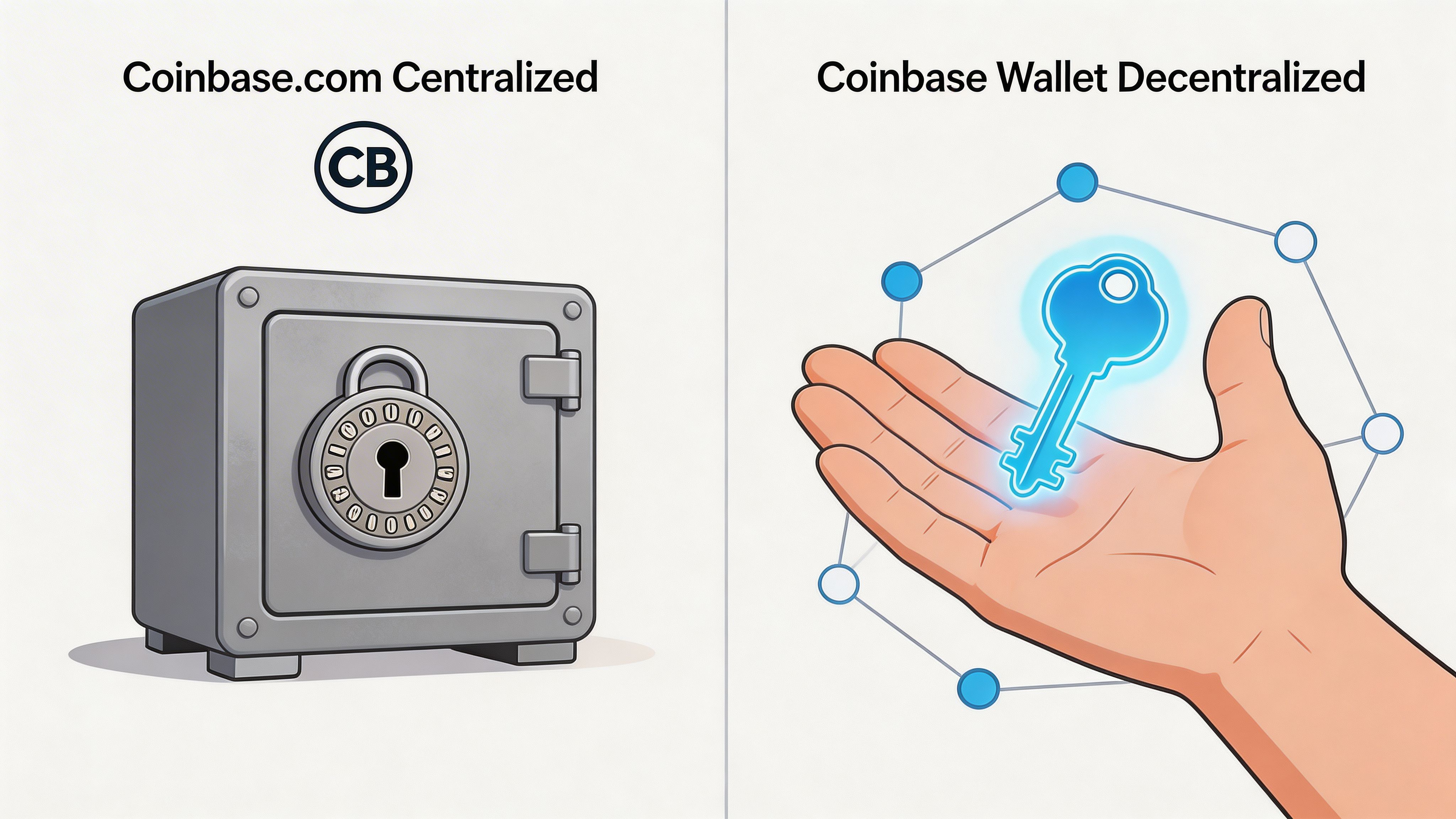
Coinbase states that Coinbase Wallet is a self-custodial, decentralized wallet where users control their private keys, and by 2025 it had 3.2 million monthly active users, equal to 2.7% of Coinbase's 120 million monthly platform users, according to Coinbase wallet security information.
Why traders should care
On the exchange, Coinbase manages custody. In a self-custody wallet, the user signs transactions directly.
That changes three practical things:
- Asset control: If your funds are on the exchange, you're relying on Coinbase's custody systems.
- Execution path: A wallet transaction goes to the blockchain, not through exchange account balances.
- Trackability: On-chain analysts can follow wallet activity directly when trades happen from a self-custody address.
A simple way to think about it
Use this mental model:
| Product | Who holds the keys | Where activity happens | Best for |
|---|---|---|---|
| Coinbase.com | Coinbase | Inside a centralized platform until you withdraw | Buying, selling, convenience |
| Coinbase Wallet | You | Directly on-chain | DeFi, NFTs, dApps, on-chain trading |
Start tracking smart money today
Join thousands of traders using WalletFinder.ai to find profitable wallets and copy their trades.
Start Free Trial →

