
APY Meaning Crypto: Master Returns & Spot Risks
Understand the true apy meaning crypto. Learn to calculate returns, compare APY vs. APR, spot risks, & use data for smarter crypto investments.
You’re probably here because you saw a yield number that looked absurd. Maybe it was a staking page, a liquidity pool, or a token farm flashing a headline APY that seemed too good to ignore and too suspicious to trust.
That reaction is healthy.
In DeFi, APY is one of the most useful metrics and one of the easiest to misread. If you only look at the headline number, you can mistake temporary incentives for real edge, confuse token emissions with sustainable yield, and copy wallets whose profits came from market direction rather than actual skill. If you understand apy meaning crypto at a deeper level, you stop reading it like marketing and start reading it like signal.
Why That 1000% Crypto APY Might Not Be What It Seems
You spot a pool offering 1,000% APY. A wallet you follow piled in early, posted a huge gain, and now the setup looks like easy money.
That is usually the moment when careful traders slow down.
A headline APY is an annualized projection built from current conditions. In DeFi, those conditions can change in days, sometimes in hours. The number on the page may reflect launch incentives, a temporarily tiny deposit base, or rewards paid in a token that can drop faster than the yield accrues. A triple digit or four digit APY can be real on the dashboard and still be misleading in practice.
High APY often works like a "Now hiring" sign with a giant bonus posted in the window. The bonus gets attention, but it also tells you the job may be temporary, risky, or hard to fill. In crypto, the oversized yield is often the protocol paying up for your capital because it needs liquidity fast or because you are absorbing risks that are easy to miss at first glance.
What high APY usually signals
When a yield figure looks extreme, break it into its actual parts.
- Reward emissions: The protocol may be distributing newly issued tokens, not paying yield from borrower demand, trading fees, or other durable activity.
- Small pool math: If only a little capital is deposited, even a modest reward program can annualize into a massive APY. That number usually falls as more users enter.
- Promotional timing: New protocols often front-load rewards to attract attention and bootstrap liquidity.
- Hidden risk: You may be taking on smart contract risk, token volatility, impermanent loss, liquidation risk, or weak exit liquidity.
A large APY is a clue. It is not proof of a good trade.
That distinction matters even more if you use APY as part of a copy trading process. A wallet can look like a genius because it entered a farm during the best week of emissions and exited before liquidity thinned out. Another wallet can look less exciting while running a steadier strategy with lower headline yield and much better survival odds.
Theory becomes useful on-chain. If you understand what is creating the APY, you can read wallet behavior with more precision. On Wallet Finder.ai, that means asking whether a profitable wallet earned returns from a repeatable yield strategy or merely benefited from being early to a short-lived incentive program.
Use four filters before you copy any wallet tied to a high-APY opportunity:
- Source of yield: Is the return coming from fees, lending demand, staking rewards, or token emissions?
- Reward asset quality: Is the wallet earning a liquid major asset, or a farm token that can slide hard once selling begins?
- Capacity: Could the strategy still work if more capital enters, or does the APY depend on the pool staying small?
- Exit quality: Can the wallet get out cleanly, or will slippage and thin liquidity erase much of the paper yield?
That shift in perspective is where newer traders start to improve. APY stops being a marketing number and becomes a diagnostic tool. Once you read it that way, you are better at spotting which wallets on Wallet Finder.ai are harvesting real edge and which ones just caught a temporary wave.
What APY in Crypto Actually Means
APY stands for Annual Percentage Yield. In crypto, it is the annualized return on positions like staking, lending, or liquidity provision, with compounding included, as explained in this APY explainer from Howlader & Co.
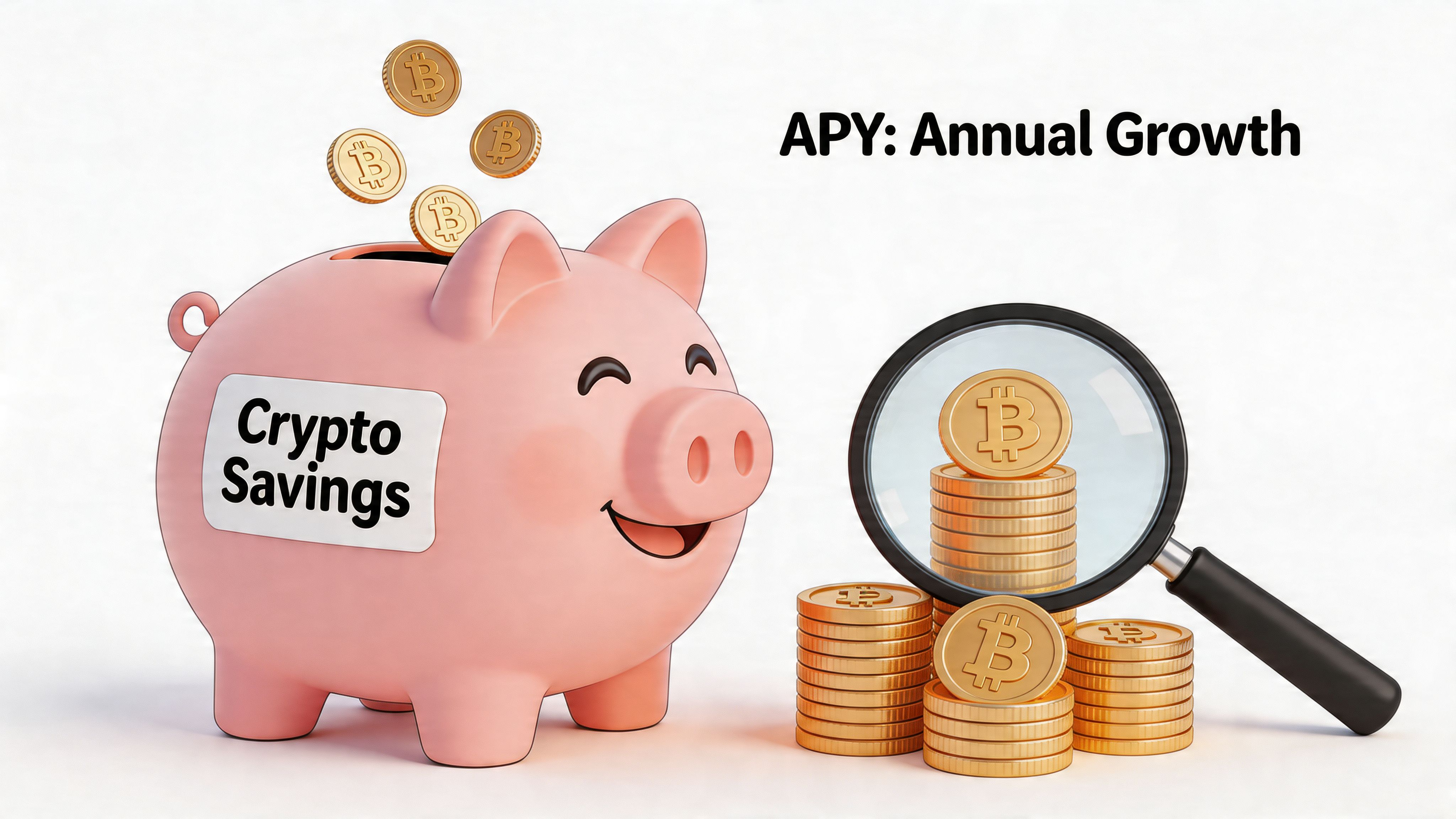
A simple way to read that is this. APY measures what your position could grow to over a year if rewards keep getting added back into the position. Each new reward increases the base that earns the next reward.
A savings account is the closest familiar comparison, but DeFi changes faster. The rate can shift daily, rewards may be paid in a different token, and compounding may happen automatically or only if the user restakes by hand. Those details shape the number you see on-screen.
Compound interest means you earn returns on your starting balance and on rewards that have already been reinvested.
The formula in plain English
The standard formula is:
APY = (1 + r/n)^n - 1
Here’s what each part means:
- r is the annual reward rate
- n is the number of compounding periods in a year
- The formula shows how reinvesting rewards increases the effective yearly return
You do not need to calculate this by hand every time. The practical point is simpler. More frequent compounding usually leads to a higher effective yield, if the base rate stays the same.
That matters because two pools can advertise the same headline rate while delivering different outcomes. One may auto-compound every few hours. Another may require the wallet owner to claim and restake rewards manually. On-chain, those are different strategies, and skilled copy traders treat them differently.
Why APY confuses newer traders
New traders often blend together three separate ideas:
| Term | What it tells you | What it misses |
|---|---|---|
| APR | Base annual rate | Compounding |
| APY | Annualized return with compounding | Token price changes |
| PnL | Total profit or loss | The specific source of the return |
Start tracking smart money today
Join thousands of traders using WalletFinder.ai to find profitable wallets and copy their trades.
Start Free Trial →

