
Your Guide to a Secure Trading Platform
What makes a secure trading platform in DeFi? Learn to evaluate custody, encryption, smart contract risk, and use tools to protect your crypto assets.
You place a trade, confirm the wallet prompt, and everything looks normal. The price moves your way, the chart says you were right, and then the actual loss shows up somewhere else. A malicious contract drained approvals, a fake mobile app intercepted traffic, or the platform froze at the worst moment.
That's why trading skill and platform security can't be separated. In a market this large, weak security isn't a side issue. The global online trading platform market was valued at USD 10.82 billion in 2025 and is projected to reach USD 11.57 billion in 2026, according to Fortune Business Insights' online trading platform market report. When that much capital flows through online platforms, every weak login flow, every sloppy mobile implementation, and every bad contract interaction becomes expensive.
Crypto traders often focus on entries, exits, and copy-trading signals. The more painful lesson is that a good trade on an insecure stack is still a bad setup. If you want to understand how losses happen beyond price action, start with this breakdown of smart contract hacking risks in DeFi.
The Hidden Risks in Crypto Trading
Crypto losses often look like trading losses at first. They aren't always. Sometimes the token was fine, but the platform wasn't. Sometimes the platform was fine, but the wallet approval gave a hostile contract broad access. Sometimes neither failed technically, but execution quality, custody, or settlement broke the outcome.
Where traders usually misread the risk
A common example is the “clean trade, messy aftermath” pattern. You swap into a token on a fast-moving market. The transaction confirms. Hours later, you discover an approval is still live, a bridge contract you used has a weakness, or a fake interface copied the authentic app closely enough to trick you once.
That confusion happens because traders often define security too narrowly. They ask, “Can I log in safely?” when they should ask three separate questions:
- Can I access my account safely
- Can this platform handle my funds and orders safely
- Can the on-chain contracts I touch be trusted at all
Security failures in trading rarely announce themselves. They hide inside normal-looking actions.
Why this matters beyond hackers
A secure trading platform protects more than your password. It reduces the chance of intercepted data, account takeover, unauthorized order activity, and poor handling of sensitive financial information. In crypto, it also shapes how safely you interact with smart contracts, wallets, and settlement systems.
Traders get confused because “secure” sounds like a badge. It isn't. It's a moving target. A platform can have a polished interface and still expose users through weak mobile app validation, unclear custody practices, or poor operational controls.
The practical takeaway is simple. Don't treat security like a one-time box to check before depositing funds. Treat it like part of your trading process, the same way you treat position sizing, slippage, and liquidity.
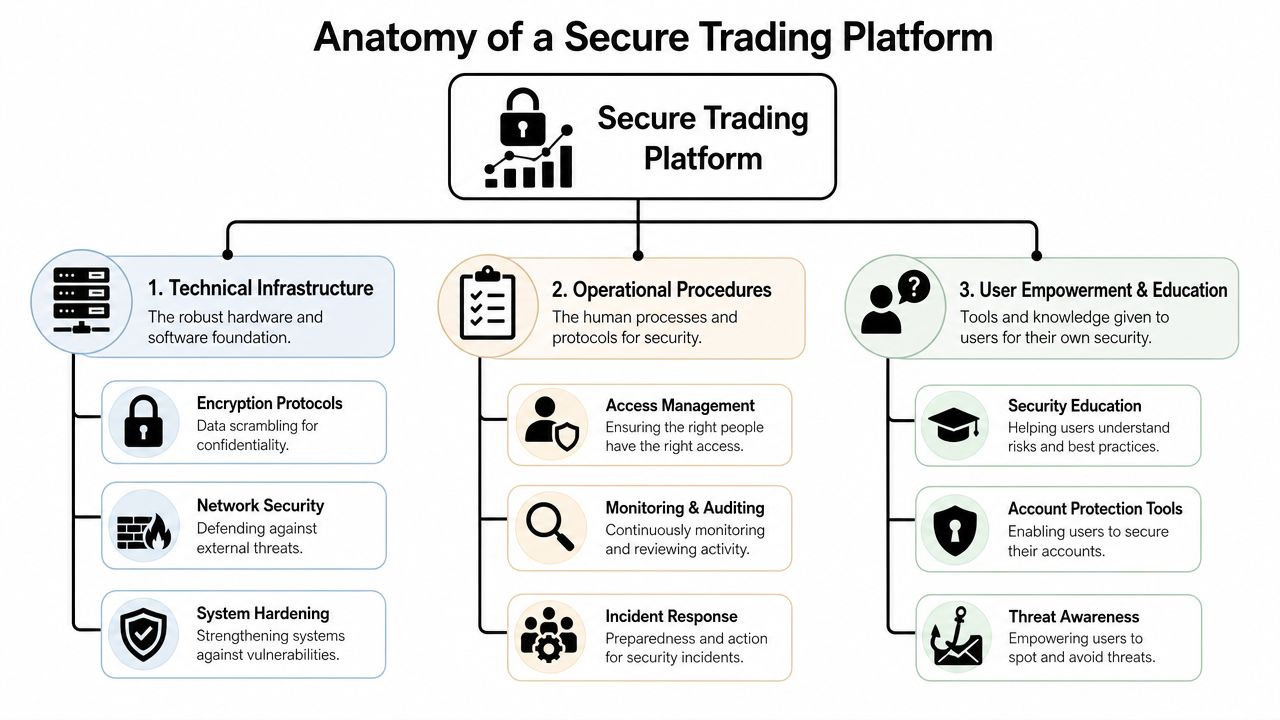
What a Secure Trading Platform Actually Is
A secure trading platform isn't just an app with a login screen and a lock icon. It's a system with multiple layers working together. If one layer fails, another should limit the damage.
Start tracking smart money today
Join thousands of traders using WalletFinder.ai to find profitable wallets and copy their trades.
Start Free Trial →

