
A DeFi Trader's Loss Prevention Strategy Guide
Build a robust loss prevention strategy for DeFi. This guide covers risk rules, position sizing, exit logic, and on-chain monitoring to protect your capital.
Most DeFi traders don't blow up from one bad idea. They blow up from a loose process. A position gets oversized because conviction feels high. A stop gets moved because the chart "still looks fine." A wallet dump hits before the candle confirms. Then the week ends with a stack of avoidable losses that look random on the surface but came from the same root problem. No operating rules.
That's why I treat loss prevention strategy as a trading discipline, not a defensive afterthought. In retail, shrink from theft, fraud, and errors amounts to over $112.1 billion in losses according to SafetyCulture's loss prevention overview. Retailers didn't solve that by telling staff to "be more careful." They built systems, alerts, controls, and review loops. DeFi needs the same mindset if you want to stay solvent long enough to catch the big moves.
Beyond Stop-Losses The Need for a Real Strategy
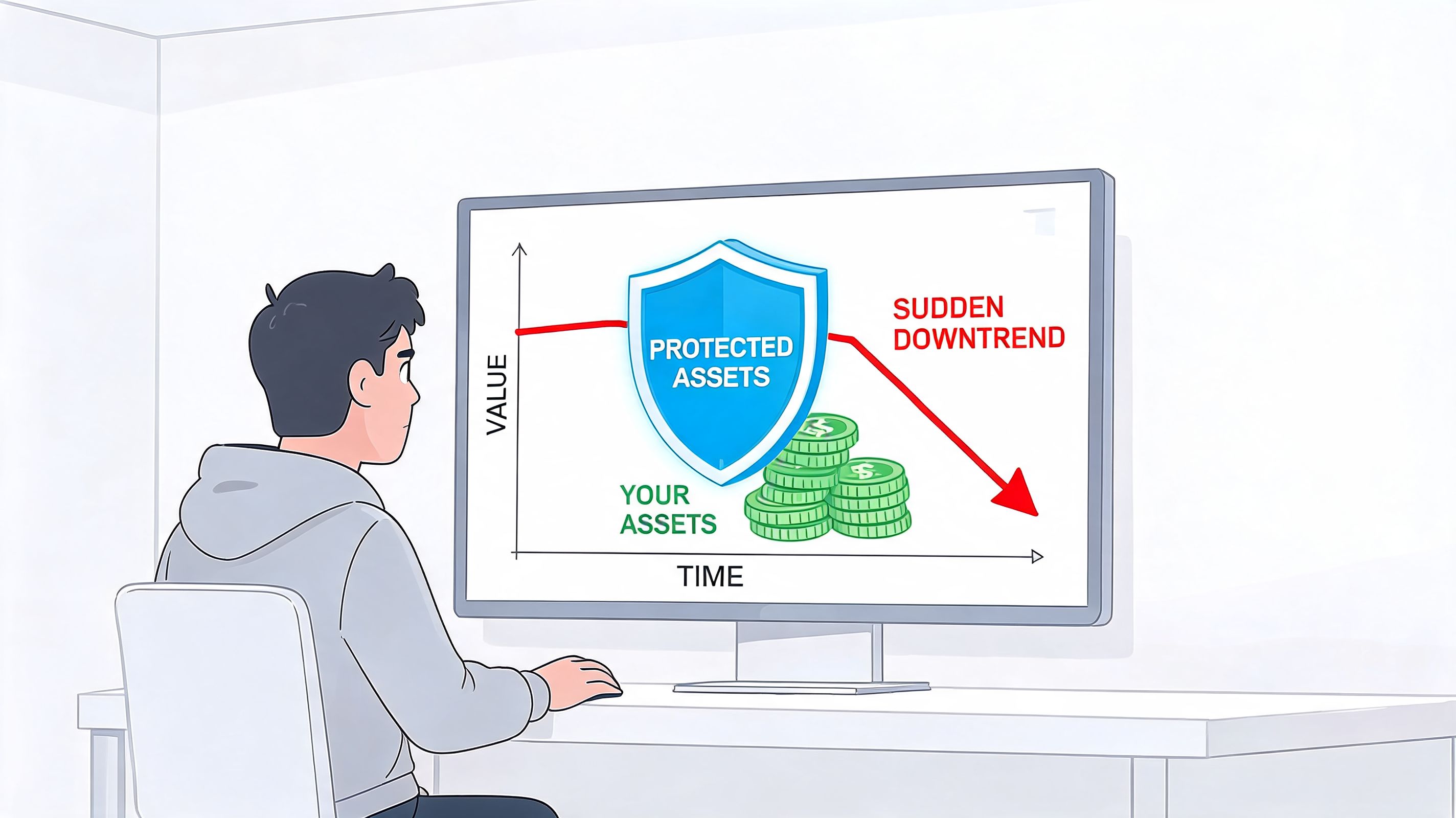
A stop-loss helps. It doesn't protect you from every way capital leaks out.
In DeFi, losses come from more than price moving against you. You can get trapped in thin liquidity, front-run on exits, chopped by volatility, baited by copy-trading noise, or stuck in a thesis that technically hasn't invalidated but is clearly getting weaker on-chain. A single stop order or mental line on the chart won't handle that.
What works is a layered model. Retail loss prevention evolved from guards and cameras into a measured operating system built around inventory accuracy, analytics, surveillance, and review cycles, as described in SafetyCulture's guide to loss prevention. Traders need the equivalent. Not just "where do I stop out?" but also:
- What am I allowed to risk today: Before emotions, before entries.
- What type of setup is this: Momentum chase, smart money follow, mean reversion, event trade.
- What breaks the trade first: Price, time, wallet behavior, liquidity shift, or thesis drift.
- What requires immediate reduction: Treasury movement, clustered exits, failed reclaim, or unusual flow.
- What gets reviewed later: Every avoidable mistake and every rule violation.
Practical rule: If your only defense is a stop-loss, you don't have a strategy. You have an emergency brake.
A real loss prevention strategy does something important. It gives you permission to trade aggressively when the setup is clean because your downside is already caged. Without that structure, most traders do the opposite. They hesitate on good entries and then freestyle risk management once the trade is live.
The traders who last don't think like gamblers protecting a bet. They think like operators protecting inventory.
Defining Your Core Risk Framework
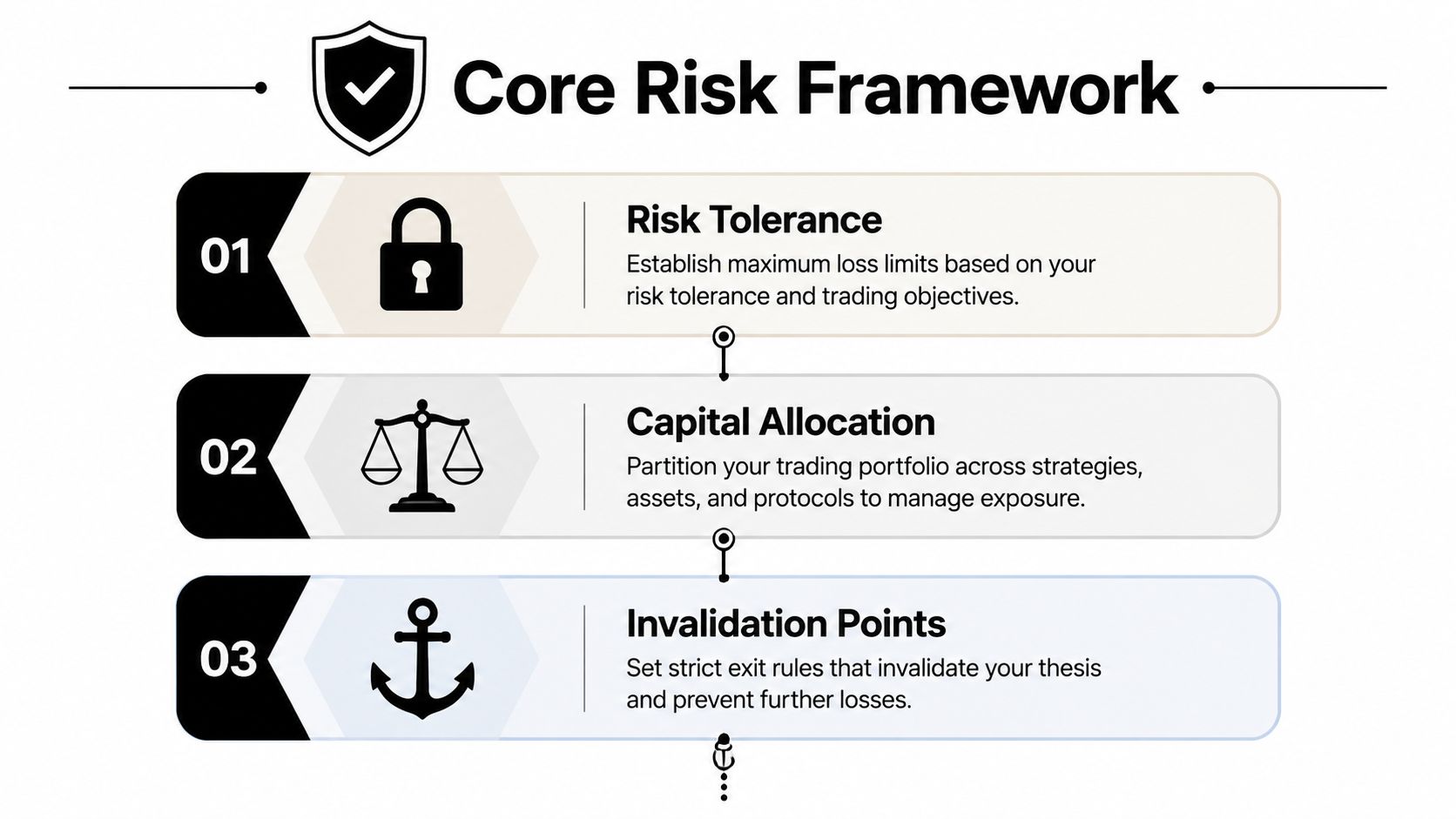
Before entry logic, before wallet tracking, before any "alpha," you need a constitution. This is the part of your process you don't negotiate with when the market gets loud.
Retail operators use a closed loop: define baselines, segment losses, deploy controls, train people, and review performance. The trader version is similar. As noted in GoDaddy's loss prevention guide, expert-level programs work by defining baselines, segmenting loss sources, deploying layered controls, training personnel, and reviewing results. For a trader, that means setting risk limits, classifying trade types, writing rules, and reviewing the journal.
Write your non-negotiables first
Most traders start with setups. Start with limits.
Your framework should answer these questions in writing:
| Rule area | What to define | Why it matters |
|---|---|---|
| Account protection | Your maximum drawdown before you stop trading and reassess | Prevents one bad streak from turning into a full account spiral |
| Trade risk | Your max risk per trade | Stops conviction from silently turning into overexposure |
| Portfolio exposure | Your max open exposure across all positions | Correlated trades can behave like one giant bet |
| Category caps | Separate limits for majors, DeFi blue chips, new launches, and memecoins | Not all risk belongs in the same bucket |
| Execution rules | What invalidates an entry, when you trim, when you fully exit | Keeps decisions consistent under stress |
Start tracking smart money today
Join thousands of traders using WalletFinder.ai to find profitable wallets and copy their trades.
Start Free Trial →

