
Leopard Gecko Crypto: A Trader's Guide to Vetting Tokens
Is 'leopard gecko crypto' a hot new token or a vet's warning? This guide clarifies the term, vets the LEOPARD token, and gives a playbook for finding alpha.
You searched leopard gecko crypto and got two completely different worlds. One is a micro-cap token on BNB Chain. The other is a reptile disease that breeders and vets take seriously.
That mix-up is useful. It forces the right first habit for any trader in low-cap markets. Clarify the asset before you analyze it. If you can't separate noise, naming confusion, and bad assumptions at the search stage, you'll make worse decisions once money is involved.
Most traders lose on obscure tokens for boring reasons. They buy the ticker before checking the contract. They react to a candle before checking who caused it. They treat a temporary volume spike like proof of quality. A professional workflow does the opposite. It starts with identity, then legitimacy, then behavior, then execution.
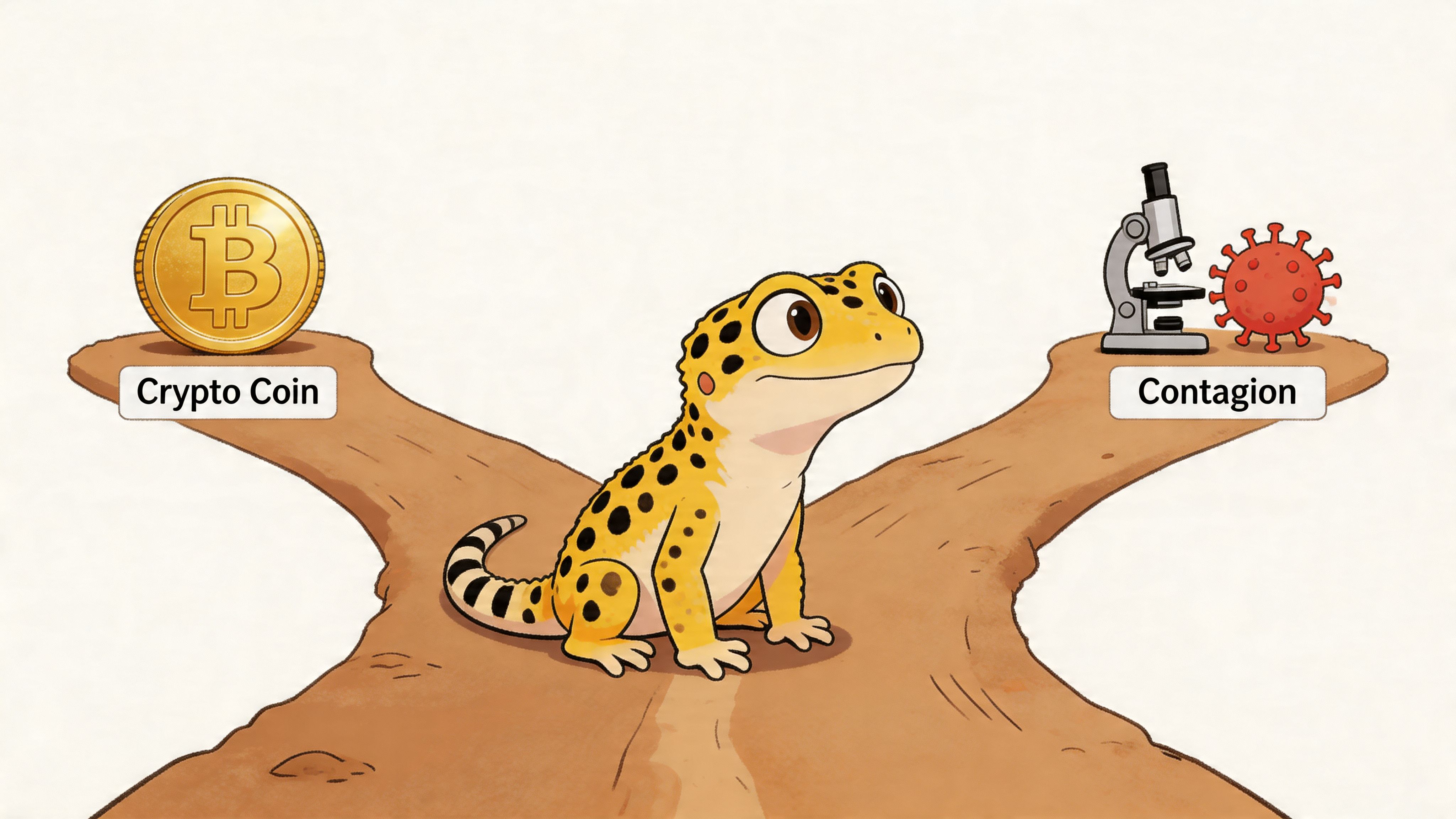
Unmasking Leopard Gecko Crypto Coin or Contagion
The phrase leopard gecko crypto is ambiguous for a real reason. In reptile medicine, “crypto” often means Cryptosporidium, a parasitic infection. In token markets, it can refer to LEOPARD, a cryptocurrency token in the BNB Chain ecosystem.
That veterinary result isn't random search clutter. A 2023 Thailand study found Cryptosporidium in 51.43% of captive leopard geckos, and infection was significantly linked to wasting syndrome. The same research noted that reptile strains such as C. varanii are considered non-zoonotic, meaning they don't infect humans, according to the Thailand leopard gecko Cryptosporidium study.
Why this confusion matters to traders
Naming confusion is common in crypto. A token can share a word with a meme, animal, game, company, or medical term. Search results then blend unrelated content, and weak traders make fast assumptions from the wrong dataset.
That matters most in the exact part of the market where people search terms like leopard gecko crypto: low-liquidity, high-volatility tokens where information quality is already poor.
Practical rule: If a token name creates search ambiguity, rely less on generic web search and more on contract-level verification, holder behavior, and transaction history.
The useful lesson hidden in the keyword
The veterinary side also teaches a trading lesson. A parasite case isn't judged from one glance. Vets look for patterns, repeated evidence, and transmission risk. Memecoin vetting works the same way.
When I evaluate an obscure token, I don't ask, “Is this chart exciting?” I ask four harder questions:
- What exactly is the asset? Token name, contract, chain, trading venue.
- Can it be traded safely? Sell function, liquidity structure, contract risk.
- Who is active in it? Wallet concentration, repeat buyers, likely insiders.
- Is the move durable or just noisy? Volume quality, wallet quality, timing.
That's the frame for the rest of this guide. LEOPARD is the case study. The workflow applies to any risky token that shows up on your screen with a sudden burst of attention.
What Is the LEOPARD Token A Project Deep Dive
LEOPARD is a cryptocurrency token listed on CoinGecko and categorized within the BNB Chain Ecosystem, based on CoinGecko market data for Leopard. That tells you two things immediately. First, this is a live tradable asset, not just a vague meme reference. Second, you're dealing with a token in a chain environment where low-cap launches, thin liquidity, and fast rotations are common.
The current market profile is the kind of profile that attracts speculators and punishes lazy analysis.
What the market data says
CoinGecko shows LEOPARD with a 2.68% price increase over the last 24 hours, trading inside a 24-hour range of $0.000124470 to $0.000124525, using a global volume-weighted average across 1 exchange and 1 market. It also shows $136.78 in trading volume over the past 24 hours, a 728.30% increase from the previous day.
Those numbers matter less as an investment thesis and more as a warning label. A surge in activity on a token with such limited market structure can signal fresh attention, but it can also signal fragility. One venue. One market. Tiny absolute volume. That combination can move sharply on very little real participation.
What traders usually misread
A junior trader sees the volume percentage and thinks momentum. A better trader notices the base is small, the venue count is narrow, and the market can become distorted quickly.
Use this framing:
| Signal | What it tells you | How to interpret it |
|---|---|---|
| Single exchange exposure | Trading access is limited | Execution risk is higher |
| Single market structure | Price discovery is thin | A few actors can shape the tape |
| Recent volume spike | Attention has increased | Attention is not the same as durability |
| Tiny price denomination | The token looks “cheap” | Unit bias traps inexperienced buyers |
Start tracking smart money today
Join thousands of traders using WalletFinder.ai to find profitable wallets and copy their trades.
Start Free Trial →

