
IMX Token Price: A Trader's Guide for 2026
Explore the IMX token price with our 2026 guide. We cover historical data, market drivers, and how to use Wallet Finder.ai for smart money trading signals.
As of April 2026, IMX was still trading about 93.6% below its all-time high. That alone tells traders what kind of asset they are dealing with. IMX can deliver outsized moves, but it also punishes entries made on comfort, headlines, or lagging confirmation.
Price is only the surface layer. A candlestick chart shows where IMX has traded. It does not show whether larger wallets are building positions into weakness, whether a rebound is being carried by a small cluster of aggressive buyers, or whether liquidity is thin enough to turn a decent setup into a trap.
A better read on the imx token price comes from stacking market structure with wallet behavior.
Start with the token’s role inside the Immutable ecosystem. Then place the current move in historical context, especially how IMX has reacted during narrative expansions and sentiment breakdowns. After that, track wallet flows. In volatile assets, the identity of the buyer often carries as much weight as the candle itself. That is where tools like Wallet Finder.ai become useful. They help separate random volume from smart money activity you can act on.
Understanding the Volatility of the IMX Token Price
IMX went from a low token sale base to a sharp exchange debut, then pushed to an early-cycle peak before spending a long stretch repricing lower. That kind of path matters because it shows the token can overshoot in both directions. Traders are not dealing with a slow, valuation-led asset here. They are dealing with a narrative-driven market that can expand fast, then retrace just as hard.
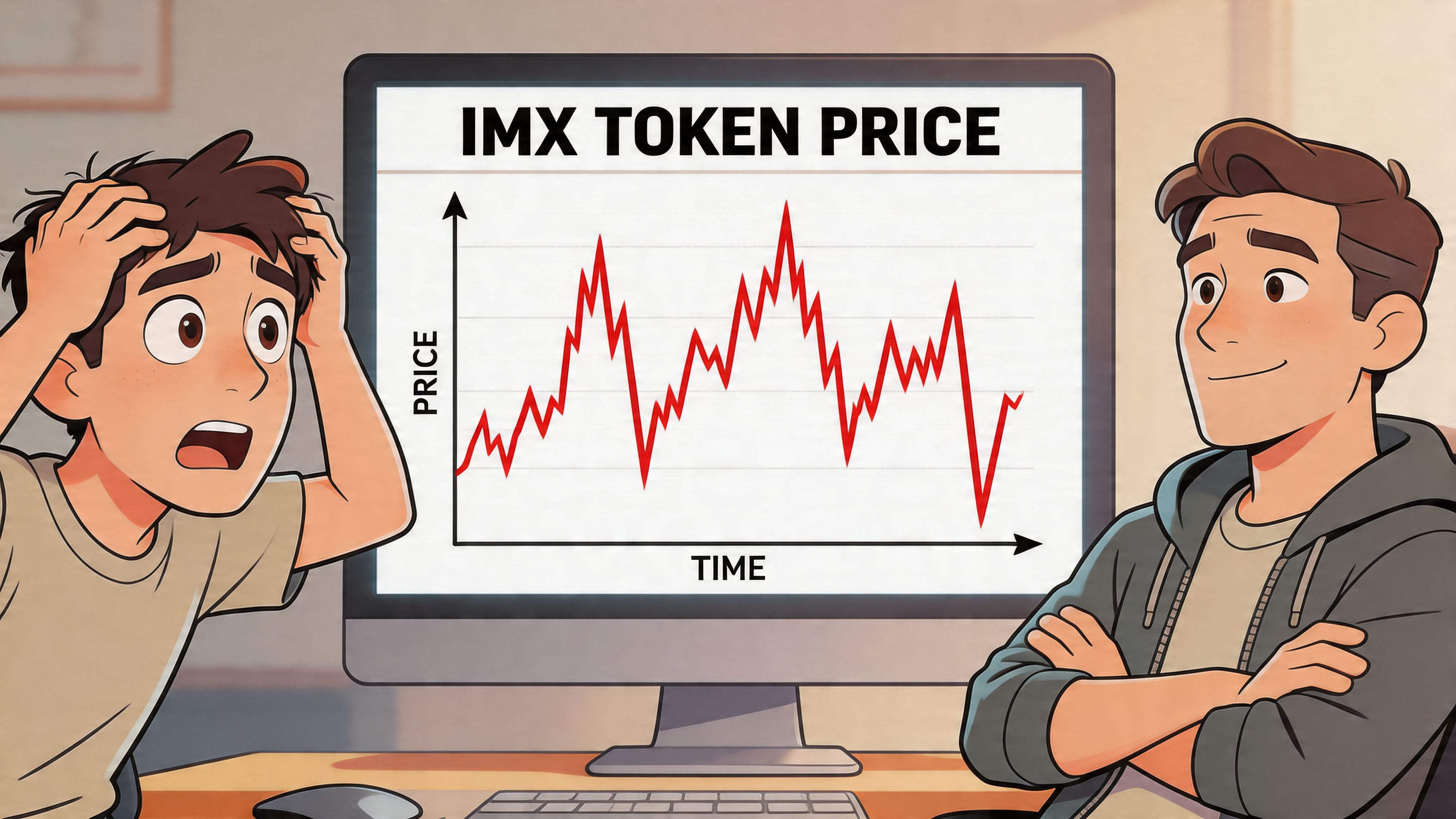
A common mistake is to treat this volatility as noise and wait for clarity. On IMX, "clear" setups often appear after the best asymmetric entry has already passed. By then, early wallets have usually built their positions and late buyers are reacting to a move, not anticipating it.
Why IMX behaves like this
IMX trades at the intersection of several high-beta themes: Ethereum scaling, NFT infrastructure, and Web3 gaming. Each theme brings its own flow of attention and speculation. When two or three of them heat up at the same time, price can move faster than fundamentals can justify in the short term. When sentiment fades, the same reflex works in reverse.
That pattern has shown up repeatedly around ecosystem catalysts. A game partnership, marketplace expansion, or new launch can trigger a fast upside response as traders price in future usage. The first move is often sharp. The retrace can be just as sharp if wallet follow-through is weak, volume is concentrated in short-term traders, or the broader alt market rolls over.
That is why I treat IMX as a trading vehicle first and a conviction hold second.
A better way to read the move is to ask four practical questions:
- Where is price sitting in the broader cycle? Extended after a breakout, compressed near support, or stuck in a range where both sides get trapped?
- What was the actual catalyst? A real ecosystem development, a sector-wide sympathy move, or a headline with limited on-chain follow-through?
- Which wallets are driving the tape? Fresh retail-sized inflows, exchange-related churn, or larger wallets accumulating before the crowd notices?
- How much liquidity is behind the move? Thick enough to sustain continuation, or thin enough that one wave of selling can erase days of gains?
Those questions turn raw price action into something usable. A green candle after a headline means little on its own. A green candle backed by repeat buys from larger wallets, improving market structure, and steady liquidity is a different setup.
Practical rule: For IMX, price matters less than who is buying, when they started buying, and whether they keep adding after the headline hits.
Volatility is where the edge comes from, but only if it is measured correctly. Chart traders watch breakouts. On-chain traders can go one layer deeper and track whether smart money wallets were active before the breakout, whether they sold into strength, or whether they kept accumulating through the first pullback. Tools like Wallet Finder.ai help separate random volume from coordinated positioning, which is often the difference between chasing a spike and catching the next leg early.
Preparation matters more than prediction here. Set levels in advance. Mark catalyst dates. Watch wallet clusters around those dates. On IMX, the traders who stay ahead usually read participation early, not just price after the move is obvious.
What Is IMX and Why Does It Matter
Before trading the imx token price, you need a reason the token should exist at all. If you skip that step, every move looks random. If you understand the role of Immutable, the price starts to make more sense.
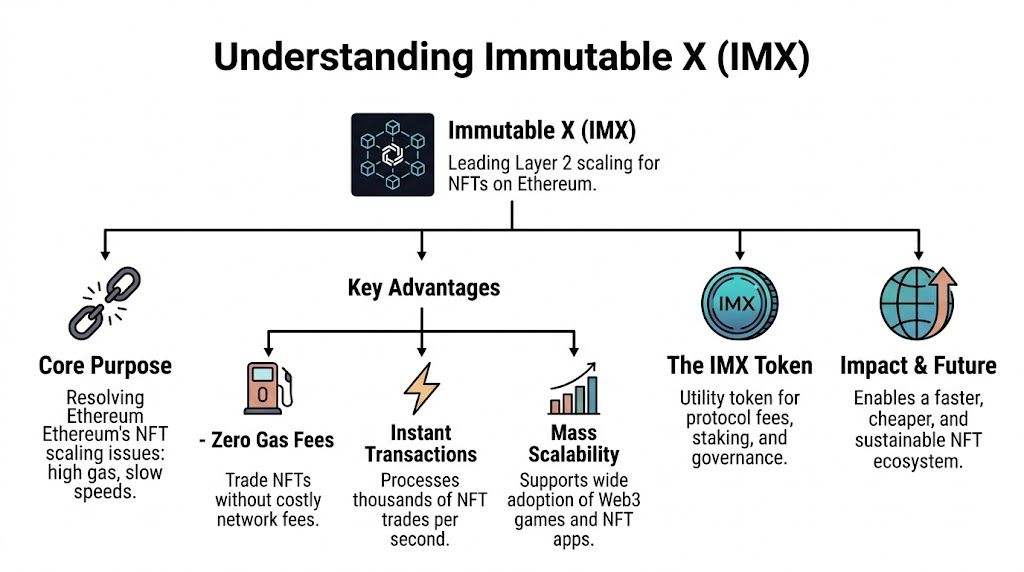
Immutable is a Layer 2 network built around NFTs and Web3 gaming on Ethereum. The practical pitch is simple: Ethereum gives security, but trading digital assets directly on Ethereum can be slow and expensive. Immutable tries to solve that by making NFT and gaming-related activity faster and cheaper while staying tied to Ethereum’s base layer.
The easiest way to think about the network
Treat Immutable like a dedicated fast lane for digital asset activity that would otherwise clog the main Ethereum highway. Developers want smoother user experience. Players want transactions that don't feel like a tax event. Traders want infrastructure that can handle activity spikes without becoming unusable.
That matters because infrastructure tokens usually trade on two different clocks. In the short term, they trade on narrative and momentum. Over longer periods, they trade on whether the network remains useful enough for developers, users, and speculators to keep coming back.
Where the token fits
The IMX token matters because it isn't separate from the ecosystem's operating logic. Its role is usually discussed through three functions:
| IMX function | Why traders should care |
|---|---|
| Protocol utility | Utility creates a reason for the token to stay relevant beyond pure speculation. |
| Governance | Governance gives token holders a say in network direction, which can matter when ecosystem priorities shift. |
| Staking | Staking can affect how tokens move through the market and how holders think about time horizon. |
Start tracking smart money today
Join thousands of traders using WalletFinder.ai to find profitable wallets and copy their trades.
Start Free Trial →

