
Move Crypto From Coinbase to Wallet: Quick Steps
Discover how to move crypto from coinbase to wallet with practical wallet picks, fee tips, and transfer fixes.
Moving your crypto from Coinbase to a personal wallet is a straightforward process that gives you full control. It boils down to three key actions: getting your wallet's "receive" address, using the "send" feature in Coinbase, and carefully confirming the details before sending. This simple transfer unlocks better security and opens the door to the wider world of decentralized finance (DeFi).
Why You Should Move Crypto to Your Own Wallet
Keeping crypto on an exchange like Coinbase is convenient, but you don't truly own your assets. The exchange holds the private keys, giving them ultimate control. Learning how to move crypto from Coinbase to your own wallet is a crucial step toward self-custody and gaining a strategic edge.
The old crypto saying, "not your keys, not your coins," is a core security principle.
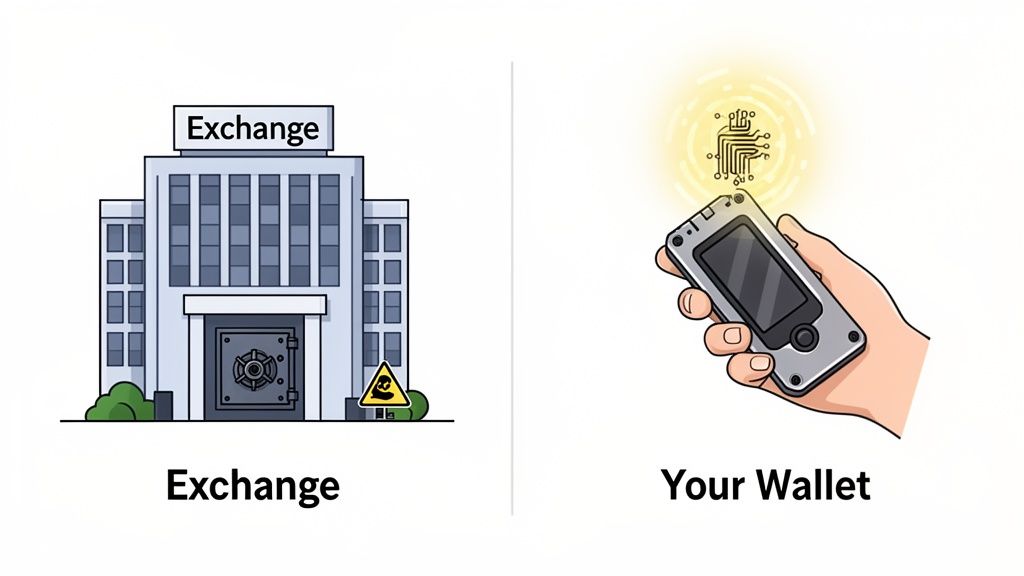
When you take your assets into your own hands—a practice known as self-custody—you unlock significant advantages:
- Complete Control: Your funds are yours, period. No exchange can freeze your account, limit withdrawals, or go down for maintenance during a critical market move.
- Enhanced Security: You sidestep exchange-specific risks like a major hack or insolvency, which could jeopardize customer funds.
- DeFi and NFT Access: A personal wallet is your passport to decentralized finance (DeFi), NFTs, and airdrop opportunities that are inaccessible from a centralized exchange account.
Building Your On-Chain Identity
Every transfer you make from an exchange to your personal wallet is recorded forever on the blockchain. This on-chain history is invaluable for tracking your performance and makes your strategies visible to platforms built to analyze skilled wallets. Understanding the difference between holding assets on an exchange versus in a wallet is critical, as our guide on crypto exchanges vs. wallets explains.
The move to self-custody changes your role from a passive investor to an active participant in the decentralized economy. Think of it as the difference between keeping your money in a bank versus holding cash in your own secure safe.
The Strategic Value of On-Chain Transparency
The flow of funds between exchanges and personal wallets is a massive signal for market analysts. For instance, in one tracked event, a staggering 2,063 BTC (worth around $183.8 million at the time) was moved into a Coinbase institutional address. Analysts saw this as a sign of big players getting into position.
For DeFi copy traders and quant funds, moving crypto off Coinbase is about building a trading footprint that intelligence platforms can track. This permanent record solidifies your on-chain reputation with every transaction.
Your Pre-Transfer Security Checklist
Before you hit “Send” on Coinbase, a few minutes of careful preparation can prevent costly mistakes. Treat this as your non-negotiable pre-flight check.
First, choose and set up your non-custodial wallet. This could be a browser-based wallet like MetaMask for Ethereum, Phantom for Solana, or a hardware wallet from Ledger or Trezor for maximum security.
During setup, you will receive a seed phrase (or recovery phrase)—a list of 12 or 24 words that acts as the master key to your crypto.
Your seed phrase is the single most important piece of information you will manage in crypto. If you lose it, your funds are gone forever. If someone else gets it, they have full control of your assets.
Securing Your Seed Phrase
How you handle this phrase determines the security of your entire crypto portfolio.
This table outlines the hard rules for protecting your assets.
Start tracking smart money today
Join thousands of traders using WalletFinder.ai to find profitable wallets and copy their trades.
Start Free Trial →

