
Master Dynamo Pool Management for Top Yield
Master Dynamo pool management. Set up positions, optimize yield, use Wallet Finder.ai signals to copy top traders, & mitigate loss.
You open a concentrated liquidity position, the pair looks healthy, volume is active, and the APR on the front end seems good enough to justify the click. A few days later, price drifts, your range goes stale, fee generation slows, and your PnL starts reflecting a problem you didn’t sign up for. Not because the pool is broken. Because passive LPing in volatile markets usually is.
That’s the fundamental approach for dynamo pool management in DeFi. It isn’t about picking a pool and hoping the math carries you. It’s about treating liquidity like a trading operation. You define ranges with intent, monitor when those ranges stop working, and rebalance before a decent setup turns into dead capital.
Most LPs learn the same lesson the expensive way. The edge doesn’t come from the first deposit. It comes from what you do after entry.
Beyond Just Setting and Forgetting
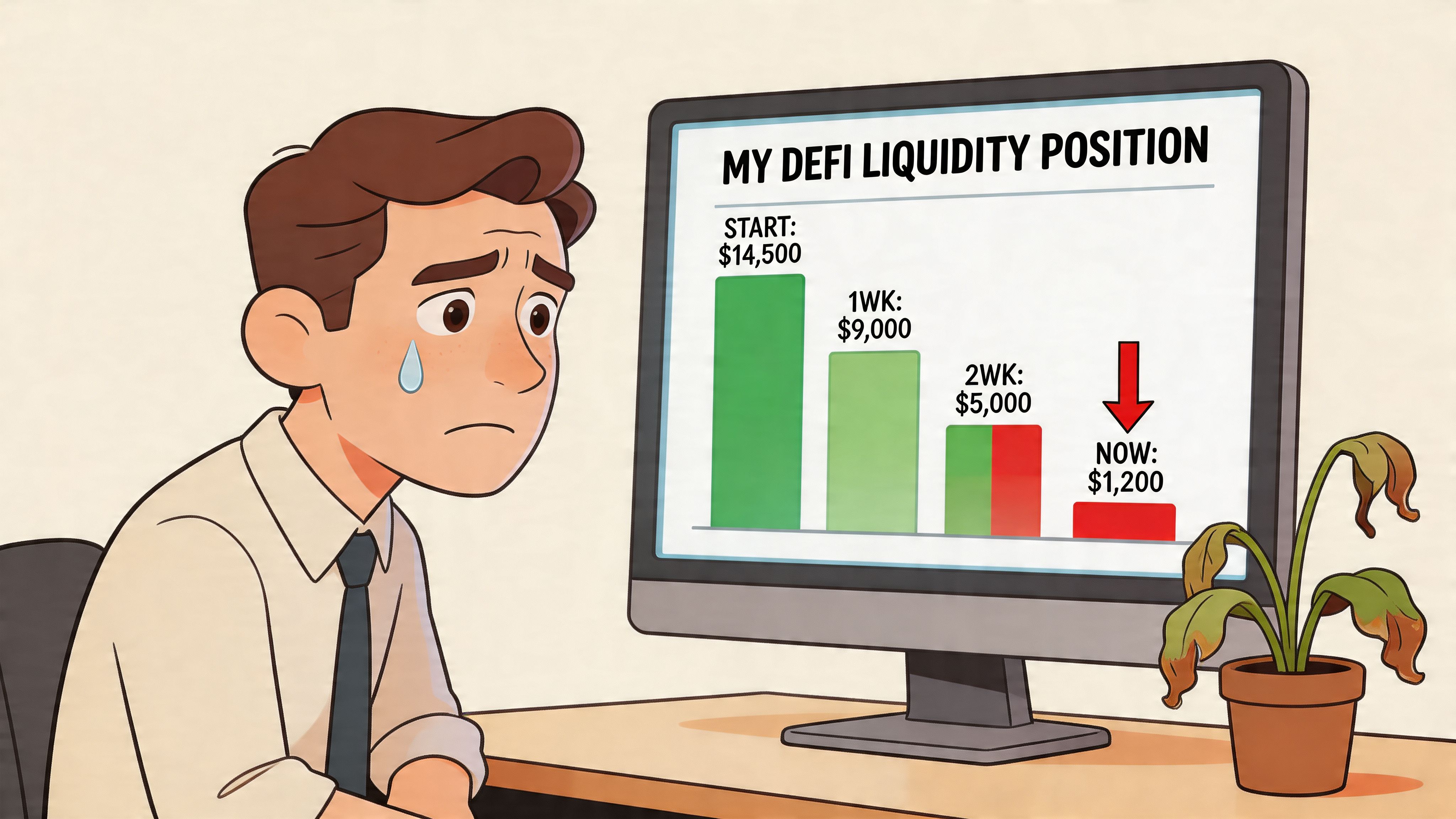
A bad LP trade rarely blows up all at once. It leaks.
You deposit into a concentrated liquidity pool around the current price because you want stronger fee density. At first, it works. Swaps hit your range. Fees come in. Then price trends in one direction, your inventory shifts toward the weaker side of the pair, and the position stops earning the way the dashboard promised. You haven’t exited, but you’re no longer really participating either.
That’s why I use the phrase dynamo pool management as a mindset. The useful metaphor comes from a real company named Dynamo Pool Management, which operates as a for-profit subsidiary of a non-profit, with profits supporting the Dynamo Swim Club, as described on the Dynamo Pool Management about page. In DeFi terms, that’s the right mental model. Your liquidity positions should feed your broader portfolio. They shouldn’t become isolated bets that gradually drain it.
What passive LPs usually miss
The common mistake is assuming fee income will compensate for poor positioning. Sometimes it does for a while. Over longer stretches, weak range placement and slow reaction times usually hand the advantage to more active participants.
A strong LP setup does three things:
- Keeps capital in the active zone: If your range sits far from current price, you’re not collecting the fees you modeled.
- Protects inventory quality: You need to care what asset you’ll hold if price moves hard in one direction.
- Supports the portfolio outside the pool: Fees are useful only if they improve the whole book, not just the vanity APR of one position.
Practical rule: If you can’t explain when you’ll adjust a range before you enter it, you don’t have a liquidity strategy. You have a deposit.
What works and what doesn’t
What works is narrow focus with active oversight. Pick pools you understand. Know why that pair trades. Know who uses it. Know what kind of movement invalidates your current range.
What doesn’t work is copying broad LP advice from social posts that treat all pools the same. A stablecoin pool, an ETH-stable pool, and a volatile alt pair each punish different mistakes. The traders who stay profitable don’t “set and forget.” They decide what the position is supposed to do, then they manage it like it matters.
Foundations of Smart Liquidity Provisioning
Concentrated liquidity rewards precision and punishes laziness. That’s the appeal and the trap.
When you provide liquidity in a concentrated AMM, you choose a price range instead of supplying capital across the full curve. That gives you more fee efficiency inside the range, but once price leaves it, your capital stops working as intended. So the first job isn’t hunting for the highest displayed yield. The first job is understanding the setup you’re entering.
There’s a useful metaphor from the labor market. Some roles pay about 25% below the national average, and the point for LPs is obvious: uninformed participants often earn meaningfully below what a better setup could have produced, as framed in this salary comparison discussion. In DeFi, below-average execution usually comes from poor pool selection, bad range width, and mismatched fee tiers.
The three decisions that matter first
Price range
A narrow range increases fee concentration, but only while price stays inside it. That makes narrow bands better for pairs with cleaner structure and more predictable trade flow. Wider ranges reduce how often you need to intervene, but they dilute fee density.
Ask one question before setting width: Am I trying to maximize fee capture or maximize time in range?
If you can’t monitor actively, don’t pretend you’ll maintain a very tight range well.
Fee tier
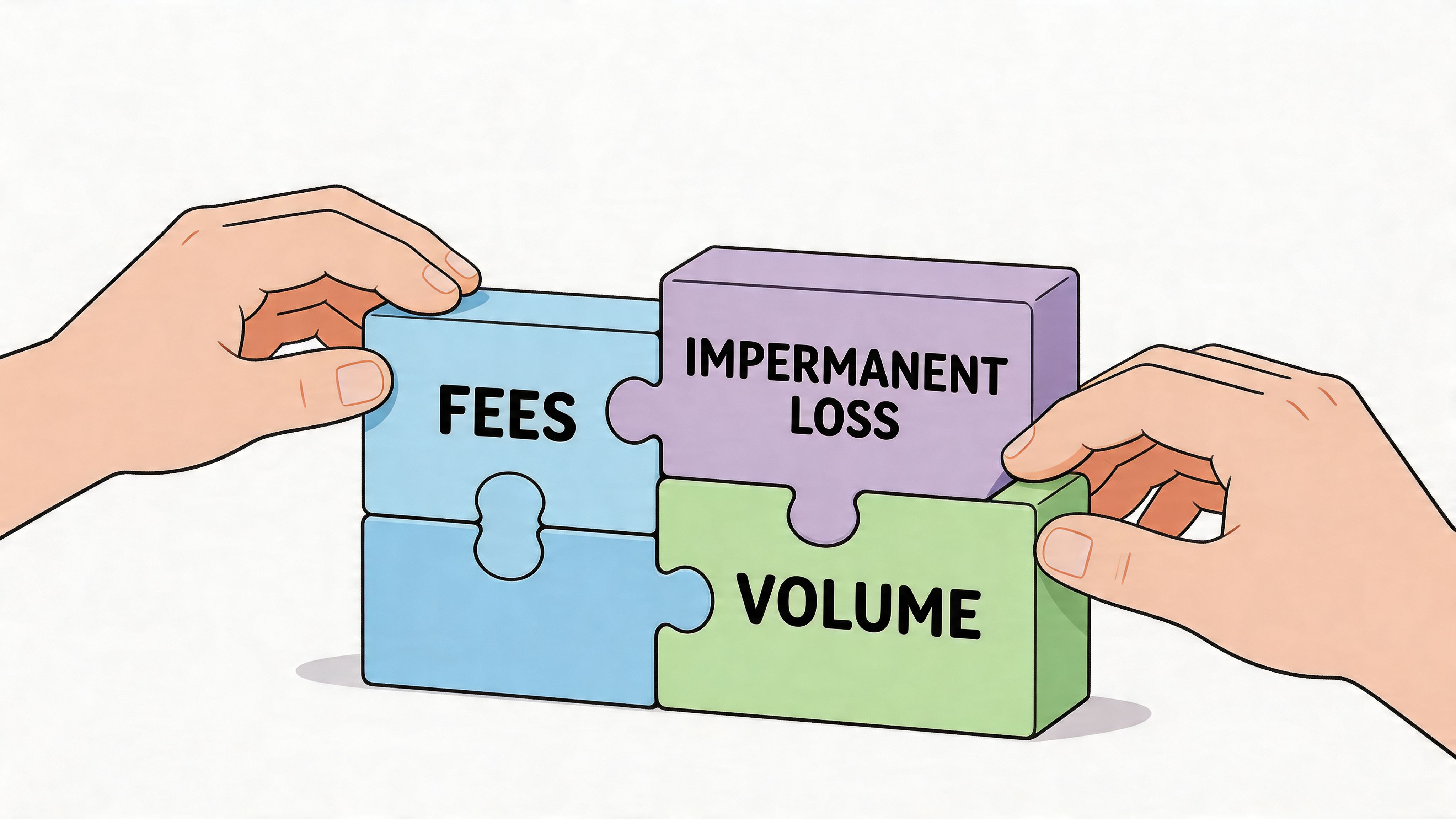
Higher fee tiers can work when the pair is volatile and traders will tolerate more slippage. Lower fee tiers fit pairs where efficiency matters more than margin per swap. The wrong fee tier can make even a decent range underperform because your position isn’t aligned with the pair’s trading behavior.
Token relationship
The true impact of this is frequently underestimated. Some pairs move with each other. Others only look attractive because the fee number is large. Correlated assets usually create cleaner LP conditions. Uncorrelated assets can still work, but your range and rebalance plan have to be sharper.
A practical pool selection checklist
Use this before every new deployment:
Check the pair’s behavior
- Correlation first: If both assets often move in related ways, the position is easier to manage.
- Narrative risk second: If one token trades mostly on hype, your inventory can deteriorate fast.
Read the volume pattern
- Consistent flow beats event spikes: You want repeatable swap activity, not one hot day that makes the APR screen look heroic.
- Look for tradable behavior: Pools with random bursts and long dry periods are harder to manage.
Match the pool to your time horizon
- Short attention span: Use simpler, more forgiving ranges.
- Active desk mindset: Tighter bands can make sense if you will monitor them.
For a broader grounding in LP mechanics, this guide to crypto liquidity pools is worth reviewing before you size up a new position.
How I set an initial position
I don’t start by maximizing. I start by validating.
| Decision | Good starting bias | What to avoid |
|---|---|---|
| Pair choice | Assets with understandable trade flow | Tokens you can’t value outside the pool |
| Range width | Wide enough to survive normal movement | Hyper-tight bands without monitoring time |
| Position size | Small enough to observe behavior first | Full allocation on first entry |
| Rebalance trigger | Predefined before deposit | Making it up after price moves |
Start tracking smart money today
Join thousands of traders using WalletFinder.ai to find profitable wallets and copy their trades.
Start Free Trial →

