
Does Crypto Trade 24/7? The Complete Guide
Does crypto trade 24 7? Yes, but it's not that simple. Learn why crypto markets never sleep, how it affects your trades, and the strategies you need to know.
The short answer? Yes. Unlike the stock market with its opening bells and closing times, the crypto market is always on. Bitcoin doesn't wait for anyone; you can trade it on a Saturday night just as easily as you can on a Monday morning. This non-stop nature is a core feature of the digital asset world, and it's a game-changer.
Crypto Trades 24/7, But With Critical Exceptions
Think of the New York Stock Exchange (NYSE) as a traditional retail store with set business hours. It opens at 9:30 AM ET and closes promptly at 4:00 PM ET, locking its doors on weekends and holidays. No exceptions.
The cryptocurrency market, on the other hand, is like a global, automated vending machine that never runs out of stock and never needs a cashier.
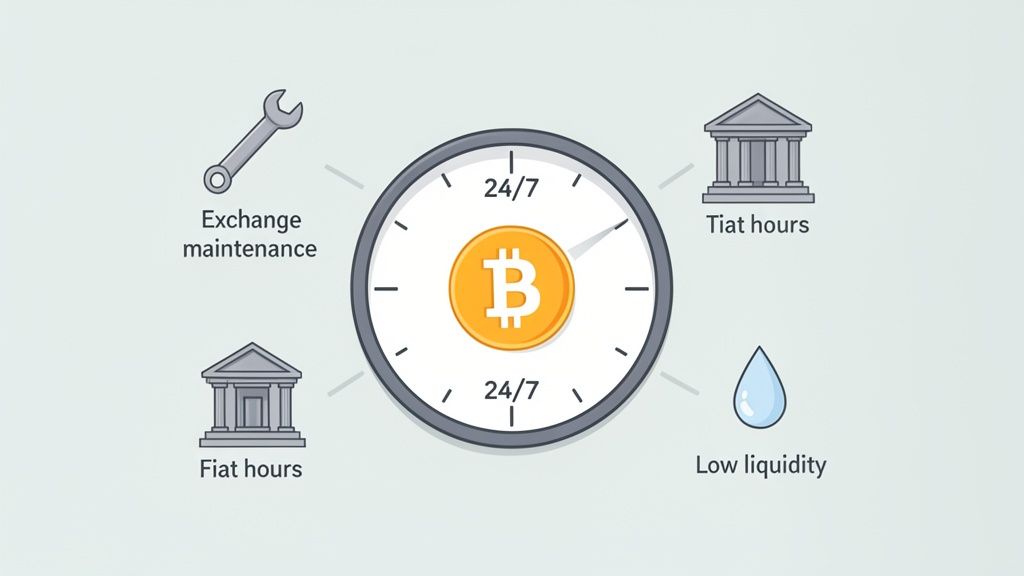
This fundamental difference is completely by design. Crypto markets are built to be open globally 24/7, unbound by banking hours or gatekeepers. As S&P Global notes, this is a stark contrast to equity venues that only operate for about 6–8 hours per weekday. This structure allows for continuous trading across every time zone, without a single break.
But here's the catch: while the core technology never sleeps, your ability to interact with it isn't always seamless. Think of it this way: the highway is always open, but sometimes your specific on-ramp is closed for construction.
Practical Pauses in an Always-On Market
For any active trader, several real-world factors can create temporary interruptions or "hidden pauses." Understanding these is absolutely crucial for timing your moves.
Centralized Exchange Maintenance: Platforms like Coinbase or Binance have to perform system upgrades and maintenance now and then. During these windows, which can last anywhere from a few minutes to several hours, trading for everyone on that specific exchange is completely halted.
The Fiat Bottleneck: While you can trade one crypto for another anytime, converting your dollars or euros into crypto still depends on the old-school banking system. If you need to deposit cash to buy a dip at 3 AM on a Sunday, you’ll probably have to wait until your bank opens on Monday morning.
Low Liquidity Periods: Just because the market is technically open doesn't mean it's buzzing with activity. Trading volume ebbs and flows, and during quiet hours—like late on a weekend—there are far fewer buyers and sellers. This "low liquidity" can lead to much higher price volatility and make it tough to execute large trades without accidentally moving the price yourself.
To make this clearer, let's break down how crypto and traditional markets stack up side-by-side.
Crypto vs. Traditional Market Hours
This table quickly shows the key differences in operating hours, which is the root of so many strategic considerations for traders.
Start tracking smart money today
Join thousands of traders using WalletFinder.ai to find profitable wallets and copy their trades.
Start Free Trial →

