
Top Decentralized Crypto Exchanges Paired with Wallet Finder
Learn the top 8 decentralized crypto exchanges and use Wallet Finder.ai to spot high-performing wallets, analyze trades, and make informed crypto moves.
If you have ever traded crypto on a platform like Binance or Coinbase, you have used a centralized exchange. These platforms deposit your funds in a central bank-like account, wherein every verification, along with trading, is done for you by the exchange. They are quite simple, but the trustworthiness of your funds lies with a central authority or middleman.
Now, picture trading without that middleman.
You get to connect your digital wallets, trade directly with users, and your funds remain with you all throughout. No signups. No KYC. And no account unlocking while you beg for support. Just pure on-chain peer-to-peer crypto transactions.
Considering how many DEXs exist, it can be challenging to determine which are worth your time. That is where Wallet Finder.ai comes in. It informs you which tokens to trade and helps track the wallets of profit-making traders to analyze their trading activities. It is suitable for both seasoned traders and newcomers alike. Using Wallet Finder.ai alongside top DEXs helps you analyze profitable wallets and trades, enabling more data-driven decisions. To protect your investments, our 7 Best Crypto Scam Checkers guide highlights tools that help identify fraudulent tokens and risky projects before you trade.
What Are Decentralized Crypto Exchanges?
A decentralized crypto exchange (DEX) actually serves as a platform for individuals to trade digital assets among themselves. No centralized exchange allows crypto to reside on its servers. DEXs rely solely on blockchain technology, where trades occur on-chain.
There are a few types of decentralized exchanges:
1. Automated Market Maker (AMM)
Platforms like Uniswap V3 and PancakeSwap are AMM-based. They do not match buyers with sellers. Instead, users trade directly against liquidity pools that the crowd fills and earns fees for their participation.
AMMs cater to traders seeking instant, permissionless swaps via liquidity pools, though low‑liquidity pools can suffer slippage and impermanent loss during volatile market conditions.
2. Order Book DEXs
Order Book DEXs could easily pass for typical exchanges. You leave a buy or sell request in the system, and a trader will match with you in the opposite direction. The most popular examples would have to be dYdX and the on-chain trading tools of Kraken.
Order book DEXs are popular with experienced traders and with others who want more control over the pricing and timing of trades.
3. Aggregator DEXes
Platforms like Jupiter serve as liquidity providers for the entire chain. They aggregate liquidity from multiple DEXs to secure the best price and lowest fees for your chosen trading pair. It is excellent for beginner investors who want to avoid the hassle of manual price comparison for every crypto trading platform.
How to Choose the Best Decentralized Crypto Exchange?
Not all decentralized exchanges are alike. Some are better suited for beginners, while others suit advanced users.
Here are things to be on the lookout for when picking the right decentralized crypto exchange for your crypto investments.
1. Security & Trustworthiness
Prioritize security at all times. Evaluate a DEX’s security by checking for audited smart contracts, robust encryption, and a transparent, experienced development team. A strong community and a transparent team will also build confidence.
2. Liquidity & Trading Pairs
You do not want to be left high and dry when no one holds the opposite end of your trade.
It is necessary to make sure that the exchange has a wide range of digital currencies and trading volume sufficient to accommodate them. Low liquidity typically leads to larger price slippage and poorer execution prices.
3. Fees & Slippage
While some DEXs charge fixed trading fees, others vary their fees based on the activity of the account user. Even the slightest fees will dig into your profit margins if you are an active trader. Slippage is the price difference you incur when your final trade price is worse than expected.
4. User Interface & Experience
A confusing interface can get one into a lot of trouble. A great crypto app platform should allow you to easily connect your wallet, swap tokens, and bridge assets across chains.
5. Cross-Chain Support
Cross-chain capabilities. If you trade between different blockchain networks, you will have to depend on a crypto trading platform that operates across several chains. Aggregator DEXes render the finest services.
They check for the best price and liquidity among multiple chains. It is great for active users out there who want access to tokens that are chained beyond Ethereum.
6. Integration with Tools
It becomes easier to trade if you can track what smart traders are doing.
Platforms such as Wallet Finder.ai help track profitable wallets and identify which tokens are being bought or sold, allowing users to align their trades with the investment objectives of top wallets while also avoiding unnecessary risks.
8 Best Decentralized Crypto Exchanges
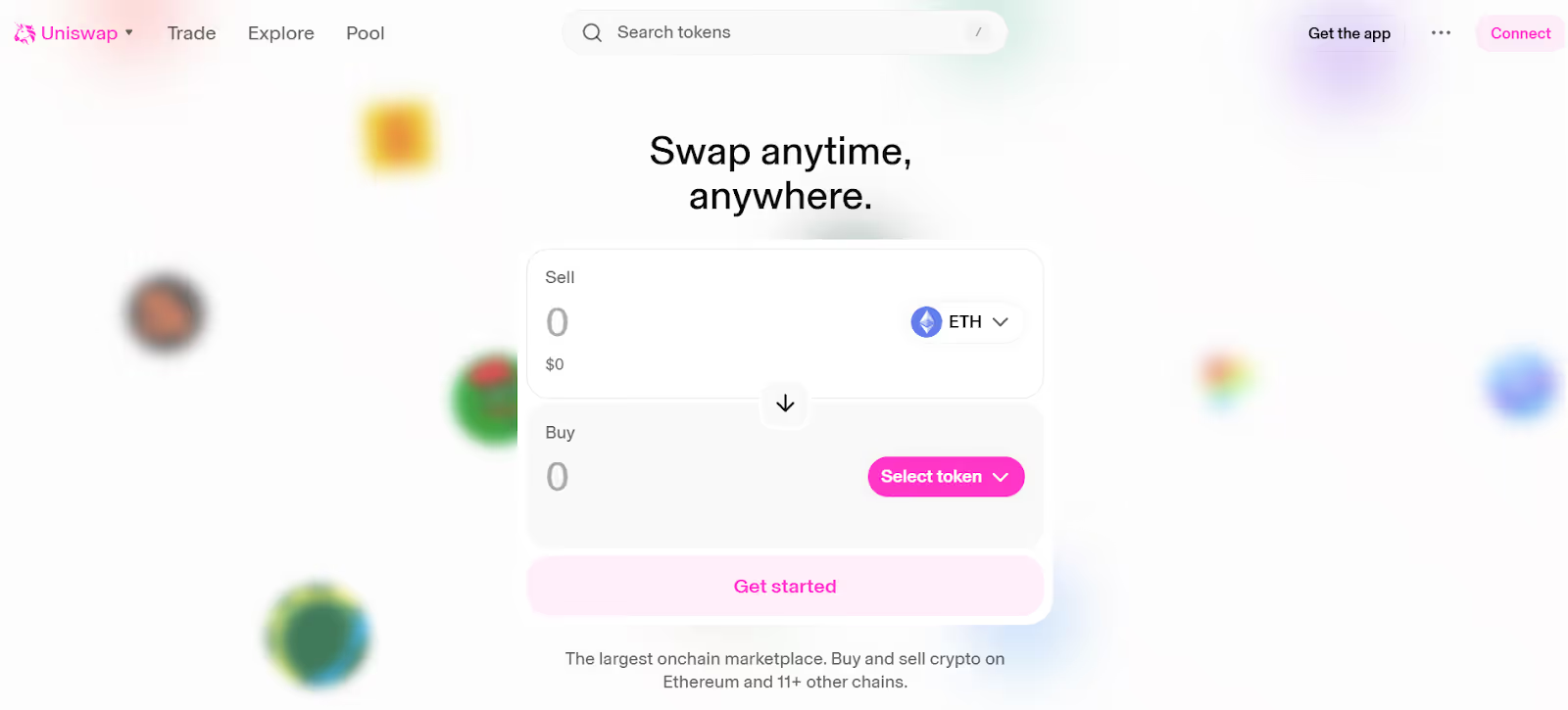
1. Uniswap V3
Start tracking smart money today
Join thousands of traders using WalletFinder.ai to find profitable wallets and copy their trades.
Start Free Trial →

