
How to Cash Out With Coinbase: A Complete Guide
Learn how to cash out with Coinbase. Our guide covers withdrawal methods, fees, and tips for selling crypto and moving funds to your bank or PayPal.
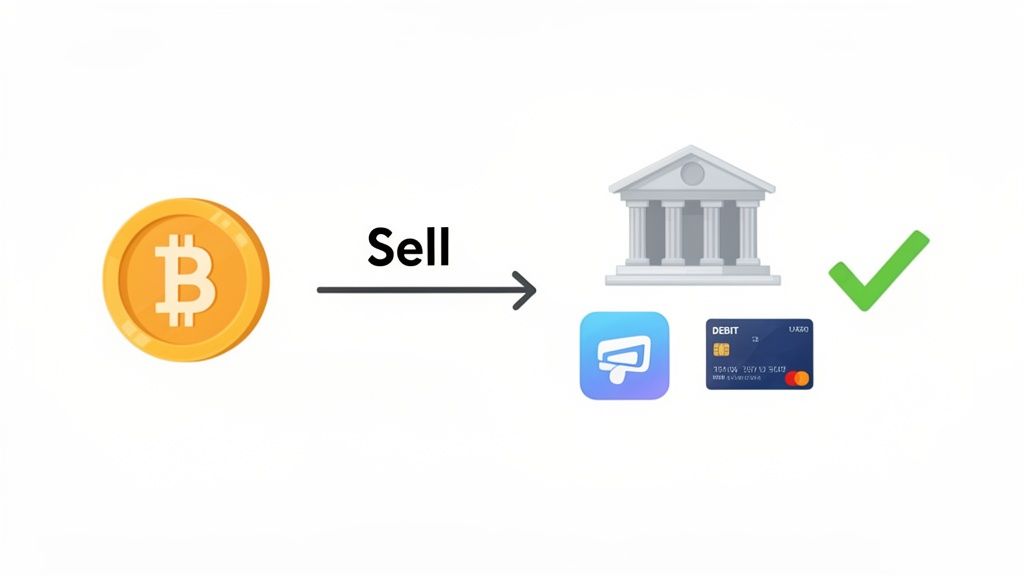
Cashing out on Coinbase is simple: you sell your crypto for a fiat currency (like USD or EUR) and then transfer that cash to your bank, PayPal, or a debit card. This process is the final step for locking in your crypto profits. It’s designed to be a direct line from digital asset to spendable cash in just a handful of clicks.
The Hidden Costs of Poor Withdrawal Timing
Most guides tell you how to cash out on Coinbase. Almost none tell you when you should. This timing decision can cost you thousands in unnecessary fees, slippage, and taxes—or save you the same amount with a few strategic moves.
The moment you click "sell" isn't just a technical transaction. It's a financial decision with immediate consequences that ripple through your taxes, your available capital, and even your future trading opportunities.
Why Selling During Market Volatility Destroys Your Returns
Here's a scenario that happens daily: Bitcoin pumps 5% in an hour. You get excited, decide to lock in profits, and hit sell. Coinbase executes your order at $98,500. But by the time you check your fiat balance, you got filled at $97,200. You just lost $1,300 on a $100K position due to slippage and the spread during volatile conditions.
This isn't Coinbase ripping you off—it's basic market mechanics. During high volatility, the spread between buy and sell prices widens dramatically. The order book gets thin. Your market sell order eats through available buy orders at progressively worse prices.
The fix is simple but requires discipline: never market sell during volatility spikes. If you're selling a significant position (over $10K), use limit orders and be willing to wait 30-60 minutes for the market to settle. You'll get filled at your target price instead of whatever chaos price the market offers.
The Weekend Withdrawal Trap
Friday afternoon feels like the perfect time to cash out your week's gains. You sell your crypto, initiate an ACH withdrawal to your bank, and expect the money Monday or Tuesday. Except it doesn't arrive until Thursday because you forgot one crucial detail: banks don't process ACH transfers on weekends.
Your sell executed Friday at 4pm. The cash sat in your Coinbase account all weekend doing nothing. The ACH transfer initiated Monday morning. Banks take 1-3 business days, which means your funds arrive Wednesday at the earliest, Thursday more likely.
Meanwhile, if you'd waited until Monday morning to sell, you'd have gotten the same result but with two extra days to change your mind or respond to market conditions. Or if you truly needed the cash Friday, you should've used instant card withdrawal (yes, it costs more in fees, but you'd have had the money in 30 minutes).
The lesson: plan your withdrawal method around your actual cash needs, not just convenience. If you don't need the money urgently, ACH on Monday beats ACH on Friday. If you do need it urgently, instant withdrawal is worth the premium.
Tax-Loss Harvesting: The Withdrawal Strategy Nobody Uses
December is the most important month for strategic withdrawals, and most traders completely waste it. Here's why: capital losses offset capital gains dollar-for-dollar on your taxes. If you're sitting on positions that are underwater, selling them before December 31st can save you thousands in taxes.
Real example: You made $50,000 profit on Bitcoin this year but you're sitting on an Ethereum position that's down $15,000 from your purchase price. If you do nothing, you owe capital gains tax on the full $50,000 (roughly $7,500-$18,500 depending on your bracket and whether it's short or long-term).
But if you sell that losing ETH position before December 31st, you can claim the $15,000 loss. Now you only owe taxes on $35,000 in net gains (saving you $2,250-$5,500 in taxes). You can immediately rebuy that Ethereum if you want to maintain the position—just make sure you wait 30 days to avoid the wash sale rule.
This is called tax-loss harvesting, and Coinbase makes it dead simple. Go to your tax center, download your gain/loss report, identify your biggest losers, and sell them before year-end. The cash goes to your fiat wallet and you can withdraw it or rebuy different crypto. Either way, you've reduced your tax bill legally.
Your Quick Guide to Cashing Out on Coinbase
Start tracking smart money today
Join thousands of traders using WalletFinder.ai to find profitable wallets and copy their trades.
Start Free Trial →

