
Will The Crypto Market Recover? Expert 2026 Outlook
'Will the crypto market recover'? This guide analyzes macro data, market cycles, & on-chain signals to forecast a 2026 recovery. Get insights!
You’re probably staring at the same screen every crypto trader has stared at after a violent drawdown. Portfolio down. Twitter split between doom and moon calls. Price bouncing just enough to create hope, then fading again.
That’s usually when the wrong question takes over. A common question asked is, will the crypto market recover. A better question is: what does a real recovery look like before price confirms it?
Recovery doesn’t start with headlines. It starts with a sequence. Macro pressure eases. Strong assets stop making lower lows. Institutional flows hold up during fear. Then on-chain behavior shifts. The best wallets accumulate before the crowd feels safe.
That sequence matters more than any single prediction. If you treat recovery as a process instead of an event, you stop waiting for certainty and start tracking evidence.
Setting the Stage for a Crypto Recovery
A recovery usually begins while the market still feels broken. Price stops cascading, weak holders finish selling, and capital with a longer time horizon starts buying into fear before the broader market is willing to call a turn.
That setup is why timing a recovery with headlines is a losing approach. By the time the narrative feels safe, the highest-conviction positioning is often already done. Traders need a framework that tracks conditions early, then tests whether those conditions are being confirmed by real wallet behavior.
I focus on three layers.
First, the market needs room to recover. Liquidity pressure has to ease, policy risk has to stop getting worse, and access for larger pools of capital has to remain open. Those forces shape whether a bounce can turn into a sustained repricing or stay trapped as a short-covering rally.
Second, price structure has to improve in a way that reflects absorption rather than hope. That means watching whether major assets stop printing fresh lows on heavy fear, whether breakdowns fail to follow through, and whether dips are bought faster than they were during the prior leg down. Traders who use a crypto market cycle chart to map where sentiment and structure tend to shift can frame that transition more clearly.
Third, on-chain behavior has to confirm that stronger hands are stepping in. This is the part generic recovery articles usually miss. A market can look better on a weekly chart and still lack conviction under the surface. What matters is whether high-quality wallets are accumulating spot exposure, whether stablecoins are being redeployed into risk, and whether smart money is buying weakness instead of chasing green candles.
That distinction changes execution.
If macro pressure stabilizes and price holds, but experienced wallets remain inactive, the move is still fragile. If macro pressure stabilizes, price holds, and tracked wallets begin accumulating before sentiment resets, the probability of a real recovery improves sharply. Wallet Finder.ai matters here because it lets traders move from abstract bullishness to observable behavior: which wallets are buying, how often they add, what sectors they rotate into, and whether that activity spreads beyond a handful of addresses.
A useful rule is simple. Treat recovery as a checklist, not a prediction. Conditions improve first. Structure follows. Wallet behavior confirms. The traders who act early are usually the ones watching all three at the same time.
Reading the Macroeconomic Winds and Tides
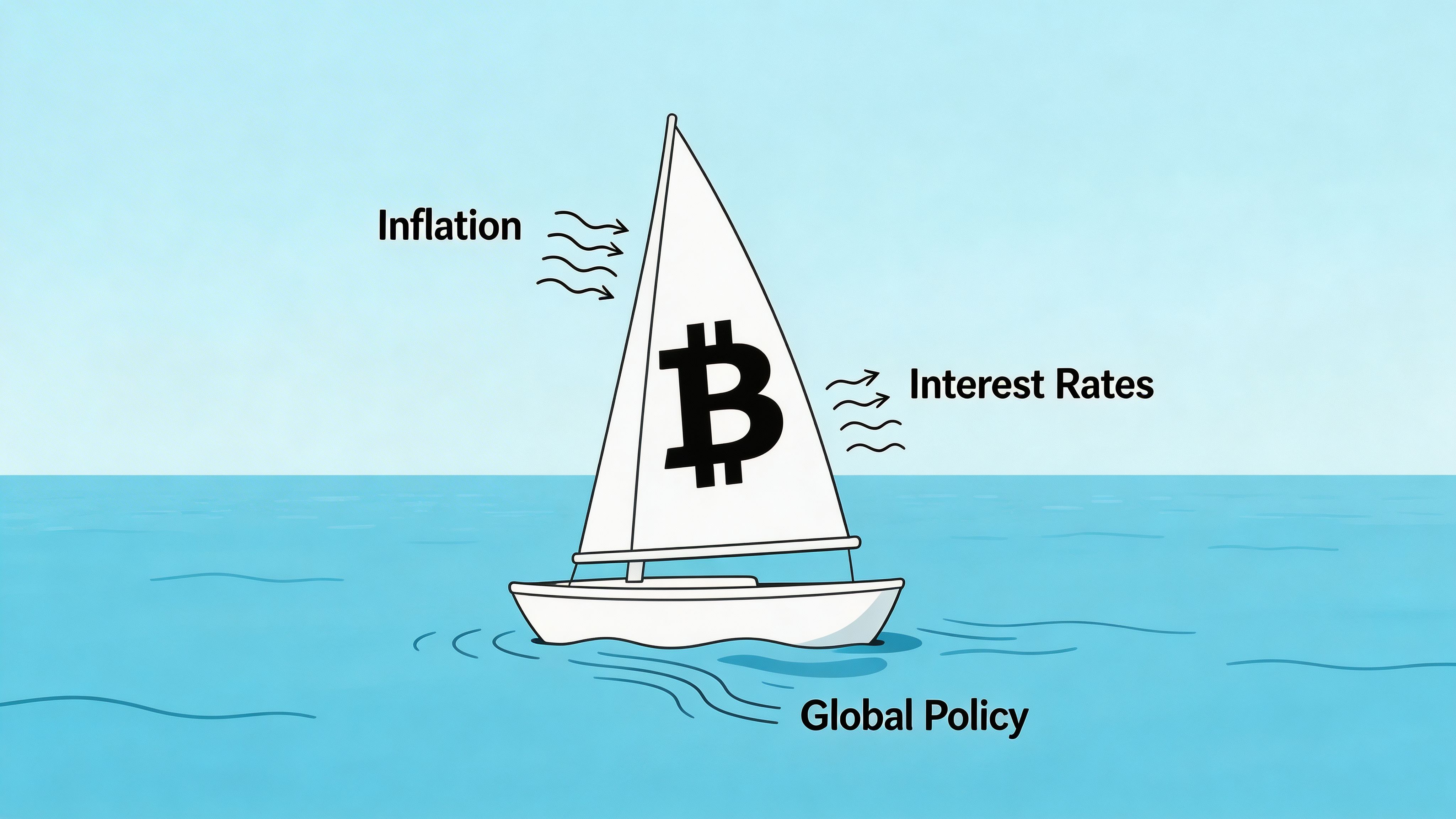
Monday opens with a hot CPI print, Treasury yields jump, Bitcoin trades lower in the first hour, and Crypto Twitter declares the recovery dead. By the close, spot ETFs have still taken in net capital and several high-conviction wallets have added on weakness. That is the kind of session that matters. Recovery often starts when macro headlines stay noisy but forced selling stops getting cleaner follow-through.
Liquidity sets the ceiling. Flows reveal conviction.
Crypto remains highly sensitive to real rates, dollar strength, and broad financial conditions because it sits far out on the risk curve. When liquidity tightens, weak hands sell first, borrowed capital quickly exits the market, and correlations with other risk assets usually rise. A durable recovery usually begins only after those macro pressures stop intensifying.
The useful question is not whether the Federal Reserve sounds friendly on any given day. It is whether capital keeps showing up during stress. US spot bitcoin ETFs publish daily flow data, which gives traders a direct read on whether institutional demand is absorbing supply or stepping away. You can monitor those creations and redemptions through public issuers, exchange data, and a disciplined on-chain analysis framework for identifying accumulation behavior.
That distinction matters in practice. If Bitcoin drops on a macro scare and ETF flows stay firm, the selloff is often distribution from weaker holders into patient capital. If price drops and those flows reverse at the same time, the market usually needs more time.
Policy matters when it changes who can buy
Traders often overfocus on whether regulation is bullish or bearish in the abstract. The more useful frame is access. Does a policy change make it easier for advisers, funds, corporates, and banks to hold the asset within their mandate?
That is why product approvals, custody clarity, and reporting standards matter more than headline tone. They expand the buyer base. In crypto, recoveries become stronger when capital moves from opportunistic trading desks to slower pools of money that can hold through volatility.
The non-obvious read is timing. Regulatory progress rarely marks the exact bottom. It changes the quality of future demand. That tends to matter more in the middle phase of a recovery than at the first bounce.
Protocol upgrades can shift allocation inside crypto
Macro is not only about central banks. Within crypto, major network upgrades can act like internal rate changes because they alter expected yield, security assumptions, and capital efficiency.
Ethereum is the clearest example. When staking economics improve, validator operations become more efficient, or execution risk falls, allocators may revisit ETH exposure even if Bitcoin remains the macro bellwether. That does not guarantee immediate upside. It does increase the odds that a Bitcoin-led rebound broadens into a sector-wide recovery instead of stalling as a single-asset move.
Breadth is the signal to watch. A market is healthier when capital rotates by thesis rather than crowding into the one asset perceived as safest.
A macro checklist that traders can actually use
I reduce the macro backdrop to four questions:
- Are financial conditions still tightening, or just tight? Recovery odds improve once conditions stop getting worse.
- Are ETF and fund flows holding up during red days? Demand that survives volatility matters more than demand that chases breakouts.
- Has market access improved for larger allocators? Clearer rails often matter more than better headlines.
- Are protocol-level catalysts creating reasons to rotate? A stronger tape usually broadens beyond Bitcoin.
Crypto does not need perfect macro conditions to recover. It needs macro pressure to stabilize while stronger buyers absorb supply.
What to monitor in real time
Macro analysis helps set the backdrop, but execution improves when you connect the backdrop to wallet behavior. If ETF flows are positive on a risk-off day, the next question is whether experienced on-chain wallets are also accumulating, rotating into leaders, or rebuilding exposure after de-risking. That is where traders get an edge before the broader narrative catches up.
| Macro factor | Why it matters | What a constructive read looks like |
|---|---|---|
| Financial conditions | Determines how much pressure sits on speculative assets | Conditions stop tightening even if they remain restrictive |
| ETF flows | Shows whether institutional demand is absorbing weakness | Inflows or stable demand during down days |
| Regulatory access | Expands the set of buyers allowed to participate | Better custody, clearer rules, easier product access |
| Protocol catalysts | Creates asset-specific reasons for capital to rotate | Renewed interest beyond Bitcoin alone |
Start tracking smart money today
Join thousands of traders using WalletFinder.ai to find profitable wallets and copy their trades.
Start Free Trial →
