
Don't Get Rug Pulled Out: A DeFi Survival Guide
Learn how to spot a crypto rug pull before it happens. Our guide explains the red flags, detection tools, and steps to take if you get rug pulled out.
More than 300,000 scam tokens have been created, and 8% of all Ethereum ERC-20 tokens plus 12% of all Binance Smart Chain BEP-20 tokens were designed as rug pulls, according to Solidus Labs on crypto rug pull scams. That changes how you should think about risk in DeFi. The danger isn't limited to a few obviously fake projects. It sits inside the normal flow of token launches, hype cycles, and fast-moving social narratives.
A lot of new traders think getting rug pulled out means they picked a bad chart. Sometimes that's true. Sometimes a token just fails. But a real rug pull has a different shape. Someone controls the setup, attracts your capital, and then removes the support that made the market look tradable in the first place.
If you trade memecoins, low-cap DeFi tokens, or fresh launches on a DEX, you need a sharper filter than “the website looks legit” or “people on X seem excited.” You need to read the structure underneath the story.
What It Means to Get the Rug Pulled Out
The phrase comes from the older idiom “pull the rug out from under,” which means to suddenly remove important support, security, or stability from someone, leaving them in a difficult position, as defined by Cambridge Dictionary's entry on pull the rug out from under. That original meaning maps perfectly onto crypto.
In normal life, the “rug” might be trust, a contract, or a promise you were relying on. In DeFi, the rug is often liquidity, sellability, or the belief that the people behind a token are still building. Once that support vanishes, the chart doesn't drift lower in an orderly way. It collapses.
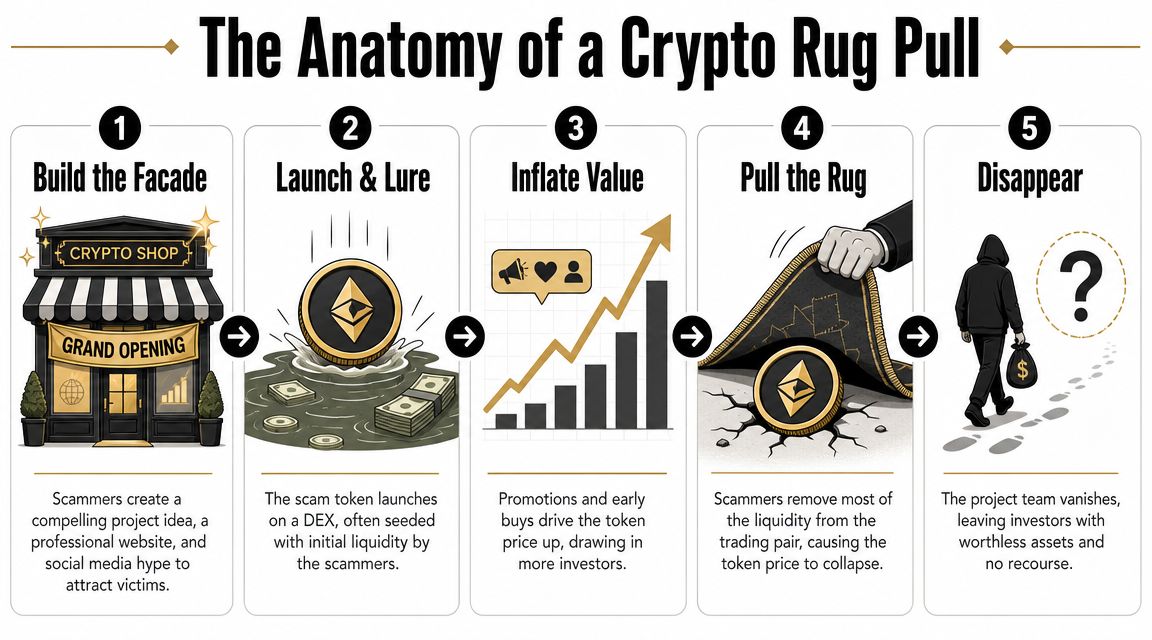
A common beginner mistake is thinking a rug pull always looks theatrical. It often doesn't. The chart can look healthy for hours or days. Buys keep coming in. The Telegram is active. The team posts memes, roadmap updates, and vague partnership hints. Then one wallet moves, liquidity disappears, sells stop working, or insiders dump at once.
Practical rule: If a token depends on one group's continued good behavior, you're not just trading price. You're trading trust.
That's why “rug pulled out” is such a useful phrase. It captures the feeling traders describe after the event. One minute, there seems to be a floor under the market. The next minute, there isn't.
A trader's version of the phrase
A new trader sees a token trending, notices quick upside, and enters after a few green candles. The position goes positive. Confidence rises. Then the pool gets drained or the token becomes impossible to sell. The profit on screen turns into a wallet full of something nobody can exit.
That isn't ordinary volatility. It's a support structure being removed.
Where readers usually get confused
People often ask whether every violent crash is a rug pull. No. Some launches are sloppy, overhyped, or badly structured. Some teams migrate liquidity. Some whales dump. The hard part is telling the difference before the collapse becomes obvious.
That distinction matters because your defense isn't emotional. It's forensic. You need to inspect who controls the token, who controls the liquidity, and whether the contract lets the team change the rules after you buy.
The Anatomy of a Crypto Rug Pull
In crypto, a rug pull is when developers abandon a project and take investor assets, and Bankrate distinguishes between hard rug pulls and soft rug pulls in its explainer on what a rug pull is in crypto. That distinction matters because the warning signs differ.
Start tracking smart money today
Join thousands of traders using WalletFinder.ai to find profitable wallets and copy their trades.
Start Free Trial →

