
A Guide to Raydium Liquidity Pool Profits
Unlock the secrets of the Raydium liquidity pool. This guide explains how to analyze pools, manage risk, and use on-chain data to mirror smart money strategies.
Think of a Raydium liquidity pool as a big, decentralized pot of cryptocurrency on the Solana blockchain. Instead of a bank, these pools let anyone swap tokens instantly. You can add your own crypto to the pot and earn a slice of the trading fees, making you part of the exchange itself.
Unpacking the Raydium Liquidity Pool
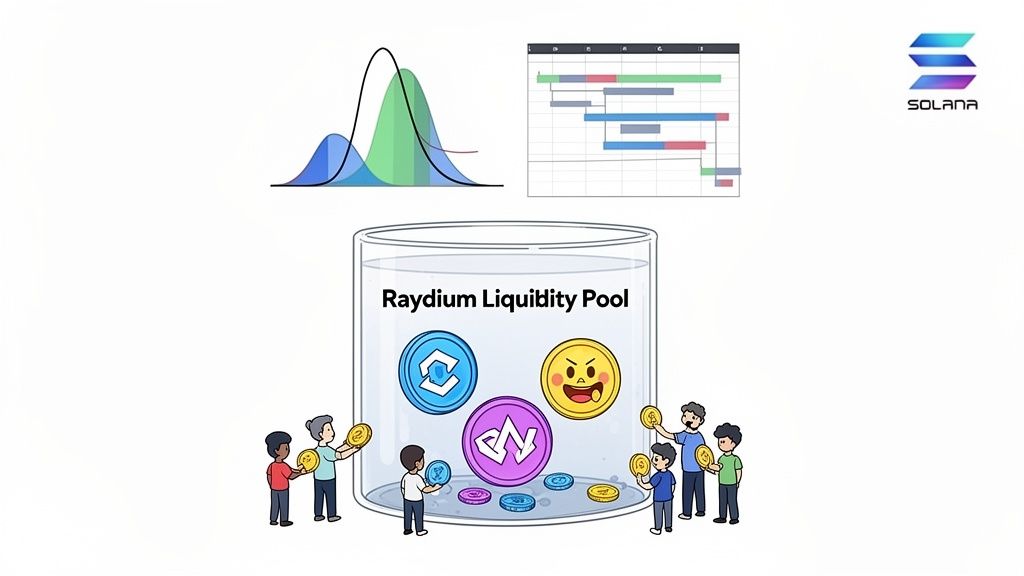
At its heart, a Raydium liquidity pool is like a community-run currency exchange. Picture a kiosk that needs both US Dollars (USDC) and Euros (SOL) to serve travelers. To get it started, you can deposit an equal value of both currencies.
Every time someone swaps their dollars for euros, they pay a tiny fee. A piece of that fee goes straight into your pocket as a thank-you for providing the cash. That’s the core idea behind providing liquidity in decentralized finance (DeFi). If you want to go deeper, we've covered the basics in our detailed guide on crypto liquidity pools.
The Automated Market Maker Engine
Raydium's pools run on an Automated Market Maker (AMM). This is a smart contract that uses a math formula to set token prices based on the assets in the pool. If someone buys a lot of SOL with USDC, the amount of SOL in the pool drops, and the AMM automatically nudges the price of SOL higher.
This setup ensures there’s always a market ready for traders, eliminating the need to wait for another person to match an order.
Raydium's Hybrid Advantage
So, what makes Raydium special? It’s how it connects to the Serum decentralized exchange (DEX). Most AMMs are isolated, but Raydium's pools also feed liquidity directly into Serum's central limit order book—the same system pros use on major trading platforms.
This hybrid approach creates much deeper liquidity. That means you can execute bigger trades with less price impact, or slippage. It gives both casual swappers and serious traders a much better deal.
This powerful design is a big reason why Raydium has become a cornerstone of the Solana ecosystem. It’s no surprise that its liquidity pools have handled a jaw-dropping $577.373 billion in cumulative DEX volume, drawing in traders looking to copy the moves of top-performing wallets. You can dig into all the numbers on Raydium's DeFiLlama page.
Core Components of a Raydium Liquidity Pool
This table sums up the key players in a Raydium pool and what they mean for you as a user or provider.
Start tracking smart money today
Join thousands of traders using WalletFinder.ai to find profitable wallets and copy their trades.
Start Free Trial →

