
Price Realization Definition: Prevent Profit Leakage
Get the precise price realization definition. Learn its formula, how it differs from realized price, and on-chain methods to stop profit leakage.
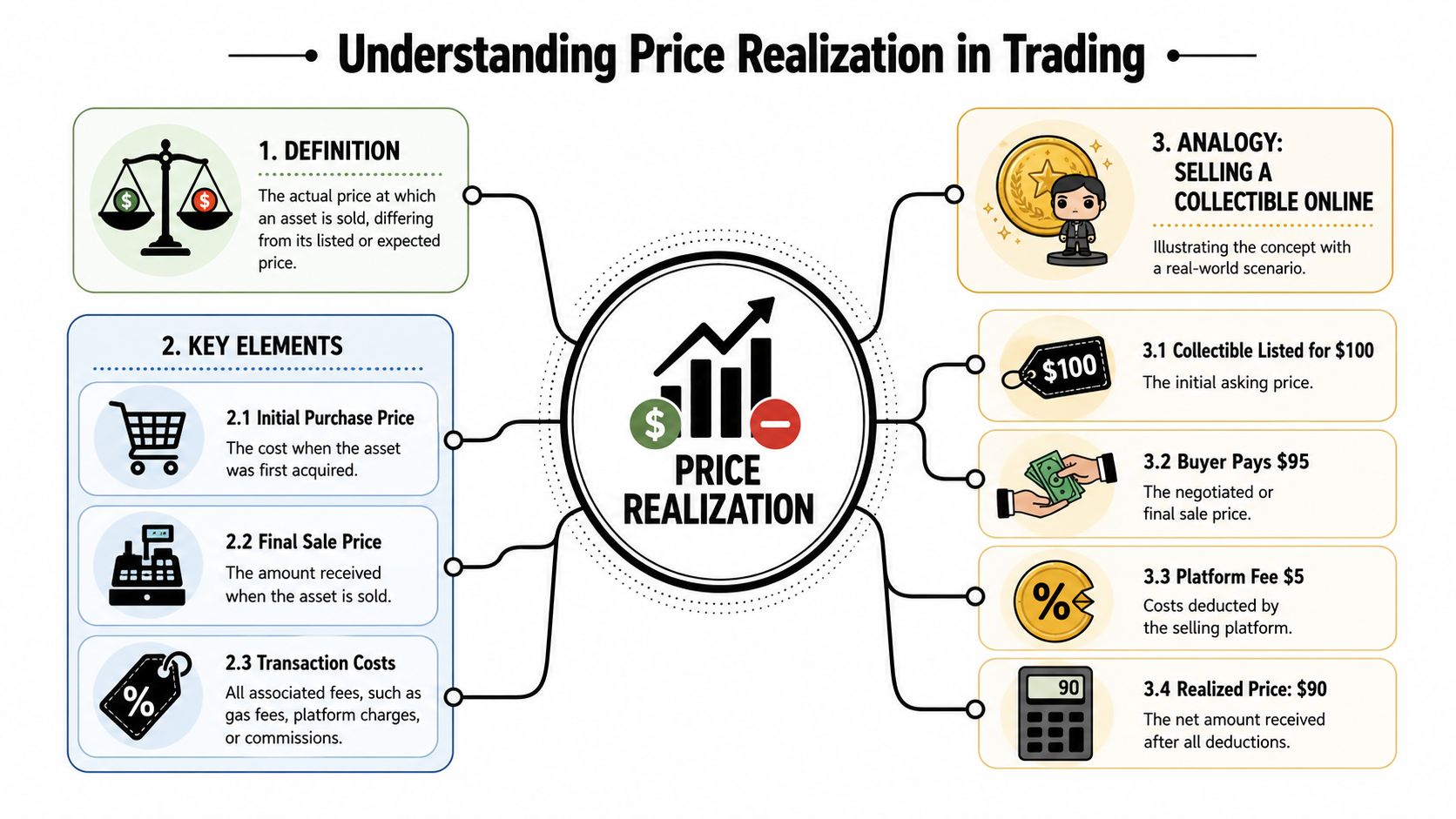
Price realization is the price you get for a trade after all costs, versus the price you expected. In practice, it can sit below 100% when value leaks through discounts, rebates, terms, or mix, and it can go above 100% when surcharges or mix shifts lift what you capture.
You know the setup. A swap looks clean in the DEX UI. The quoted output is attractive, the chart agrees with your thesis, and the trade seems profitable before you click confirm. Then you check the wallet after settlement and the result is worse than the screen implied.
That gap is where traders lose edge.
In DeFi, it's common to blame “slippage” and move on. That's too shallow. The key question is whether your execution converted the price you aimed for into the price your wallet realized after gas, pool fees, routing choices, price impact, and any other concession buried inside the trade path. That's the practical meaning behind the price realization definition.
If you trade size, rotate fast, or copy smart wallets, this metric matters more than many headline PnL screenshots. A trader can be directionally right and still realize mediocre outcomes. Another can trade in choppy conditions and still keep more of the intended price because they manage execution better.
Why Your Profits Do Not Match Your Expectations
A common DeFi mistake is treating the displayed quote as the trade result. It isn't. It's only the starting reference.
On-chain trading inserts friction at several points between intention and settlement. You see one number before submitting. The chain records another after the transaction lands. Your wallet balance reflects a third reality, because the wallet includes execution costs the quote didn't fully represent in the way you mentally modeled the trade.
Where the leakage usually happens
Three leaks show up again and again:
- Slippage and price impact matter when your order moves through shallow liquidity or a volatile pool. The expected output can deteriorate before inclusion.
- Gas and network costs reduce the economic value of the trade even if token output looks acceptable.
- Routing and fee structure can worsen execution if the aggregator chooses a path with extra hops, worse pools, or less favorable terms.
Practical rule: If your P&L review starts from token price alone, you're already missing part of the trade.
This is why price realization is useful. It forces you to compare what you wanted from the trade with what you captured. That sounds simple, but it changes how you diagnose mistakes.
Why smart traders focus on this metric
A trader who only tracks entry and exit price sees direction. A trader who tracks price realization sees execution quality.
That distinction matters when you're reviewing swaps on Uniswap, Jupiter, Raydium, 1inch, or CowSwap. Two traders can make the same directional call on the same token pair and end up with meaningfully different wallet outcomes because one traded at a better time, used a tighter method, split size more intelligently, or avoided hostile conditions.
Use price realization as an execution lens. It tells you whether the issue was your market view, your trade mechanics, or both.
What Is Price Realization in Trading
You swap 50,000 USDC into ETH, the quote looks fine, and the trade confirms. Later, your wallet value says you captured less than the setup suggested. Price realization is the metric that explains that gap.
The cleanest definition is this: price realization measures the price you captured relative to the price you meant to capture.
That sounds simple until you try to measure it on-chain. In DeFi, the hard part is rarely the math. The hard part is choosing the right benchmark, then adjusting for what the trade really cost you. If the benchmark is weak, the metric is weak. If the benchmark matches the trade you were trying to execute, price realization becomes a useful P&L diagnostic instead of a vague ratio.
Traditional pricing explanations often frame price realization as the share of a list or target price collected after discounts, rebates, or credits, as noted in Lusha's overview of price realization. That framing is fine as a starting point. For traders, it misses the practical question that decides whether the number means anything. What price should count as the reference?
A practical DeFi example
Say you planned to buy ETH with USDC on a DEX aggregator.
Your screen showed a pre-trade quote. Your order then routed across multiple pools, paid protocol fees, consumed gas, and moved enough size to shift execution. The price on the chart was one thing. The price your wallet captured was another.
That second number is what price realization is trying to isolate.
Start tracking smart money today
Join thousands of traders using WalletFinder.ai to find profitable wallets and copy their trades.
Start Free Trial →

