
Position Sizing Calculator: A Crypto Trader's Guide
Learn to use a position sizing calculator for crypto. This guide covers formulas, DeFi examples with leverage, and how to automate risk with Wallet Finder.ai.
You spot a clean setup on a token you've been stalking for days. The narrative is strong, the chart is tight, and the move starts exactly where you expected. Then a fast flush hits, your stop slips, and the position is so large that one trade does real damage.
That sequence is common in crypto because the idea can be right while the sizing is still wrong. A trader can read momentum well, catch the theme early, and still lose money because the position was too big for the account, too levered for the volatility, or too exposed to correlated holdings elsewhere in the portfolio.
That's why a position sizing calculator matters. It's not a side tool for neat freaks. It's the control that turns “I like this trade” into “I know exactly how much I'm willing to lose if I'm wrong.”
Your Best Trade Idea Can Still Lose You Money
A lot of traders learn risk the expensive way. They don't blow up because they can't read a chart. They blow up because they size the trade based on conviction instead of damage tolerance.
Crypto makes this worse. A token can trade cleanly for hours, then a sudden liquidity pocket opens and price jumps through levels that looked safe a minute earlier. In spot, that can mean a loss larger than planned. In margin-based perps, it can mean the trade never gets a second chance.
What usually goes wrong
The pattern is familiar:
- The entry is thoughtful: You wait for structure, volume, and a clear invalidation.
- The size is emotional: You go heavier because the setup feels obvious.
- The loss is mechanical: Price tags your stop, slips past it, or shakes you out before the move resumes.
The painful part is that the market doesn't care that your thesis later proved correct. If the position was too large, you're out anyway.
Good analysis can survive a bad trade. Bad sizing can't survive normal volatility.
Why professionals obsess over size
A professional trader doesn't ask only, “Will this go up?” The first question is, “If this fails, what does that cost me?”
That shift changes everything. It forces discipline before the order goes live. It also keeps a single mistake from hijacking the rest of the week.
In crypto and DeFi, that matters even more because trade conditions aren't stable. Slippage changes. Liquidity changes. Correlations snap tighter when the market turns risk-off. The setup might be strong, but if the size ignores those realities, the trade is still fragile.
Position sizing is the part of trading that keeps you in the game long enough for your edge to matter.
What Is Position Sizing and Why It Matters
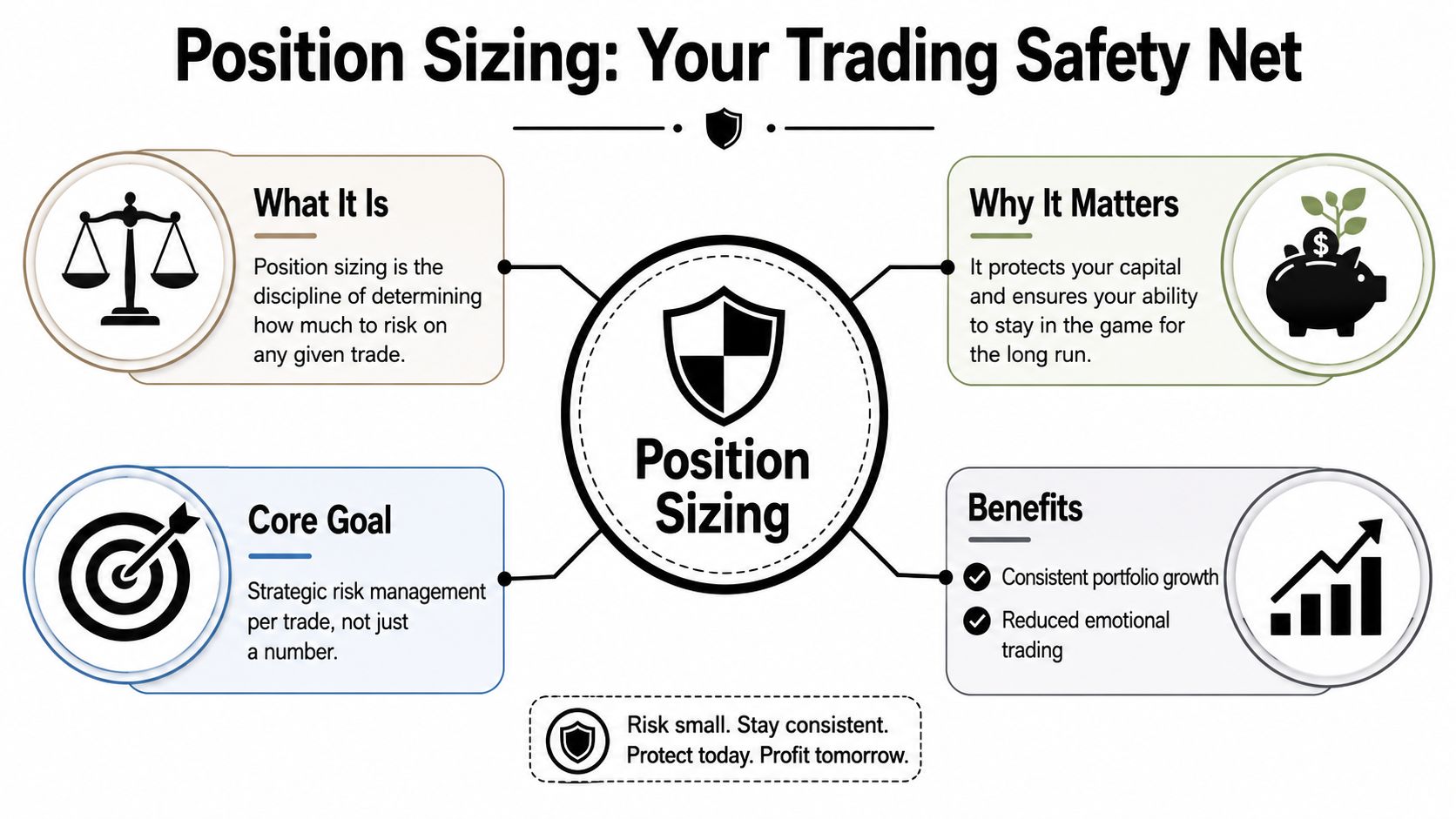
Position sizing is the process of deciding how large a trade should be based on how much of your account you're willing to risk if the stop loss gets hit. That's the key idea. The trade starts with acceptable loss, not with desired profit.
A position sizing calculator became standard because oversized trades can wreck performance even when entry logic is correct, and many trading references recommend limiting risk per trade to about 1% to 2% of total capital as a baseline for repeatable risk budgeting, as noted by Infinity Algo's overview of position sizing calculators.
Start tracking smart money today
Join thousands of traders using WalletFinder.ai to find profitable wallets and copy their trades.
Start Free Trial →

