
L Tron Scanner: A Trader's Guide to TRONSCAN & Beyond
Confused about the 'L Tron scanner'? Learn the difference between L-Tron hardware and a TRON blockchain scanner (TRONSCAN) for tracking wallets and trades.
When searching for l tron scanner, users often anticipate a single tool. This is frequently incorrect.
Sometimes they mean a physical scanner made by L-Tron, a company that builds law-enforcement hardware. Other times they mean a Tron scanner, which in crypto usually means a blockchain explorer such as TRONSCAN. Those are completely different categories. If you mix them up, the search results feel confusing, and the trading advice won’t make sense.
For traders, the useful path starts with the second meaning. A blockchain explorer turns raw on-chain activity into something you can inspect, verify, and act on. That’s where the edge comes from.
The L Tron Scanner What Are You Really Searching For
If you typed l tron scanner, there’s a good chance search intent split in half right away.
On one side, there’s L-Tron, the hardware company. On the other, there’s Tron, the blockchain network. Search engines often blur them together because the words look close, but they serve totally different users.
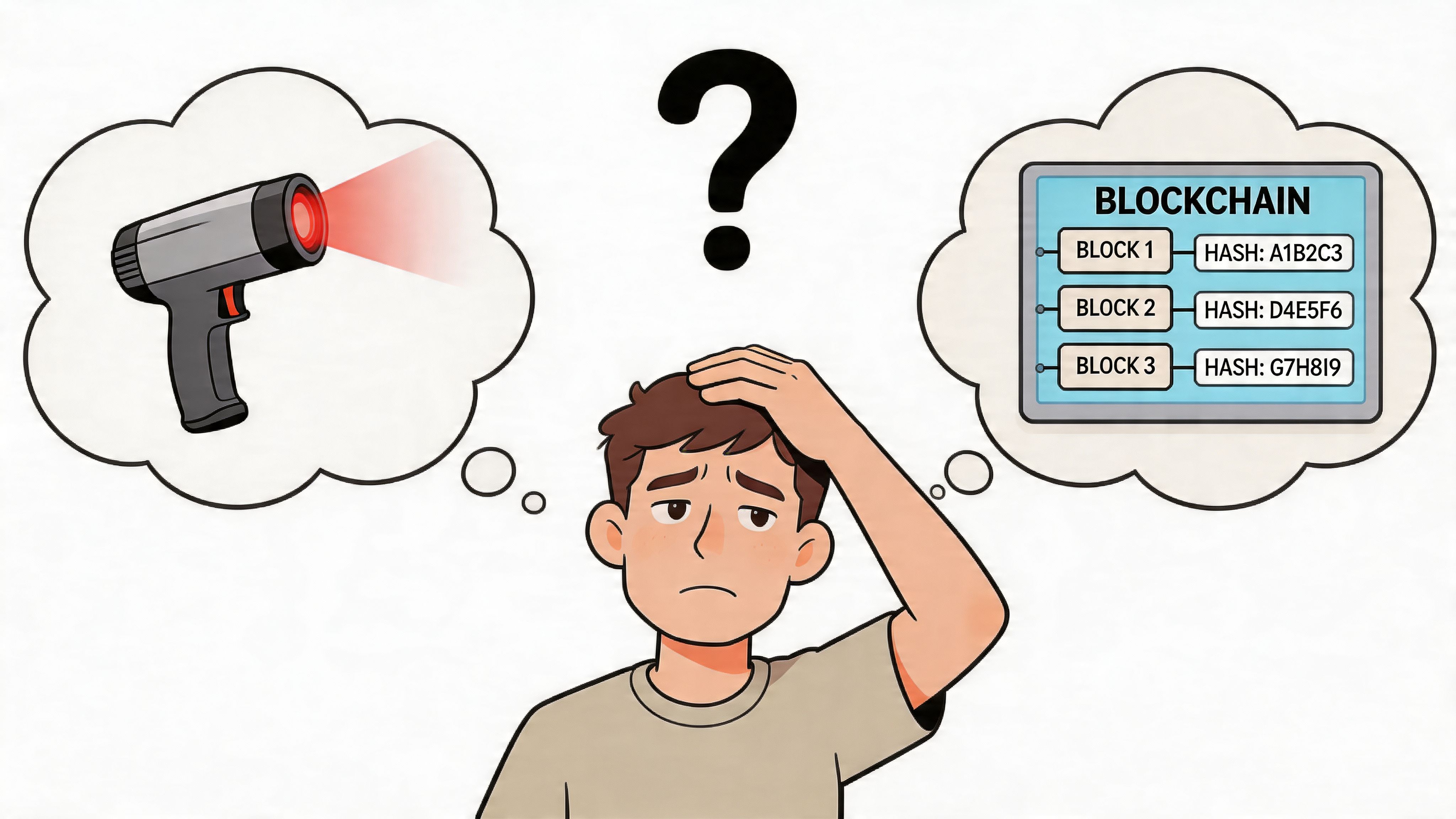
The hardware meaning of L-Tron
L-Tron makes physical scanning devices used in field workflows, especially by law enforcement. One verified example is the L-Tron 4910LR Driver’s License Scanner, which was developed around two decades ago for officers who needed something more reliable than bulky retail-style scanners. It captures data from the PDF417 barcode on driver’s licenses and fills electronic citation and reporting systems to reduce errors and roadside time, according to L-Tron’s 4910LR scanner FAQ.
That’s useful context if you landed here from a hardware search.
The crypto meaning traders actually need
If you’re a trader, though, the practical question isn’t about scanning a driver’s license. It’s about scanning a blockchain.
You’re probably trying to answer questions like these:
- Which wallet bought this token first
- Did a whale move funds before the chart reacted
- Is this transaction real, pending, or failed
- How concentrated is token ownership
- What contract is this wallet interacting with
Those questions point to a blockchain explorer, not a handheld scanner.
Simple rule: If your goal is identity capture in the field, you want L-Tron hardware. If your goal is reading on-chain activity on TRON, you want a blockchain explorer.
That distinction matters because the rest of your workflow changes with it. Hardware scanners are built for patrol and reporting environments. Blockchain explorers are built for transparency, verification, and trading research.
What Is a Tron Blockchain Scanner
A Tron blockchain scanner is really a blockchain explorer. Think of it as a searchable public ledger interface.
The blockchain itself stores transactions, wallet addresses, token transfers, smart contract interactions, and blocks. But in raw form, that data isn’t pleasant to read. An explorer organizes it so humans can search it quickly.
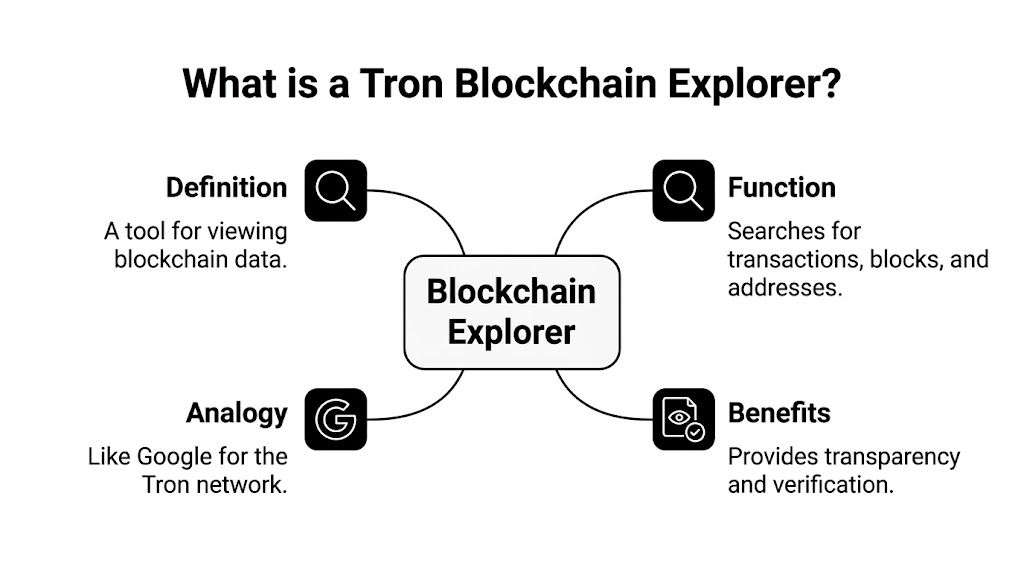
A useful analogy
The easiest way to understand a Tron scanner is to compare it to a search engine.
Google doesn’t create the internet’s pages. It helps you find them. A blockchain explorer doesn’t create transactions. It helps you locate and interpret them.
That’s why traders rely on explorers during research. Without one, the chain is still public, but most of the important context stays hidden behind hashes and contract data.
What you can search for
A good Tron explorer lets you search several core objects:
| Search target | What it tells you | Why traders care |
|---|---|---|
| Wallet address | Balance, activity history, token holdings | Track whales, smart money, and project wallets |
| Transaction hash | Whether a transfer or swap succeeded and where funds moved | Verify entries, exits, and suspicious flows |
| Token contract | Supply-related details, transfer activity, holder distribution | Check concentration risk and token behavior |
| Block | A batch of confirmed transactions | Useful for timing and confirmation context |
Start tracking smart money today
Join thousands of traders using WalletFinder.ai to find profitable wallets and copy their trades.
Start Free Trial →

