.avif&w=3840&q=75)
How Ethereum Proof of Stake Impacts DeFi Trading
Explore how Ethereum Proof of Stake impacts DeFi trading, gas fees, staking rewards, and wallet strategies. Use Wallet Finder.ai to follow top traders.
Ethereum changed gears in September 2022. It switched from Proof of Work to Proof of Stake. This was a huge step for blockchain technology.
Before, miners burned lots of energy solving math puzzles. Now, validator nodes secure the network by staking their own ETH. This cut Ethereum’s carbon footprint by over 99% and laid the path for Ethereum 2.0 upgrades.
But DeFi traders don't see this transition as energy-saving. The reduced transaction gas fees, stable block times, steady staking rewards, and increased possible earnings via smart contracts are other benefits they get.
If you trade on cryptocurrency networks or use staking, this update shapes how you plan trades, manage risk, and spot new profit ideas.
Several wallets can already benefit from the low fees, liquid staking arbitrage, and transfers to those inexpensive Layer 2s. Wallet Finder.ai keeps track of such wallets and tells you what is working and what is not; no guessing required.
Let us further analyze how Ethereum’s Proof of Stake changes DeFi trading and how Wallet Finder.ai helps you follow wallets already benefiting from it.
Proof-of-Stake (PoS) 101 for Traders
Let’s unpack how Ethereum Proof of Stake works and why it matters for traders.
Before the Ethereum Merge, the network functioned based on Proof of Work. Miners threw huge amounts of electricity into block confirmations. That contributed to the energy use of cryptocurrencies and made gas fees unpredictable.
The validator nodes do this job instead in a Proof of Stake system. They lock up ETH, run the validator software, and secure the Ethereum blockchain network. The honest validators are rewarded with validator rewards. The bad ones will either get penalized or ejected from the set of validators.
This switch cut the network’s energy consumption by more than 99%. It’s a big win for the carbon footprint of cryptocurrency networks. It also sets the stage for future sharding, which means more transactions per second.
Block times changed, too. Blocks used to come every 13.3 seconds on average. Now they arrive every 12 seconds with less variance. This helps traders time swaps and arbitrage more accurately.
Gas fees are now going to validators instead of miners. This changes the incentives for MEV (Maximal Extractable Value). Traders need to be vigilant about validator cooperation and smart regarding sandwich attacks.
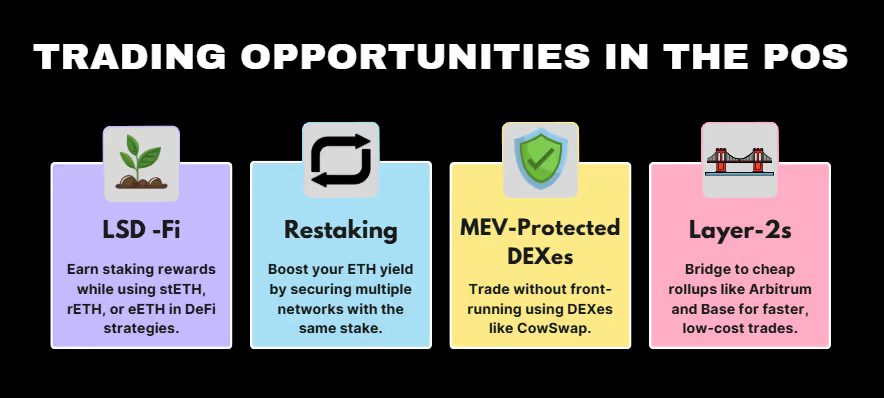
And there are staking rewards on top of that. With Ethereum staking, you earn a return on your ETH while it helps secure the network. Liquid staking provides this flexibility, allowing you to stake your ETH but receive a liquid token like stETH or rETH for trading or using in DeFi. Learning How to Track Whale Transactions in DeFi can help you spot large movements, anticipate market shifts, and optimize your strategies around staking and trading activity.
The Ethereum Foundation keeps improving this system. The Beacon Chain coordinates validator keys and the validator node set, keeping things secure and fair for everyone.
Five Direct Market Effects Traders Now See
Ethereum Proof of Stake didn’t just clean up energy consumption. It changed how DeFi traders plan moves every day. Here are five direct impacts:
1. Lower Gas Costs
Prior to the Ethereum Merge, gas fees would pile beyond 100-500 gwei, on average. Now, the base fee has decreased to below 30 gwei in 2023. This allows for small swaps to make sense once again. Traders may, therefore, try to transfer Ethereum tokens or execute smart contracts without incurring high fees.
2. More Predictable Blocks
Block timing is now a neat 12 seconds. This is due to the validator set and the Beacon Chain. Such minimal variance helps arbitrage bots and liquidity providers since they know the precise timing of the new block, so slippage and bad fills are reduced.
3. New MEV Dynamics
In Proof of Stake, builders and validators replaced miners. MEV (Maximal Extractable Value) now migrates towards validator nodes, and we are experimenting with PBS (Proposer-Builder Separation). This changes how front-running takes place. Traders use MEV protection against potential hidden fees, such as Flashbots and MEV-Share.
4. Staking Yield Adds Options
Validators earn a normal staking reward of around 3% - 5% for locking their ETH. In liquid staking, while traders are making use of stETH or rETH to farm, they are still accruing that yield. They try to catch peg arbitrage by buying stETH below its ETH value, then pocketing the differing amount by which it re-pegs.
5. Better Liquidity
Proof of Stake is followed by pools with increased spreads and deeper liquidity. Such is confirmed by academic research. Big swaps in the market move less. Thus, traders bringing size in DEXes face less slippage cuts and better average fills.
New Trading Opportunities in the PoS Era
Start tracking smart money today
Join thousands of traders using WalletFinder.ai to find profitable wallets and copy their trades.
Start Free Trial →

.avif&w=3840&q=75)