
Spotting and Avoiding DeFi Wallet Scams
Learn how to spot and avoid the most common DeFi wallet scam. Our guide covers red flags, security habits, and how to protect your crypto assets.
A DeFi wallet scam is a digital con designed to trick you into handing over your crypto or giving scammers access to your funds. They use deceptive tactics like fake websites or malicious smart contracts to drain assets directly from your wallet.
What Defines a DeFi Wallet Scam
Think of your DeFi wallet as a digital safe where you hold the only keys. A scammer is the smooth-talking thief who convinces you to either give them a copy of your key or sign a bogus contract that lets them walk in and empty the safe.
Unlike a bank robbery, these heists happen with your unknowing permission. And that’s what makes them so dangerous. We’ve all heard the DeFi mantra, "be your own bank," which is great for control but also means you're fully responsible for security. There's no customer service line to call or a bank manager to reverse a fraudulent transaction. Once the money is gone, it’s gone.
If you're new to the space, our guide on what a DeFi wallet is breaks down the fundamentals of these digital vaults.
The Soaring Financial Stakes
The amount of money being siphoned out of the ecosystem is staggering, and the problem is getting worse. Scammers are leveling up their game, and everyday wallet holders are their primary targets.
In the first half of 2025, a mind-boggling $2.17 billion was stolen from crypto services. To put that in perspective, that’s already more than the total amount stolen in all of 2024. This isn’t just petty theft; it’s organized, sophisticated crime operating at a massive scale.
Individual wallets are increasingly in the crosshairs. Personal wallet hacks now account for 23.35% of all stolen funds so far in 2025, a clear sign that attackers are shifting their focus from big protocols to individual users. You can dig into more of these stats in the 2025 crypto crime mid-year update.
Why Awareness Is Your Best Defense
Here’s the thing: scammers don't just hack code; they hack people. They play on our emotions by creating a sense of urgency, dangling once-in-a-lifetime returns, and tapping into our fear of missing out (FOMO). Their entire strategy is designed to get you to act first and think later.
The best way to protect yourself is to learn their playbook. By understanding the common scams and recognizing the red flags, you can flip the script. You stop being an easy target and become a savvy, vigilant user. This guide will walk you through exactly what you need to know to keep your assets safe.
A Field Guide to Common DeFi Wallet Scams
If you want to protect your digital assets, you first have to get inside the attacker's head. A DeFi wallet scam isn't just one single threat; it’s a whole family of sneaky tactics, each one built to exploit our human tendencies and wiggle through technical gaps. By learning their playbook, you can flip the script—turning a scammer's best weapon (surprise) into your biggest advantage.
The scale of the problem is staggering. DeFi has become a favorite hunting ground for cybercriminals, which says a lot about its rapid growth and, unfortunately, its vulnerabilities.
Decentralized Finance (DeFi) platforms were major targets for crypto-related hacks and scams, with losses totaling nearly $1.5 billion in 2024 alone due to security exploits and fraud. Out of the $2.2 billion stolen from hacks that year, DeFi platforms were the top targets.
A big reason scams work so often comes down to user habits. An alarmingly small 10.8% and 16.3% of DeFi users regularly check and revoke token permissions, leaving their wallets wide open to some of the most common attacks out there. You can get the full rundown on these security challenges in this 2025 crypto crime report.
The core threat is simple: scammers just want to get between you and your money.
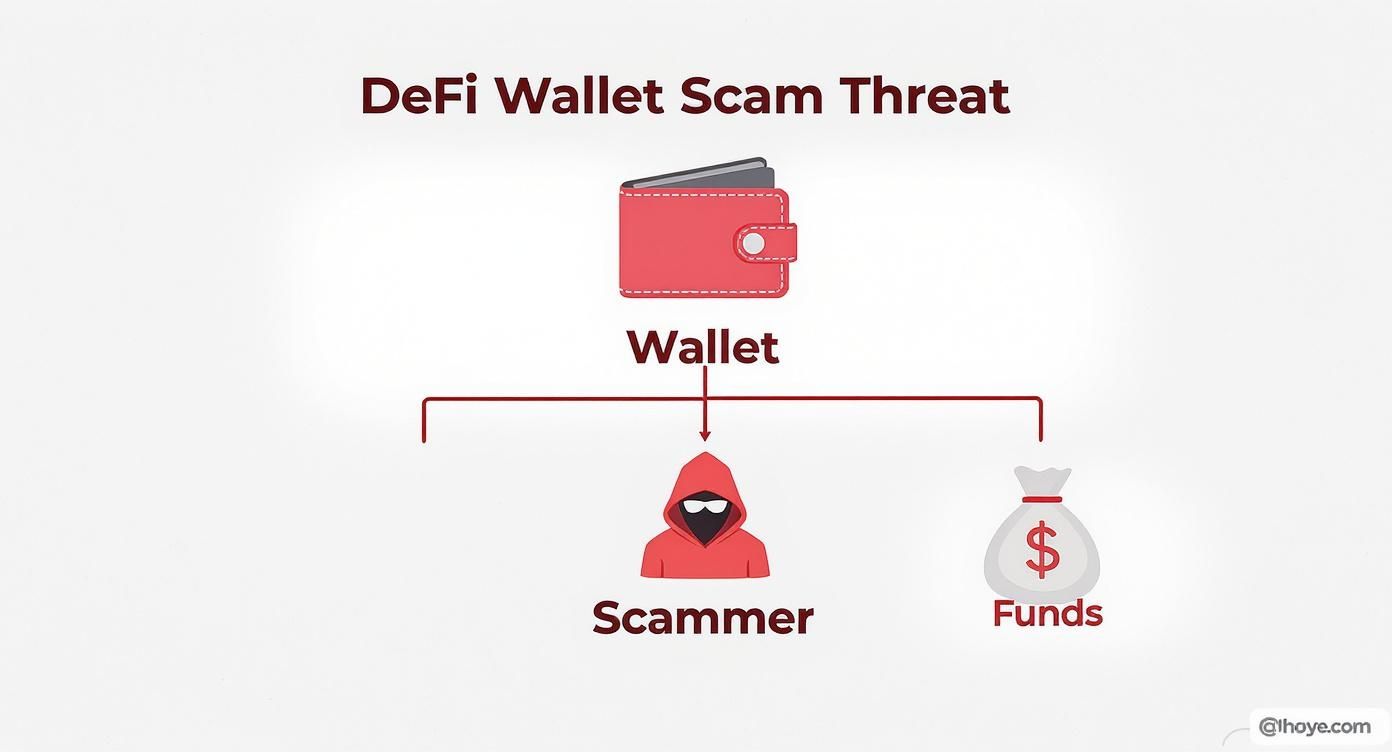
The image above breaks it down. You have your wallet, your funds, and the scammer. The scammer’s only job is to create a backdoor to your assets.
To help you spot these threats in the wild, let's break down the most common types of scams you'll encounter.
DeFi Scam Types at a Glance
This table gives you a quick overview of the most common scams, how they operate, and the key red flag to watch out for.
Start tracking smart money today
Join thousands of traders using WalletFinder.ai to find profitable wallets and copy their trades.
Start Free Trial →

