
Your Ultimate Guide to DeFi Wallet Apps
Discover how to choose the right DeFi wallet app. This guide covers features, security, and strategies to turn your wallet into a powerful trading tool.
A DeFi wallet app is your personal bank vault and all-access pass to the world of decentralized finance. It’s where you truly hold your own assets, connect directly with financial protocols, and make trades without ever needing a middleman. Simply put, it puts you in the driver's seat.
Your Gateway into Decentralized Finance
Think about the regular banking app on your phone. It's useful, sure, but it’s a walled garden. The bank holds your money, sets the rules, and can shut you down at any time. A DeFi wallet app completely flips that idea on its head. It’s less of a simple app and more of a secure, specialized browser that plugs you straight into the open financial system running on blockchains like Ethereum and Solana.
Instead of just being a place to park your cash, a DeFi wallet is an interactive tool. It's the key that unlocks a whole universe of new possibilities, from lending and borrowing to trading and earning interest through decentralized applications (dApps). You're no longer just watching the market from the sidelines; you're an active player with complete ownership.
Why Your Wallet Choice Is Crucial
Picking the right wallet isn't just a minor detail—it's the single most important first step you'll take in DeFi. This isn't about choosing a cool icon for your home screen; it's a decision that impacts your security, functionality, and overall ability to navigate this new financial world.
Your wallet determines which blockchains you can use, how smoothly you can interact with dApps, and how safe your digital assets are from hackers and scammers. A great app makes the experience feel seamless and intuitive, but a bad one can throw up roadblocks and introduce serious security risks.
This decision is the foundation for everything else you do in DeFi, including:
- True Asset Ownership: You hold the private keys. That means only you can access and move your funds. No one else.
- Direct dApp Interaction: Connect effortlessly to decentralized exchanges, liquidity pools, NFT marketplaces, and more.
- Enhanced Security: You’re in charge of your own security protocols instead of trusting a third-party company to do it for you.
The explosive growth of these apps tells the whole story. The crypto wallet market, which is the backbone of DeFi participation, hit a USD 12.20 billion valuation in 2025. It’s projected to rocket to USD 98.57 billion by 2034. This isn't just a niche trend; it shows how vital these wallets are as the main entry point for millions of users. You can dig into more data on this incredible growth at einpresswire.com.
At the end of the day, your DeFi wallet app is more than just a piece of software; it’s your command center for managing your digital wealth. It’s where your journey begins, and choosing the right one is the difference between being a confused spectator and a confident participant. Before we go any further, you can get a more detailed breakdown by reading our guide on what a DeFi wallet is.
Custodial vs Non-Custodial Wallets Explained
When you're ready to jump into DeFi, one of the first decisions you'll make is choosing a wallet app. This choice boils down to a single, critical question: who holds the keys to your crypto?
This isn't just a technical detail; it shapes your entire experience. It's the core difference between a custodial and a non-custodial wallet, and it’s the most important concept to get right from the start.
Think of a custodial wallet as being similar to a bank's safety deposit box. The "bank"—usually a centralized exchange like Coinbase or Binance—holds your assets for you. It's convenient. If you forget your password, they can help you get back into your account. The trade-off is that you're trusting them to keep your funds safe and accessible.
A non-custodial wallet, on the other hand, is like your own personal, high-tech safe. You, and only you, have the combination, which in the crypto world is your "secret recovery phrase" or "private keys." This gives you absolute control over your funds, but it also means you're 100% responsible for keeping that combination safe.
The Trade-Off Between Convenience and Control
You'll often hear the phrase "not your keys, not your crypto" in DeFi circles. It's the movement's unofficial motto, championing the self-ownership that non-custodial wallets offer. With a true DeFi wallet app, you can interact directly with any blockchain protocol without needing permission from a middleman.
Custodial services are often more beginner-friendly. They feel familiar, a lot like the banking and investing apps we're used to, and forgetting a password isn't a disaster. But this convenience comes at a cost. The custodian could freeze your account, get hacked, or even go out of business, putting your assets at risk. This is the main distinction we cover in our guide comparing a crypto exchange vs a wallet.
Non-custodial wallets put you in the driver's seat. No one can stop you from sending a transaction or trying out a new dApp. This freedom is powerful, but it demands a higher level of personal responsibility. If you lose your secret recovery phrase, your funds are gone forever. There is no customer support line to call for a reset.
This chart breaks down the initial steps for getting into DeFi, starting with that all-important decision of picking a wallet.
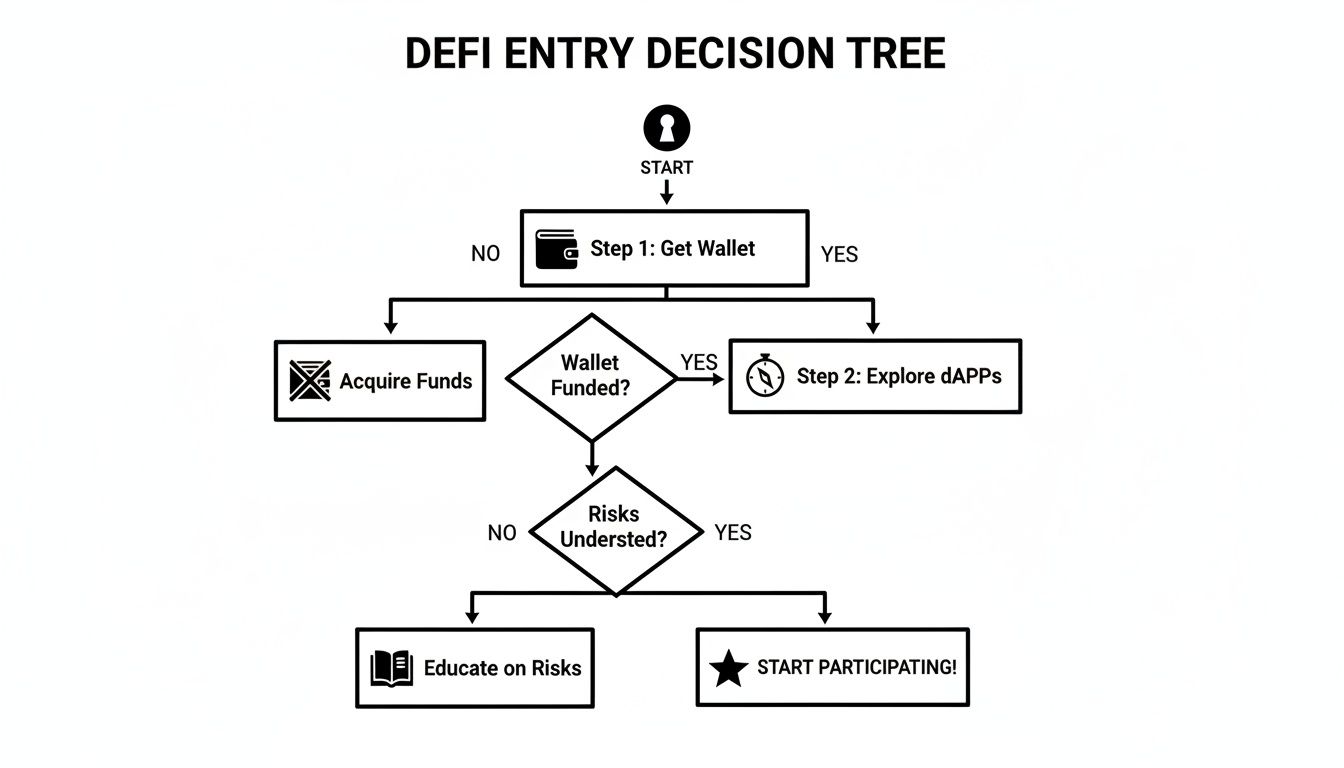
As you can see, getting a wallet is the foundational first step. It’s the key that unlocks the rest of the DeFi world.
Comparing Your Options Side-by-Side
Seeing the differences laid out clearly can help you decide what’s right for you. It all comes down to your comfort level with technology and how much you value the DeFi ethos of complete self-sovereignty.
The collapse of FTX was a brutal lesson for millions. It hammered home the risks of custodial platforms. When the exchange went under, users learned they weren't the true owners of the assets in their accounts—they were just unsecured creditors. This event triggered a massive shift in mindset, pushing a wave of people toward non-custodial wallets where they truly own their crypto.
To make it even clearer, here’s a table breaking down the key differences.
Custodial vs Non-Custodial Wallets at a Glance
| Feature | Custodial Wallet (Like an Exchange) | Non-Custodial Wallet (The True DeFi App) |
|---|---|---|
| Private Key Control | Held by a third party (the exchange or service) | Held exclusively by the user |
| Security Responsibility | You trust the platform's security measures | You are 100% responsible for securing your keys |
| Account Recovery | Usually possible through password resets/customer support | Impossible if you lose your secret recovery phrase |
| Access to DeFi | Limited; may only allow basic swaps or staking | Full, unrestricted access to all dApps and protocols |
| Censorship Risk | High; your account can be frozen or transactions blocked | Very low; you have complete control over your funds |
| Best For | Beginners, simple trading, convenient fiat on-ramps | True DeFi users, long-term holders, full self-sovereignty |
Start tracking smart money today
Join thousands of traders using WalletFinder.ai to find profitable wallets and copy their trades.
Start Free Trial →

