
Data Driven Trading: A Practical Guide for DeFi
Master data driven trading in DeFi. This guide explains the workflow, metrics, and data sources to build winning strategies with tools like Wallet Finder.ai.
You open your terminal, wallet dashboard, and Telegram alerts at the same time. BTC moves, a whale rotates, a memecoin starts trending, and your first instinct is to chase the candle that already ran. That's how most traders leak edge in DeFi. They react to noise, then tell themselves a story about why the trade was “obvious.”
A better process starts with evidence before action. In DeFi, that means treating wallets, token flows, transaction timing, and liquidity behavior as data inputs, not background chatter. The point of data driven trading isn't to sound quantitative. It's to make decisions you can test, repeat, and improve.
Most new traders think the hard part is finding signals. It isn't. The hard part is building a workflow that filters weak signals, defines entry conditions, and keeps you from improvising every time the market gets loud.
What Is Data Driven Trading and Why It Matters
Data driven trading is a rules-based way of making trading decisions from observable evidence instead of mood, bias, or social pressure. In practice, that means you define what matters, measure it, and act only when your conditions are met.
In crypto, the alternative is familiar. You see a token moving, read five bullish posts, notice one wallet bought size, and jump in without context. Then the same wallet distributes into strength, liquidity thins, and you're left managing a trade you never really planned.
That approach feels active, but it isn't systematic. It also tends to punish traders over time. An industry analysis cited by LuxAlgo's overview of quantitative trading says emotional investors can lag by about 4.4% annually, while data-driven platforms can potentially increase returns by as much as 20%.
What changes when you trade from data
A data driven trader doesn't ask, “Do I like this token?” The better question is, “What conditions exist, and have these conditions led to acceptable outcomes before?”
That shift changes everything:
- Entries become conditional: You stop buying because a chart looks exciting and start buying when wallet behavior, liquidity, and timing line up.
- Risk gets defined early: Position size, invalidation, and exit logic are set before the trade, not after stress kicks in.
- Review becomes possible: If a strategy underperforms, you can inspect the rules. If you trade on instinct, there's nothing clean to review.
Practical rule: If you can't describe your setup in a few objective conditions, you don't have a strategy yet. You have a hunch.
Why this matters more in DeFi
DeFi is unusually noisy. Narratives move fast, token lifecycles compress, and wallet-level behavior often matters more than polished public messaging. That makes systematic observation valuable.
The edge usually doesn't come from predicting everything. It comes from narrowing your field of play. You decide which wallets matter, which chains matter, what “accumulation” means, what distribution looks like, and when you'll ignore a signal. That's the difference between participating in the market and studying it closely enough to trade it with discipline.
Understanding Your Data Sources and Signals
If strategy is the engine, data is the fuel. Bad fuel gives you noisy signals and false confidence. Good fuel gives you a cleaner read on who is doing what, where, and with what conviction.
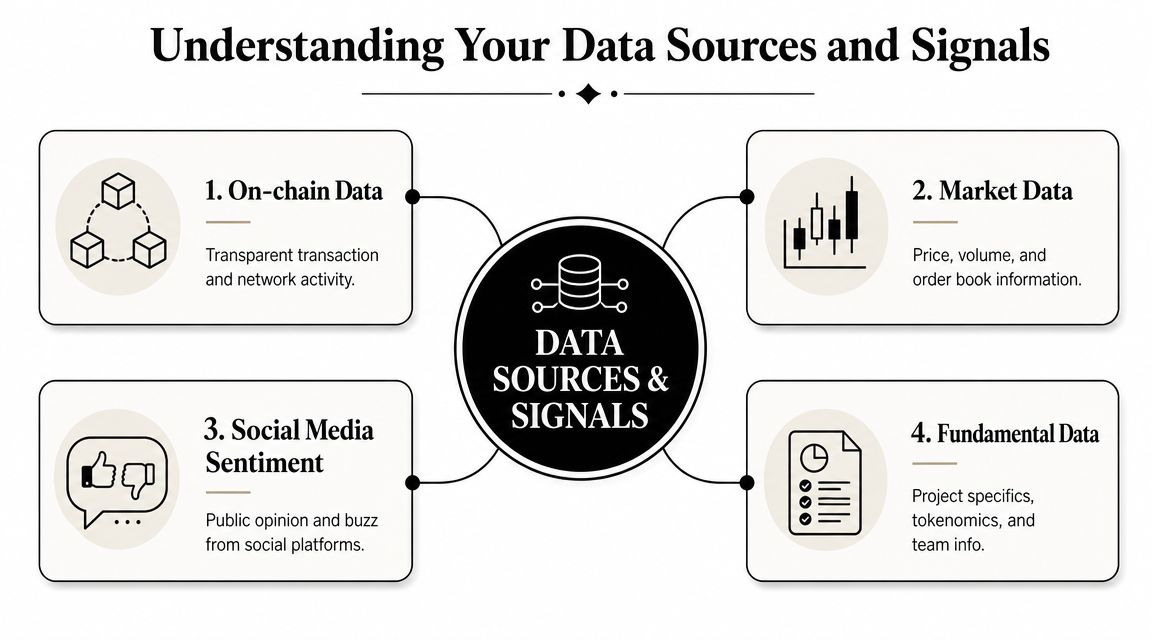
In DeFi, I treat data in four buckets. Each bucket tells you something different, and none should be used in isolation.
Start tracking smart money today
Join thousands of traders using WalletFinder.ai to find profitable wallets and copy their trades.
Start Free Trial →

