.avif&w=3840&q=75)
Track What Crypto Whales Are Buying | Crypto Whale Tracking
How to track what crypto whales are buying? Learn crypto whale tracking to spot profitable trades, analyze movements, and gain useful market insights.
The cryptocurrency market moves fast, with big players known as crypto whales who can shake things up in seconds. These crypto whale individuals hold huge amounts of crypto assets, so when they buy or sell, the prices can fluctuate, with no warning at all.
Keeping track of these whale transactions gives traders a competitive advantage and helps them stay updated on valuable insights. By monitoring crypto whale activities, you can spot trends early, anticipate price shifts, and make smarter trading decisions.
But how do you do it?
With proper crypto whale tracker tools like Wallet Finder.ai, you can view wallet balances and transaction history and receive real-time alerts. Instead of searching blockchain addresses manually, Wallet Finder.ai gives you an in-depth wallet analysis and clear insight into whale behavior so that you never miss any key trading opportunities.
This guide will provide information on how to track crypto whale wallets using Wallet Finder.ai. It will also delve into the most critical data points, including wallet balances, trading activities, and transaction histories.
By the time you finish reading, you'll have all it takes to track crypto whale transactions and use their moves to discover potential opportunities.
Let's start by understanding the importance of crypto whale tracking.
Why Crypto Whale Tracking Matters?
Big trades don’t happen by accident. Influential players shape the market, and those who track them gain an edge over those who don’t. Here are some key reasons why tracking cryptocurrency whales is important:
● Whales can move markets - a big buy can send the price flying, while a massive sell-off creates panic.
● Following the whales' wallets shows trends - if you see where the smart money is going, you can make better decisions.
● You can foresee market manias - if whales are transferring to decentralized exchanges, prepare for a sell-off. If they are accumulating, then that indicates confidence in the trading strategy.
Not tracking whales means not getting those valuable insights, which are instrumental in trading better.
Key Data Points to Track
Tracking crypto whale wallets is not only a matter of identifying those with the most Bitcoin and Ethereum wallets. The key value lies in the examination of their trading behavior and the identification of promising cryptocurrency investments with the help of credible wallet trackers.
Below are the parameters one should focus on:
1. Wallet Balances
Cryptocurrency whales, often with massive amounts of crypto assets under their control, usually determine market fluctuations by where they store their funds.
For example, if a large wallet contains BTC, ETH, or altcoins without transferring, it might mean long-term confidence. A shorter-term view could be suggested if the coins are moved quickly to decentralized exchanges, potentially indicating an imminent sell-off.
With Wallet Finder.ai, you can monitor these wallet balances in real time. By filtering through wallet addresses, you can identify whales accumulating or offloading tokens across different blockchain networks. To put these insights into action, our Copy Trading in Crypto: A Comprehensive Guide shows how to follow successful traders and replicate their strategies effectively.
2. Transaction History
Every whale transaction leaves a trail, and following deposits and withdrawals can reveal a whale's intentions.
If a whale transfers Bitcoin, Ethereum, or altcoins to an exchange in hefty amounts, it is most probably to sell off, and this can lead to a market shift. If an amount is withdrawn into a private wallet, it may symbolically mean holding long and confidence in the token's value.
With Wallet Finder.ai, there's no need for you to dig through blockchain explorers anymore. It logs every trade and transfer made via major exchanges and presents it in a clean transaction history. You can also:
● Uses timescales to filter transactions (1 hour, 1 day, 1 week, 1 month, etc.) to analyze short or long-term trends.
● Identify an outflow of funds, whether to an exchange, liquidity pool, or private wallet.
● See general trading over time to determine whether a whale is accumulating or offloading assets most of the time.
● Export transaction data for deeper analysis or integration with other cryptocurrency analytics platforms.
Through Wallet Finder.ai's transaction history functions, you gain insights into how crypto whales operate, giving you an edge in trading.
3. Timing of Buys and Sells
Whales do not buy and sell arbitrarily. They follow specific trading strategies that many retail traders overlook. Some will constantly wait for price dips to buy, while others will wait for high prices before disposing of funds.
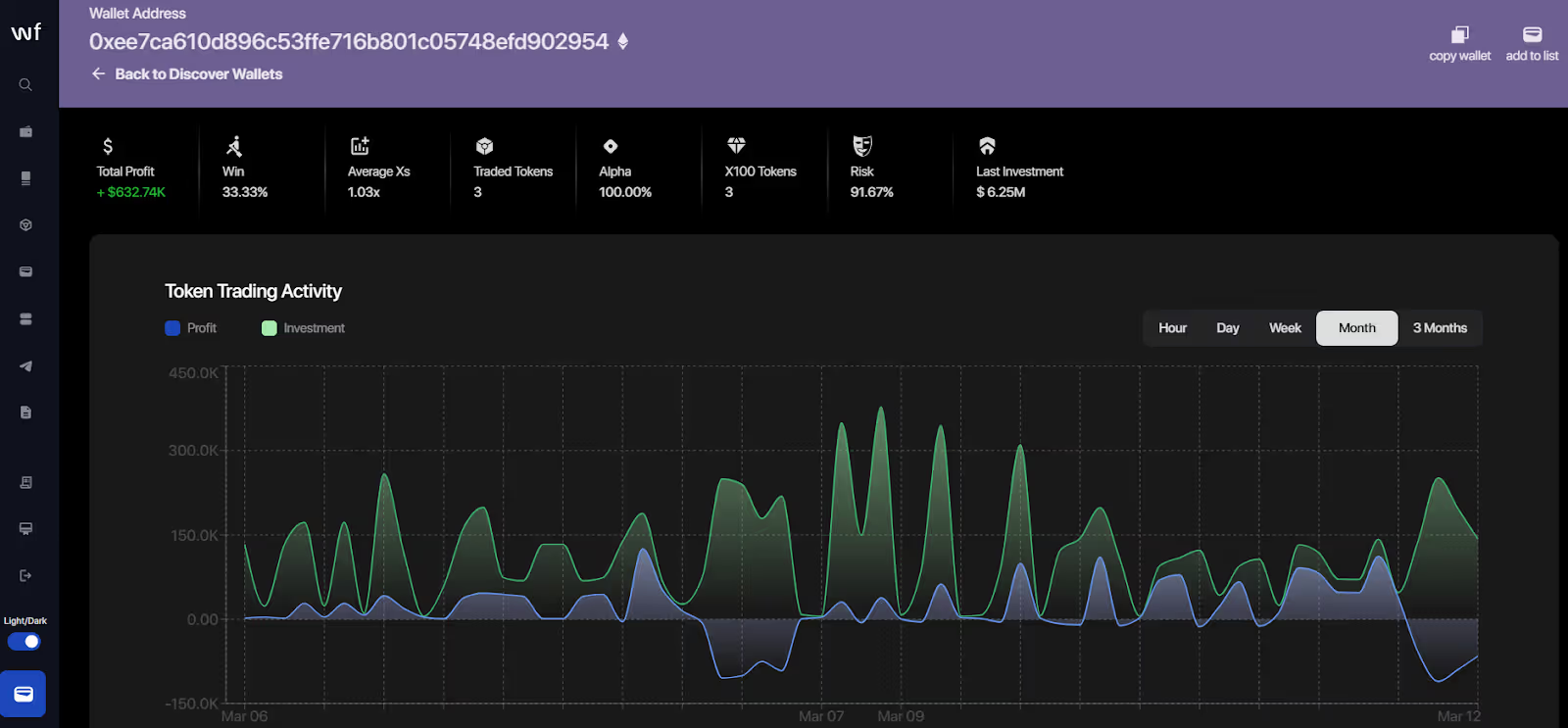
This historical performance graph from Wallet Finder.ai makes it easy to track whale activity by helping you pinpoint entry and exit points. The insight allows traders to synchronize their investment strategies with a successful trader instead of following a trailing edge.
4. DeFi Activity
Many whales are actively taking up DeFi protocols, such as yield farming, staking, and liquidity provision, and not just trading. Thus, it helps to watch where they deploy capital in decentralized exchanges.
The DeFi trading strategies that you would like to know more about can all be found in this in-depth guide on DeFi tokens and strategies. Wallet Finder.ai shows you the movement of the whales within the DeFi space, giving you relevant insights into investment opportunities.
5. NFT and Other Assets
Some crypto whales diversify beyond standard crypto assets. They invest in NFTs and cross-chain projects, expanding their portfolios.
With Wallet Finder.ai’s unified wallet overview, these holdings can easily be tracked among alternative avenues, tracing token transfers and understanding how these whales tie their investments across different markets.
All these aspects of data come into play in understanding whale behavior and predicting what would occur next in the market.
Step-by-Step Guide to Tracking Whales
If you want to stay ahead in crypto trading, tracking crypto whale wallets is one of the smartest moves you can make. But how exactly do you do that?
Here is a step-by-step guide on how to spot crypto whale transactions, trading activities, and potential market trends ahead of the rest of the market using Wallet Finder.ai.
Step 1: Identify Potential Whales
Start tracking smart money today
Join thousands of traders using WalletFinder.ai to find profitable wallets and copy their trades.
Start Free Trial →

.avif&w=3840&q=75)