
A Guide to Crypto Wallet Development
Build a secure and scalable wallet with this crypto wallet development guide. Learn architecture, security, and multi-chain support from industry experts.
Building a crypto wallet is more than just a technical exercise; it’s about creating a user's core gateway to the Web3 world. Before you even think about writing a single line of code, you need to make some critical decisions about security, custody, and features that will define your entire project.
Choosing Your Crypto Wallet's Foundation
The choices you make right now are everything. They will dictate your wallet's security model, shape the user experience, and even determine your legal and regulatory responsibilities. Get this wrong, and you'll be building on a shaky foundation.
The opportunity here is massive. The global crypto wallet market was valued anywhere from $12.20 to $15.54 billion in 2023. Forecasts predict it could explode to over $100 billion by 2033, growing at a compound annual rate of around 25%. This isn't just growth; it's a signal that there's huge demand for well-built, user-focused wallets.
The First Major Decision: Custody
So, where do you start? The first and most fundamental question to answer is: who holds the keys? Your answer splits the development path into two completely different directions.
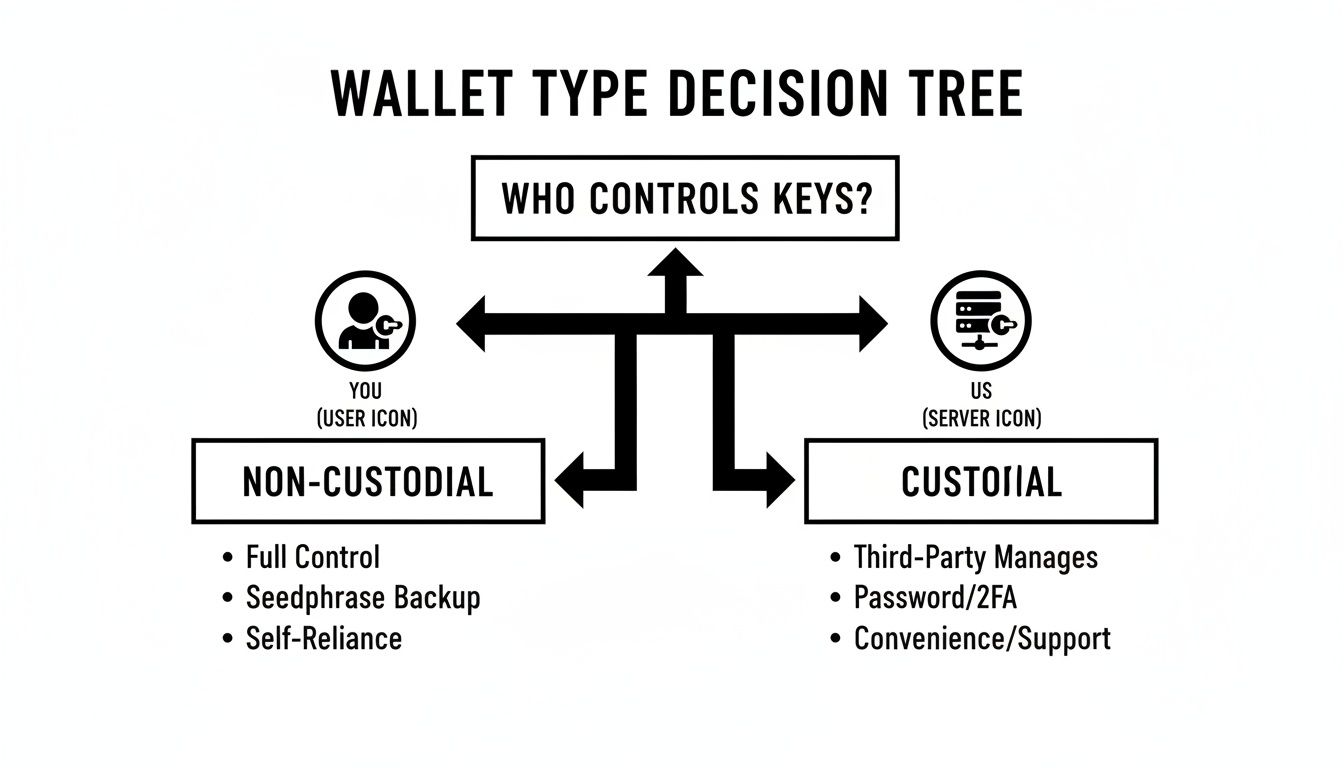
This decision tree nails the core difference. With a non-custodial wallet, you empower the user. With a custodial one, you take on that responsibility yourself.
- Custodial Wallets: In this model, you manage the private keys for your users, much like a traditional bank holds money. Users get a simple, familiar experience—no seed phrases to lose—but they have to place immense trust in you to keep their assets safe. For your team, this means heavy regulatory burdens and a massive security overhead.
- Non-Custodial Wallets: This is the "your keys, your crypto" approach. The user has complete and total control over their private keys. This model truly embraces the decentralization ethos of Web3, giving users self-sovereignty. As a developer, this shifts the direct burden of securing funds, but it means you must create incredibly intuitive and robust systems for key management and recovery.
Key Takeaway: Choosing a custody model is a philosophical decision, not just a technical one. Custodial wallets offer convenience by hiding complexity. Non-custodial wallets offer freedom and control. Your target audience's crypto-savviness and what they value most should be your guide.
Beyond Basic Wallets: The Rise of Smart Accounts
The wallet game has evolved far beyond that initial custody choice. The first generation of wallets, what we call Externally Owned Accounts (EOAs), are essentially just a simple pair of public and private keys. They're controlled directly by that one private key and remain the most common wallet type you see today.
But a new, far more powerful paradigm is taking over: Smart Contract Wallets.
Also known as "smart accounts," these are actually smart contracts on the blockchain that function as a wallet. They aren't tied to a single private key. Instead, they're governed by programmable code. This simple shift unlocks a whole new world of features that are completely impossible for a standard EOA. You can dive deeper into the nuts and bolts of these next-gen wallets in our comprehensive guide on Web3 wallet architecture.
Comparing Core Wallet Architectures
To make this choice clearer, we need to compare these architectures side-by-side. This table breaks down the fundamental differences between Custodial, Non-Custodial (EOA), and Smart Contract wallets, helping you map out your development path.
| Feature | Custodial Wallet | Non-Custodial (EOA) Wallet | Smart Contract Wallet |
|---|---|---|---|
| Key Control | Service Provider | User | Programmable (User-initiated) |
| Recovery Method | Password Reset | Seed Phrase | Social Recovery, Guardians |
| Security | Centralized server security | User's responsibility | On-chain logic, multisig |
| User Experience | Familiar (Web2-like) | Requires user education | Can be highly intuitive |
| Flexibility | Limited to platform features | Limited by protocol | Highly programmable, extensible |
Start tracking smart money today
Join thousands of traders using WalletFinder.ai to find profitable wallets and copy their trades.
Start Free Trial →

