
Crypto Wallet Address Checker Guide
Master the crypto wallet address checker. Learn to validate addresses, track smart money, and analyze on-chain data with this practical guide for traders.
A crypto wallet address checker is more than a simple validation tool; it's your first line of defense against costly mistakes and a powerful lens for uncovering a wallet's entire on-chain history. Think of it as an essential security step before sending funds and a strategic tool for analyzing a wallet's performance before you copy its trades.
Why You Should Check Every Crypto Wallet Address
A crypto address is a public ledger—a transparent window into a trader's every move and a deep well of alpha if you know how to read it. Using a crypto wallet address checker should be a non-negotiable step for any serious trader, bridging the gap from basic security to advanced on-chain intelligence.
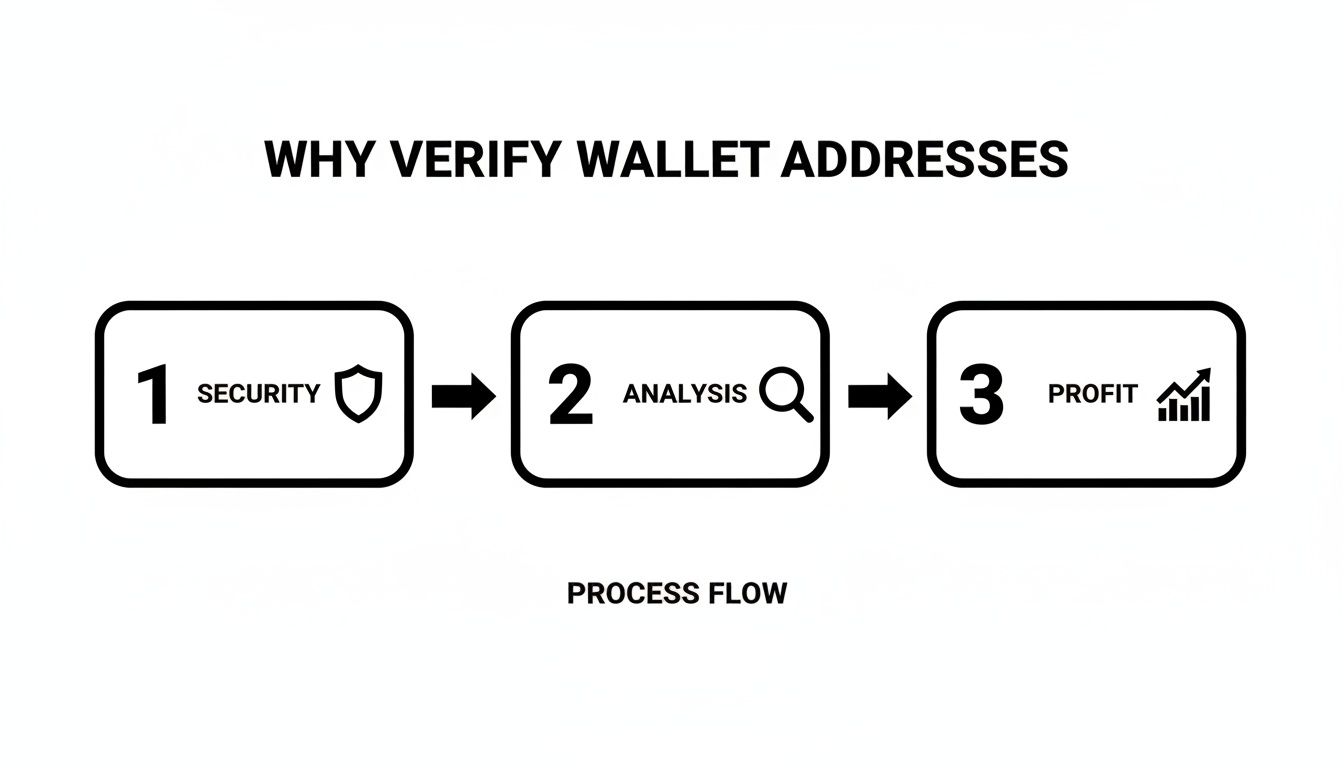
This practice is crucial for two key reasons: defense and offense.
- Defense: Simple address verification stops you from sending assets to the wrong address, a common mistake that results in the permanent loss of funds. It also helps you avoid known scam addresses flagged by the community.
- Offense: By digging into an address, you can identify patterns that signal a profitable trader, helping you discover "smart money."
The explosive growth in crypto only highlights the urgent need for tools like Wallet Finder.ai to track and analyze these addresses effectively. The global crypto wallet market was valued at a staggering USD 12.20 billion in 2025 and is projected to hit USD 98.57 billion by 2034. That's a compound annual growth rate (CAGR) of 26.7%. This boom is largely fueled by security concerns pushing users toward cold wallets, which are set to grow at an even higher CAGR of 28.3%.
For DeFi traders, this translates to billions of dollars in fresh on-chain activity to sift through. You can read more about this explosive wallet market growth on Fortune Business Insights.
The chart below from Fortune Business Insights really puts this rapid market expansion into perspective.
This data makes one thing crystal clear: as more capital flows into self-custody wallets, the volume of trackable on-chain data is multiplying. This creates an absolutely immense opportunity for those who know how to analyze it.
The most successful on-chain analysts don't just react to market news; they anticipate it by monitoring the wallets that consistently make the right moves. Checking an address is your entry point into this world of predictive analysis.
By using an advanced crypto wallet address checker, you're not just looking at raw blockchain data—you're turning it into actionable trading signals. You can pinpoint wallets with exceptional PnL, then dive deep into their history to understand how they did it. This process is the foundation for anyone serious about profiting from DeFi, from new investors to seasoned pros.
Key Functions of a Crypto Wallet Address Checker
This table outlines the primary uses of a wallet checker, from essential security verification to advanced strategic analysis.
FunctionPrimary GoalIdeal UserExample ToolAddress ValidationConfirm the address format is correct for a specific blockchain to avoid errors.Anyone sending cryptoBlockchain explorers like EtherscanScam DetectionCheck if an address is flagged for illicit activity or known scams.All users, especially new onesChainalysisPortfolio TrackingView current token holdings, net worth, and historical performance.Investors and portfolio managersDeBank"Smart Money" DiscoveryIdentify and analyze the strategies of highly profitable traders.Advanced traders and on-chain analystsWallet Finder.aiDue DiligenceInvestigate the on-chain footprint of a project's team or early investors.Token researchers and VCsArkham Intelligence
As you can see, a wallet checker is far more than a one-trick pony. Mastering its functions is what separates casual participants from strategic, data-driven traders.
Your First Check Using a Block Explorer
Your first stop for any wallet investigation is the most fundamental tool in crypto: a block explorer. Think of explorers like Etherscan (for Ethereum), Solscan (for Solana), or Basescan (for Base) as the public ledger for the blockchain. They’re the raw, unfiltered source of truth for every transaction, making them the perfect place to start.
Before you send funds or copy a trade, a quick check on a block explorer is your first line of defense. It's a non-negotiable step that can save you from costly blunders, like sending crypto to the wrong address and losing it forever.
This simple verification is the foundation for everything that follows—security, deeper analysis, and ultimately, finding profitable opportunities.
Start tracking smart money today
Join thousands of traders using WalletFinder.ai to find profitable wallets and copy their trades.
Start Free Trial →

