
Master Cost Benefit Analysis for DeFi Decisions
Master cost benefit analysis for smarter DeFi decisions. Our guide provides a simple framework, calculations, & examples for evaluating trades & tools.
Most DeFi mistakes don't come from bad token picks. They come from bad decision framing.
A trader sees a wallet ape into a new pair, rushes in, and only later realizes the trade needed more than price appreciation to work. Gas ate part of the upside. Slippage moved the entry. The capital sat idle while a better setup passed by. Then the trader calls the result “bad luck” when it was really a missing cost benefit analysis.
That sounds corporate, but the tool fits DeFi better than generally understood. In a market built on speed, fees, volatility, and uneven information, you need a way to turn impulse into a decision process. Not a prediction engine. A filter.
What Is Cost Benefit Analysis for Traders
For traders, cost benefit analysis is a disciplined way to ask one question before committing capital or time: is this decision worth it once every meaningful cost and benefit is on the table?
That applies to more than investing in a protocol. It applies to a single swap, joining a vault, paying for a wallet tracking tool, copying a smart wallet, or deciding whether to wait for a cleaner entry. In all of those cases, the obvious number, like token upside, is only one part of the picture.
The trader version of CBA
Traditional cost benefit analysis converts both costs and benefits into the same monetary frame so they can be compared directly. In fast-moving digital sectors like DeFi, the challenge is that many important drivers are opportunity costs, delayed outcomes, and hard-to-monetize benefits as noted in this discussion of CBA in changing digital settings.
That matters because DeFi decisions often look simple when they're not.
A memecoin trade might have:
- Direct costs like gas, bridge fees, slippage, and taxes
- Indirect costs like time spent monitoring the position
- Opportunity costs like missing another setup while capital is tied up
- Hard-to-price benefits like faster execution from having alerts in place
If you already use a basic trade calculator, this pairs well with a more focused break-even analysis for crypto trades. Break-even tells you the minimum move you need. Cost benefit analysis tells you whether the whole idea deserves your capital in the first place.
Practical rule: If your thesis only works when you ignore two or three messy costs, it probably isn't a strong trade.
Why traders need structure
DeFi punishes vague thinking. A setup can be directionally right and still be a bad decision because the friction was too high. That's why cost benefit analysis is useful. It forces you to write down the ugly parts before the market does it for you.
For a trader, CBA isn't about making every move slow. It's about making your fast moves cleaner.
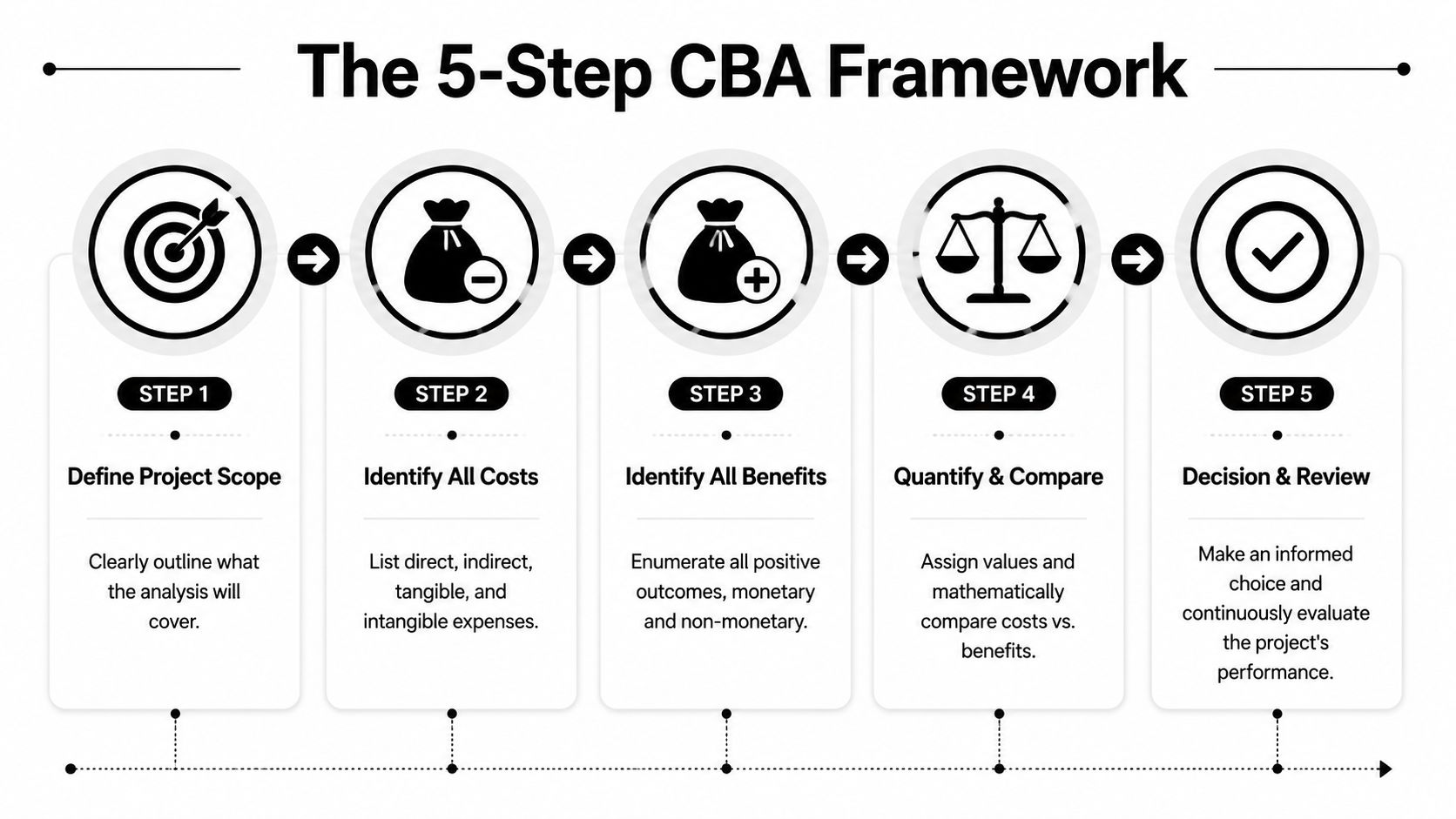
A Repeatable Cost Benefit Analysis Framework
The formal workflow for cost benefit analysis typically follows five steps: define scope, identify outcomes, quantify costs and benefits, choose a discount rate to calculate present values, and compute a decision metric like the benefit-cost ratio, as summarized in this UPenn overview of formal CBA workflow.
Start tracking smart money today
Join thousands of traders using WalletFinder.ai to find profitable wallets and copy their trades.
Start Free Trial →

