
How to Check On Chain Data & Win Trades (2026)
Learn how to check on chain data to analyze wallets, spot smart money, and find winning crypto trades. A complete guide for traders on any blockchain.
When you hear traders talk about "checking on-chain," they're talking about digging into the public, permanent record of transactions on a blockchain. This is where you can verify trades, see how different wallets are performing, and—most importantly—watch what major players like whales and institutions are up to in real time.
This radical transparency is a core part of blockchains like Ethereum, Solana, and Base. It's an open book, and learning to read it is a huge advantage.
Why On-Chain Data Is Your Trading Superpower
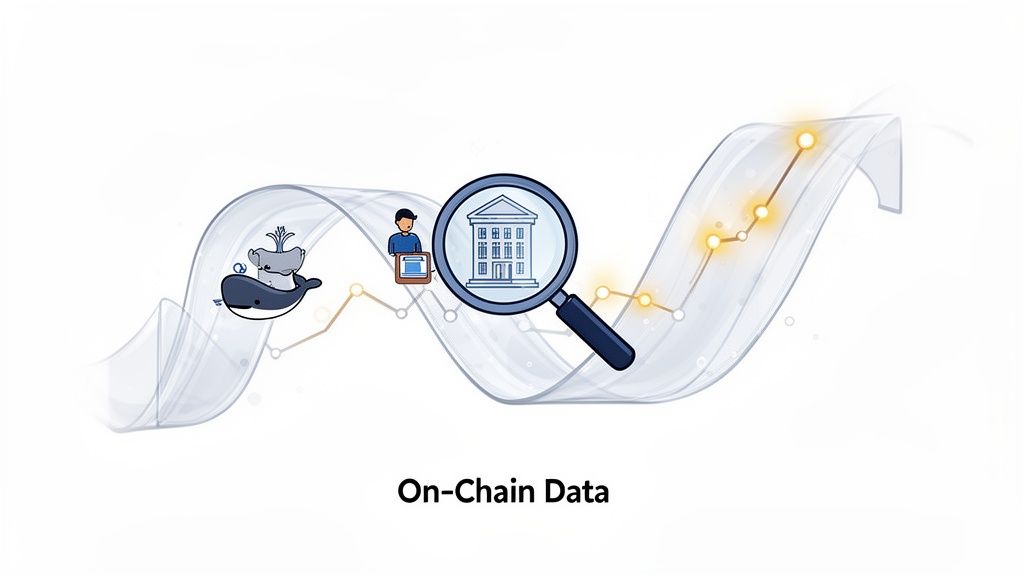
Imagine having a direct line of sight into the market's engine room, seeing every big move as it happens, not after it hits the news. That’s the edge on-chain data gives you. In traditional finance, most actions are buried in private ledgers. In crypto, every transaction is out there for anyone to see.
This isn't just another indicator on a chart. It's a transparent window into the live actions of the most influential traders. By learning how to analyze this raw data, you can turn a firehose of information into real, actionable intelligence.
Turning Data into an Edge
Getting good at checking on-chain activity means you can read market sentiment and spot trends before they become obvious. For example, seeing a cluster of large, historically profitable wallets suddenly start accumulating a new token is a massive signal—often before any official announcements. Likewise, watching funds flow out of an asset can be the early warning you need.
This is an edge that just doesn't exist in traditional markets. With on-chain data, you get to see:
- Whale Movements: Large transactions that can signal where the market is headed next.
- Institutional Adoption: See exactly when and where big funds are putting their money.
- Smart Money Strategies: Pinpoint the entry and exit points of traders who are consistently in profit.
The whole field of on-chain analytics has become a game-changer. Pioneers like James Check have been leading the charge since 2019, demonstrating the power of this data at Glassnode and through frameworks like Cointime Economics. In fact, backtests have shown that certain on-chain profit/loss indicators have a 75% correlation with short-term price moves.
Without these insights, most investors are just reacting to price. Platforms like Wallet Finder.ai are designed to bridge that exact gap, making this complex data easy to understand. You can learn more about these core concepts on Check's official site.
Key Takeaway: On-chain analysis shifts you from a reactive investor who just follows price charts to a proactive one who understands the forces driving those prices.
On-Chain Vs Traditional Financial Analysis
The gap between analyzing public blockchains and old-school markets is massive. On-chain data gives you a level of detail and real-time access that is simply unheard of in legacy finance.
This table breaks down the key differences.
| Metric | On-Chain Analysis | Traditional Financial Analysis |
|---|---|---|
| Data Source | Public blockchain ledger | Private company reports, news |
| Transparency | Fully transparent and immutable | Opaque, often with reporting lags |
| Timeliness | Real-time transaction data | Quarterly or annual reports |
| Granularity | Individual wallet and transaction level | Aggregated market and company data |
Start tracking smart money today
Join thousands of traders using WalletFinder.ai to find profitable wallets and copy their trades.
Start Free Trial →

