
Bot Crypto Price: Verify Market Bots & Oracle Feeds
Understand bot crypto price in 2026. Explore how price bots & oracle feeds impact markets. Use Wallet Finder.ai to verify bot-driven price action now.
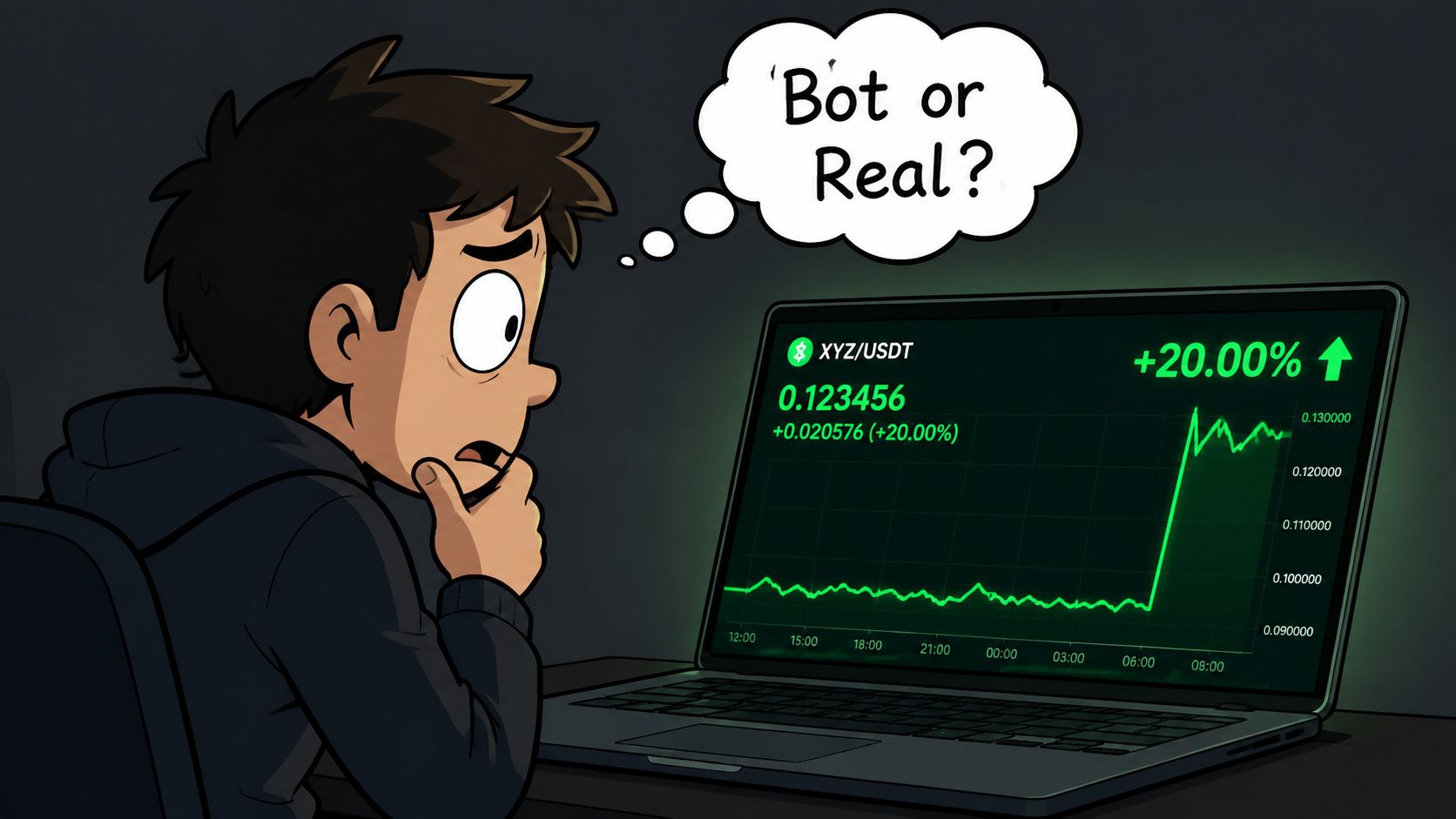
You open a chart, see a low-cap token jump hard, and your first reaction isn't excitement. It's suspicion. Was that real buying, a bot-driven breakout, a wash-traded spike, or just one wallet shoving price around in a thin pool?
That's the problem with bot crypto price. Most traders can get the number fast. Fewer can explain what produced it, whether it's trustworthy, and whether it's still tradable by the time they react. In DeFi, that gap matters more than speed alone.
The Real Question Behind Bot Crypto Price
When traders search for bot crypto price, they usually mean one of three very different things. If you don't separate them, you end up using the wrong tool for the job.
The token price itself
Sometimes the phrase refers to the market price of a bot-related token. A current example is MasterBOT. As of early June 2026, MasterBOT ($BOT) was trading at approximately $0.0002034, down 7.65% over 24 hours, with a market capitalization of $203,364.00 and $16,615.84 in 24-hour trading volume, based on live MasterBOT market data from Phemex.
That tells you what the market is printing. It doesn't tell you whether the move is healthy.
The price feed used by a trading bot
Other times, bot crypto price means the price an automated system consumes to trigger entries, exits, and rebalancing. In that case, the key question isn't “what's the coin worth?” It's “what data is this bot trusting?”
A bot can only act on the inputs it receives. If the feed is delayed, noisy, manipulated, or too narrow, the strategy may still execute perfectly and lose anyway.
The alert bot sending notifications
The third meaning is the simplest. This is the Telegram, Discord, exchange, or custom alert bot that pings you when a token crosses a threshold. Useful, yes. Sufficient, no.
Practical rule: A price alert answers what moved. A trading decision requires who moved it, where, and with what conviction.
That's why traders who want the true market story need more than a ticker or push notification. They need context around liquidity, wallet behavior, and source quality. If you want a deeper framework for that distinction, this guide on true market price in crypto is worth reviewing.
Decoding Crypto Price Bots and Data Feeds
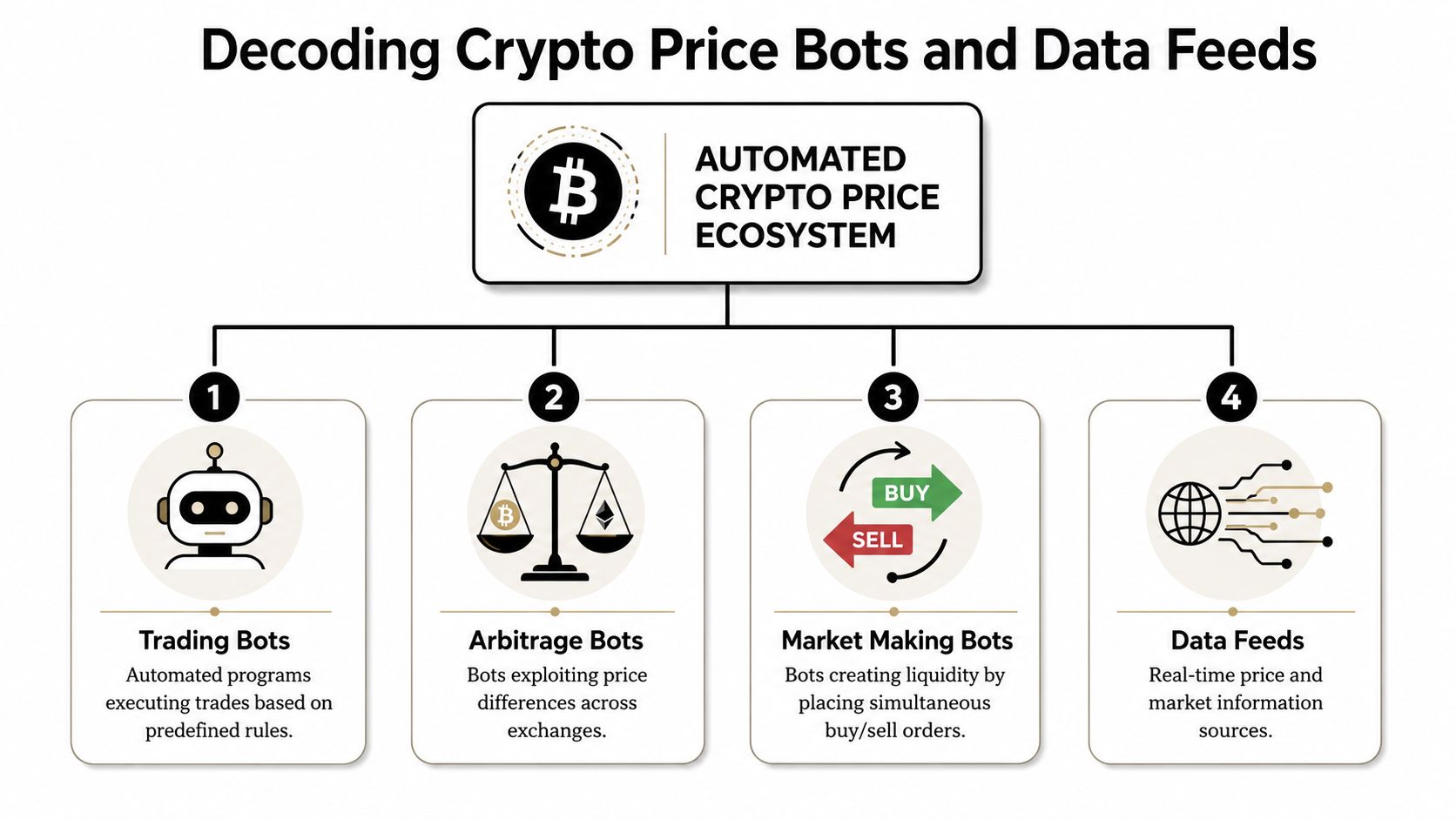
The automated side of crypto pricing has several moving parts, but traders usually blur them together. That creates bad assumptions. A trading bot isn't an alert bot, and neither is an oracle feed.
What each tool actually does
A trading bot watches market inputs and places orders according to rules. Those rules can be simple, like buying after a moving-average crossover, or more involved, like coordinating exits across several venues.
An alert bot doesn't trade. It watches conditions and reports them to a human. That can still be useful if you want manual control, but the bot stops at notification.
An oracle feed serves a different layer entirely. It moves price information into on-chain environments so smart contracts can reference external markets. Traders often ignore oracles until a feed goes stale, gets exploited, or diverges from spot conditions.
Trading bots vs alert bots vs oracle feeds
| Tool Type | Primary Function | Typical User | Data Interaction |
|---|---|---|---|
| Trading Bots | Execute trades from predefined logic | Active traders, quant desks, strategy builders | Consume market data and act on it |
| Alert Bots | Notify users about price or market conditions | Manual traders, community members, researchers | Consume market data and send alerts |
| Oracle Feeds | Deliver price data to smart contracts | DeFi protocols, on-chain developers, advanced traders | Aggregate or relay data for on-chain use |
Start tracking smart money today
Join thousands of traders using WalletFinder.ai to find profitable wallets and copy their trades.
Start Free Trial →

