
BlackRock Liquidity Funds: A Trader's Guide
A deep dive into BlackRock liquidity funds. Understand their yield, risk, and how DeFi traders can use on-chain signals to track smart money flows from TradFi.
If you're sitting in stables, clipping low-risk yield, and waiting for crypto to pick a direction, you're already playing the same game that institutional cash desks play. The difference is scale, structure, and information quality.
BlackRock liquidity funds matter because they show where serious capital hides when risk appetite drops. For a DeFi trader, that makes them more than a TradFi curiosity. They’re a benchmark for what conservative capital accepts, a template for risk management, and a signal source when money rotates out of risk assets.
What Are BlackRock Liquidity Funds
A common crypto setup looks like this: BTC is chopping, perp funding is noisy, and sitting in stables at 4% to 5% suddenly feels competitive again. That is the same capital-allocation problem institutional treasury desks solve with BlackRock liquidity funds. They are built for cash that needs to stay available, hold its value, and earn short-term rate income without reaching for risk.
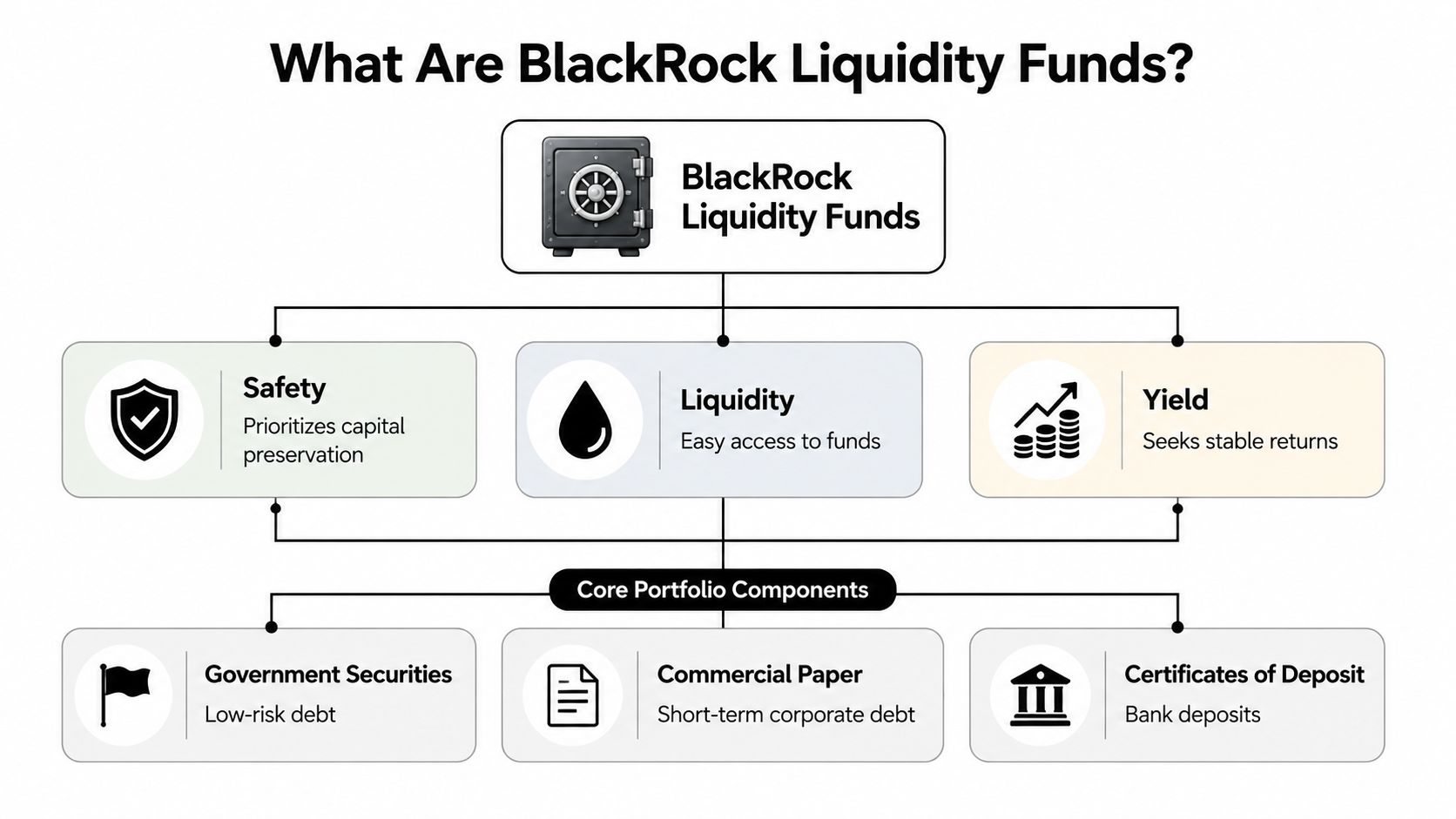
BlackRock liquidity funds are cash-management products that invest in very short-dated, high-quality instruments. The mandate is narrow by design: preserve principal, meet redemptions, and pass through money-market yield. For DeFi traders, the practical read is simple. These funds sit near the TradFi risk-free baseline that on-chain stablecoin products compete against.
Why institutions use them
Institutions park cash here because idle balances still need a job. A corporate treasury team may need same-day liquidity for payroll, margin, or operating expenses. An asset manager may need cash ready for subscriptions, redemptions, or collateral calls. In both cases, the goal is not maximizing return. The goal is keeping cash usable while collecting short-term yield.
A government-focused example is BlackRock Select Treasury Based Liquidity Fund (TFFXX). Its mandate limits holdings to cash, U.S. Treasury bills, notes, other government obligations, and qualifying overnight repo, with strict maturity limits. That structure matters more than the headline yield because it defines what kind of stress the fund is built to survive.
For a DeFi trader, that framing is useful because it sets the right comparison set. TFFXX is not competing with a high-beta farm or an incentive-heavy lending market. It competes with the decision to stay liquid and wait.
Where they sit on the risk spectrum
BlackRock liquidity funds are not all the same product with different labels. The portfolio mix drives the trade-off.
- Government liquidity funds hold Treasuries, government-backed paper, and repo against high-quality collateral. These are the closest match to a capital-preservation mandate.
- Prime liquidity funds can hold high-quality short-term credit instruments issued by banks and corporations. That can add yield, but it also adds credit sensitivity and different behavior under stress.
- Operational cash strategies prioritize liquidity management for institutions that care about daily access, settlement timing, and low volatility.
That distinction matters on-chain. If a tokenized Treasury vault is pulling demand while DeFi stablecoin yields are falling, conservative capital has a clear alternative. If flows favor products tied to government paper, risk appetite is usually tightening, not expanding.
My rule is straightforward: use BlackRock liquidity funds as a benchmark for defensive capital. Then compare any stablecoin vault, lending loop, or basis trade against that benchmark in plain terms. How much extra yield are you getting, what risk creates it, and how quickly can you exit if the market turns?
How These Funds Generate Stable Yield
A DeFi trader parking dry powder for a week cares about one thing first. What yield can you earn without introducing a hidden liquidation path, governance surprise, or exit bottleneck?
BlackRock liquidity funds solve that with a simple mandate. They collect income from very short-dated instruments and keep the portfolio liquid enough to meet redemptions without dumping assets into a bad tape.
Where the yield actually comes from
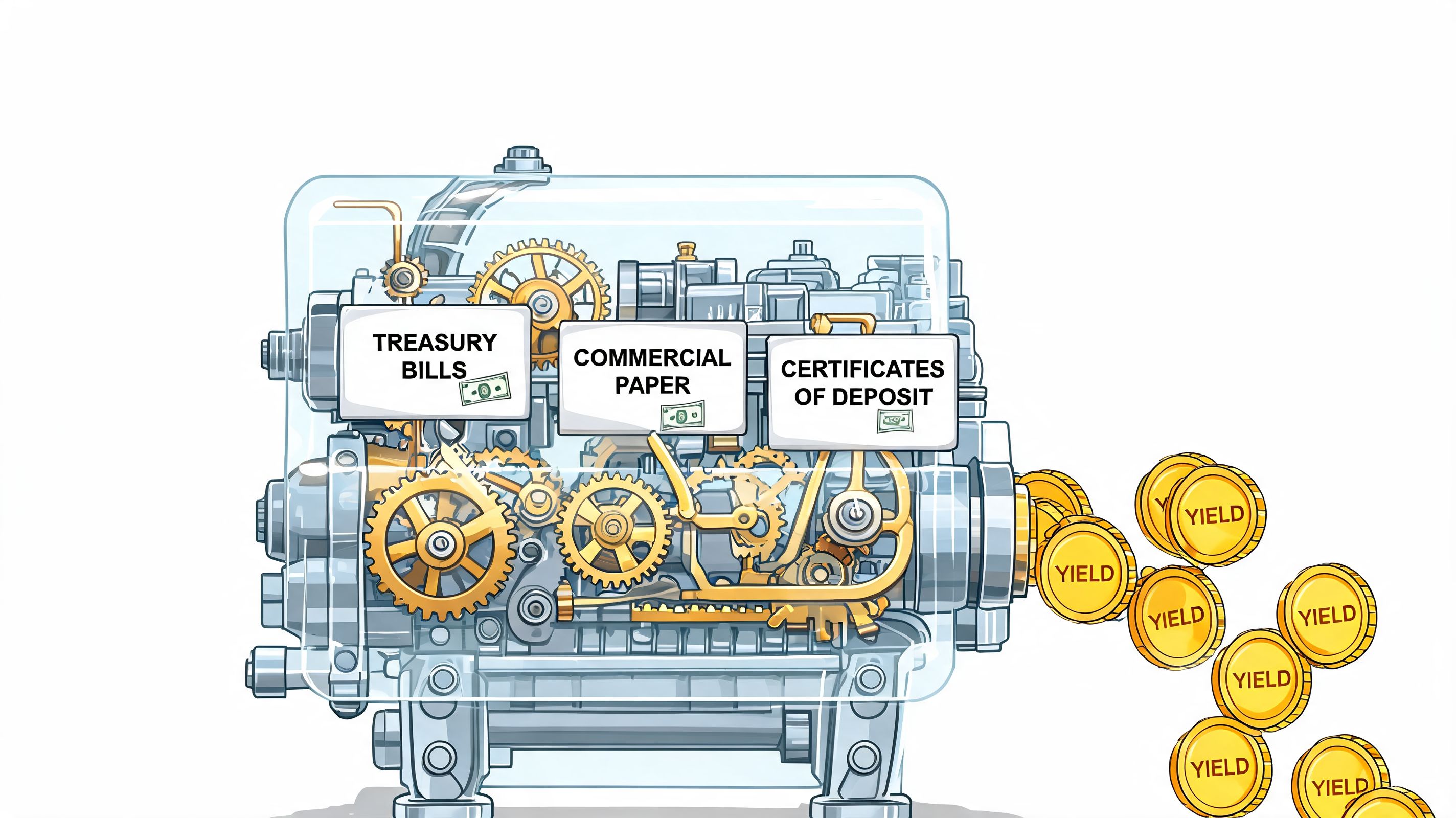
The income stream usually comes from three buckets:
- Treasury bills and other short-term government obligations
- Repurchase agreements, where the fund lends cash against high-quality collateral
- Other money market instruments allowed by the fund mandate
The trade-off is clear. You get rate income and daily liquidity, but upside is capped because the portfolio stays short and conservative.
A practical reference point is the BlackRock Institutional Cash Series US Dollar Liquidity Fund. BlackRock’s fund materials for March 2025 show a portfolio built around high weekly liquidity and a short weighted average maturity, which is exactly what supports capital stability and same-day or next-day cash management in normal conditions. For current yield and portfolio details, the higher-quality source is BlackRock’s own cash product and fund information page, not a secondary commentary link.
That matters on-chain because this yield is policy-rate transmission, not protocol growth. If DeFi stablecoin yields fall toward money market fund levels, the case for taking smart contract and counterparty risk gets weaker. If you need a clean benchmark, compare any farm or lending venue against current stablecoin interest rates across major on-chain venues.
Why WAM and WAL matter
Two TradFi metrics deserve attention because they map well to DeFi risk.
| Metric | What it tells you | Why it matters |
|---|---|---|
| WAM | How quickly the portfolio resets on average | Lower WAM usually means lower sensitivity to rate moves |
| WAL | How long principal stays tied up on average | Lower WAL usually means a stronger liquidity profile |
Start tracking smart money today
Join thousands of traders using WalletFinder.ai to find profitable wallets and copy their trades.
Start Free Trial →

