
Bitcoin Transaction Accelerator: Speed Up Stuck Transactions
Transaction stuck in 2026? Use a Bitcoin transaction accelerator with RBF, CPFP, or paid services. Guide for traders on costs, risks, & ROI.
You send BTC to an exchange, a cold wallet, or a bridge deposit address. Then it just sits there. The wallet says pending. The mempool is crowded. The trade you wanted to make is moving without you.
That’s the moment when a bitcoin transaction accelerator stops being a niche tool and becomes a trading tool. If you run time-sensitive strategies, a stuck transaction isn’t just annoying. It can mean a missed entry, a delayed hedge, or a broken copy-trade sequence.
The practical question isn’t only how to speed it up. It’s whether paying to speed it up makes financial sense versus waiting, replacing the fee yourself, or using a mining-pool-backed service. That trade-off matters more than most guides admit.
Why Your Bitcoin Transaction Is Stuck
A stuck Bitcoin transaction usually comes down to one thing. Your fee wasn’t attractive enough for miners relative to what else is waiting.
Bitcoin has limited block space. When too many transactions arrive at once, they pile into the mempool, which is basically a waiting room for unconfirmed transactions. Miners choose which transactions to include, and they usually prefer the ones that pay better fees.

If you’re trying to diagnose what’s happening, a blockchain explorer guide helps you check whether the transaction is broadcast, whether it’s replaceable, and whether a parent transaction is holding it up.
What usually causes the delay
The most common cause is a low fee relative to current demand. You may have sent the transaction when conditions were calm, then the mempool filled up after a market move.
Other times, the fee looks reasonable but the transaction still gets buried because:
- The network got busy after broadcast: A transaction that looked fine at send time can become uncompetitive fast.
- Your wallet estimated poorly: Some wallets are conservative, some are stale, and some don’t react well during sharp spikes.
- The transaction is large: Bigger transactions consume more block space, so they need more fee to stay competitive.
- You’re waiting behind dependency issues: If your transaction depends on another unconfirmed transaction, miners may ignore the whole chain unless the fee package is worth it.
Practical rule: A bitcoin transaction accelerator doesn’t magically “fix Bitcoin.” It makes your transaction more attractive to a miner, either by direct miner access, rebroadcasting, or fee replacement.
Why traders feel this more than casual users
If you’re moving funds for long-term storage, waiting can be fine. If you’re sending BTC to fund an account, settle a transfer, or position into another asset, delay has a cost.
That’s why accelerators became popular in the first place. ViaBTC launched one of the first Bitcoin transaction accelerators in 2017 as a response to congestion around Bitcoin’s 1MB block size limit, and its free tier became widely used because traders could submit a TXID and try to get priority without raising the on-chain fee aggressively, according to ViaBTC’s explanation of its accelerator service.
The key takeaway is simple. Your transaction is stuck because miners are picking other transactions first. Every acceleration method is just a different way to change that ranking.
Accelerating Transactions Yourself with RBF and CPFP
Before you pay anyone, check whether your own wallet can solve the problem. In many cases, the fastest and cheapest fix is still inside the wallet you already used.
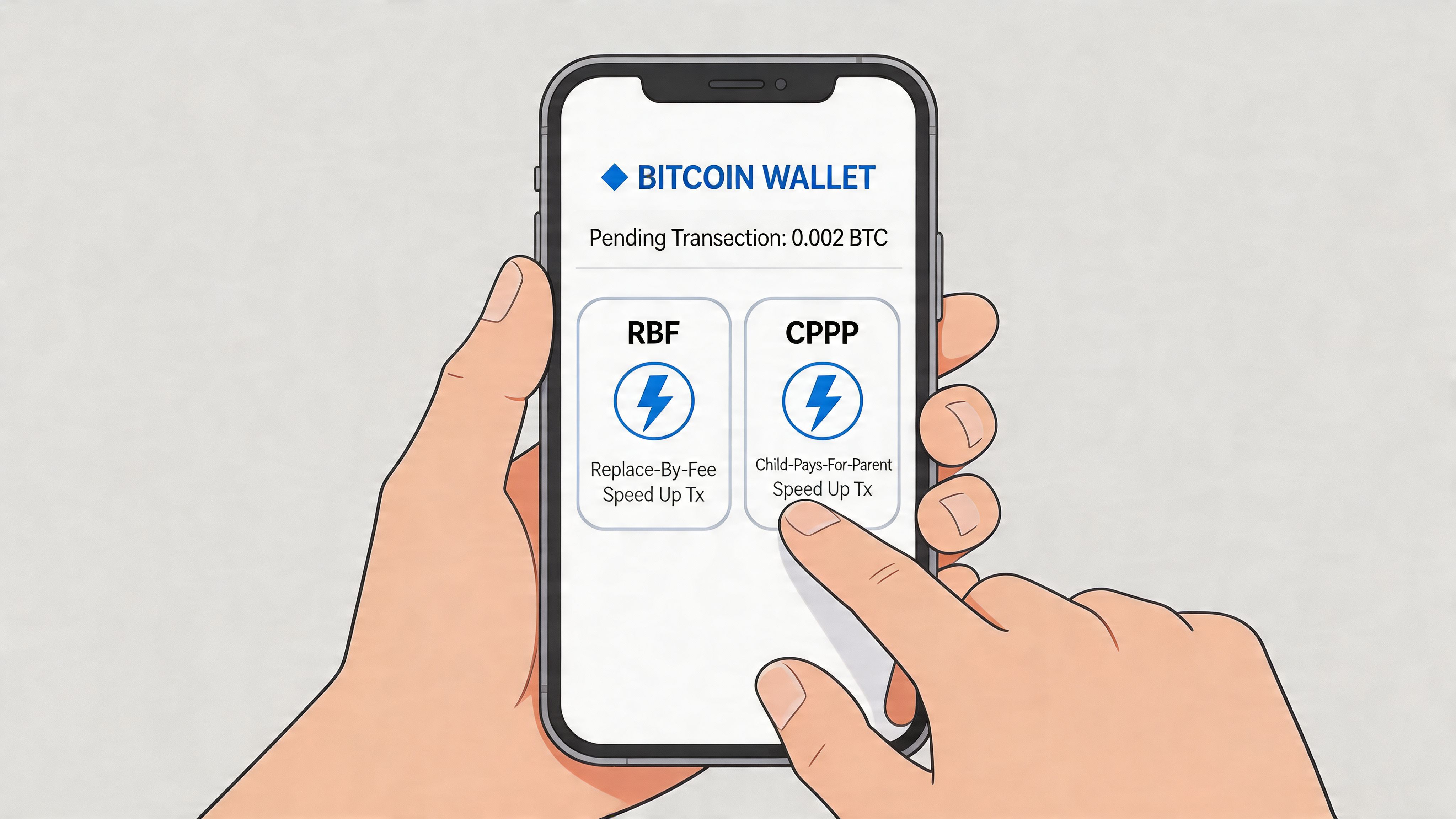
If the BTC originally came from an exchange wallet and you’re still learning the transfer flow, this walkthrough on sending funds from Coinbase is worth reviewing because wallet-level options vary depending on where the transaction started.
Use RBF when the sender wallet supports it
Replace-By-Fee, or RBF, lets you resend the same payment with a higher fee. The replacement transaction competes with the original and gives miners a better incentive to include it.
Use RBF when all of these are true:
- You control the sending wallet
- The transaction was marked replaceable
- Your wallet exposes a bump-fee or speed-up option
This is the cleanest fix for most self-custody users. Wallets such as Electrum and other fee-aware wallets typically make this straightforward. You open the pending transaction, choose the bump or speed-up action, and approve a higher fee.
What matters in practice is not the label but the result. You’re telling the network, “Ignore my earlier cheaper version. Confirm this better-paying version instead.”
If your wallet has a built-in fee bump feature, use that before hunting for a third-party bitcoin transaction accelerator.
A few practical notes:
- Don’t guess blindly on the new fee: If you underbump, you can waste time and still remain stuck.
- Check whether the wallet says replaceable: If it doesn’t, RBF may not be available.
- Avoid panic-clicking multiple times: You want one clear replacement, not confusion about what was rebroadcast.
Use CPFP when you can spend the unconfirmed output
Child-Pays-For-Parent, or CPFP, is the backup move when RBF isn’t available. It works by creating a new transaction that spends the output from the stuck one. You attach a strong fee to the child transaction so miners want to confirm both together.
This is especially useful when:
- the original transaction wasn’t sent with RBF enabled
- you control the receiving output
- your wallet supports spending unconfirmed funds
Miners evaluate the package. If the combined fees are attractive enough, they confirm the parent so they can collect the child fee too.
That makes CPFP handy for traders moving funds between wallets they control. It’s less useful if the receiving side is an exchange deposit address you don’t control, because you can’t create the child transaction there.
Here’s a simple decision shortcut:
| Situation | Better move |
|---|---|
| You sent the transaction and wallet supports fee bump | RBF |
| You received the stuck output in your own wallet | CPFP |
| You used an exchange wallet with limited controls | Third-party accelerator |
| You need certainty fast and wallet options failed | Mining-pool-backed paid service |
Start tracking smart money today
Join thousands of traders using WalletFinder.ai to find profitable wallets and copy their trades.
Start Free Trial →

