
Your Crypto Allocation Strategy: A Trader's Guide
Master your crypto allocation strategy for copy trading. This guide explains key methods, risk controls, and how to use on-chain signals for better returns.
You find a wallet with clean entries, strong exits, and a trade history that looks surgical. You copy it with too much size because you don't want to “miss the move.” Two bad trades later, your account is down hard even though the wallet's longer-term record still looks fine.
The opposite mistake is just as common. You track several strong wallets, spread your capital so thin that none of the winners matter, then watch solid calls produce a weak portfolio result.
That gap is allocation strategy. Not wallet discovery. Not trade selection. Allocation.
In DeFi copy trading, a large majority of participants spend nearly all their energy finding the right wallets and almost none deciding how much capital each wallet should control. That's backwards. A strong wallet with bad sizing can hurt you. An average wallet with disciplined sizing can stay manageable. The traders who last treat allocation like a control system, not an afterthought.
Why Your Allocation Strategy Matters More Than Your Trades
A copied wallet can be right on direction and still lose you money.
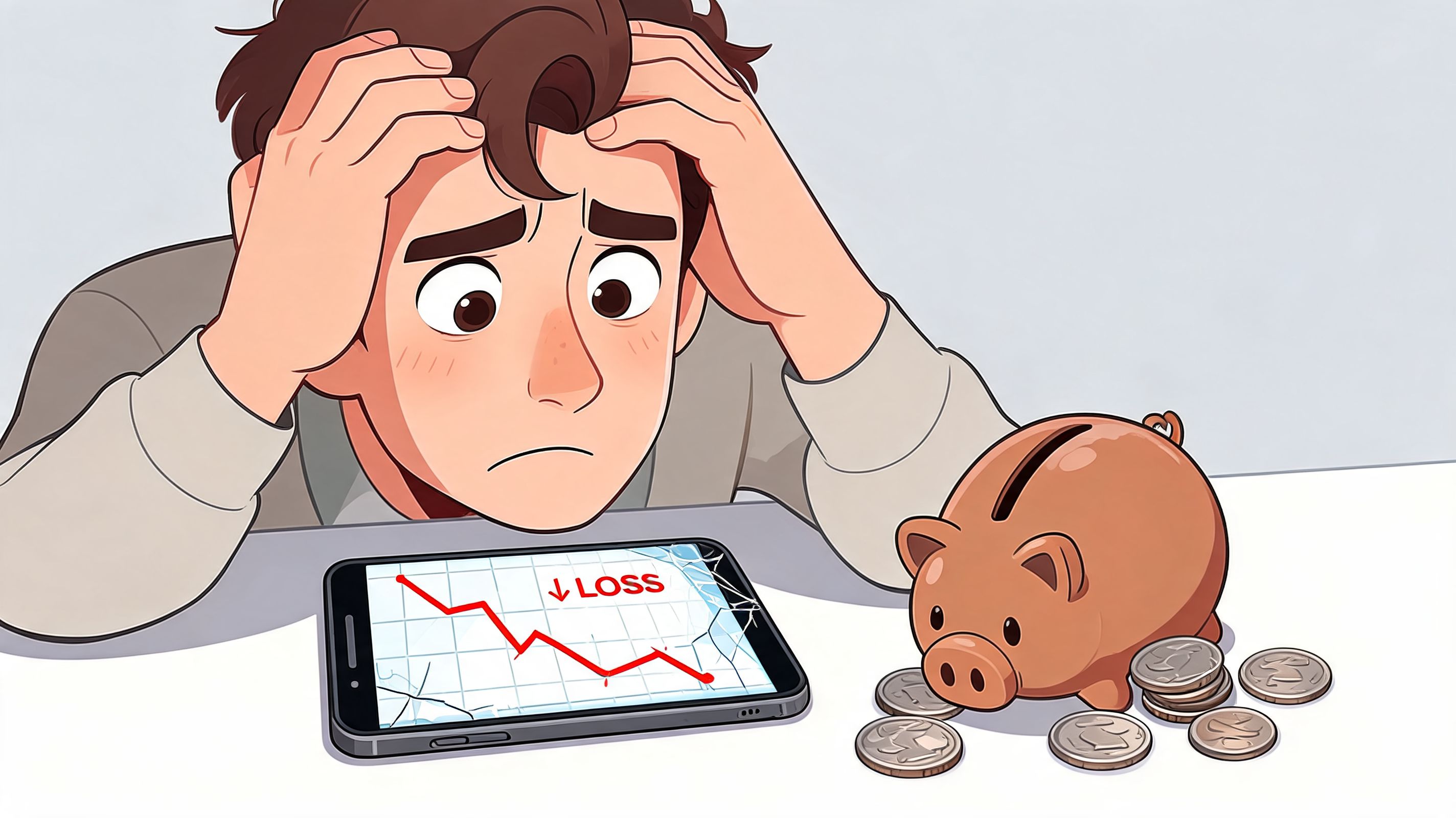
That happens all the time in DeFi copy trading. The wallet enters late because gas spikes. You get worse fills on a thinner token. Then the trade pulls back 12%, which is normal for that setup, but you gave that wallet 40% of your book because its last month looked strong. The trade idea may still be fine. Your sizing turned a routine drawdown into a portfolio problem.
That is why allocation deserves more attention than entry quality alone. Wallet selection answers who to follow. Allocation answers how much damage a bad week can do, how much a good week can help, and whether your portfolio can survive normal variance.
The failure pattern is usually easy to spot once you have seen it a few times:
- A wallet gets promoted from “interesting” to “core” after a short hot streak
- Capital piles in before you have enough data on its behavior across conditions
- A rough patch hits, often from liquidity, sector rotation, or plain variance
- The copied portfolio takes a much larger hit than the underlying edge justified
The direct impact of poor sizing shows up fast:
- Drawdowns get deeper than they need to be. A decent wallet can still hurt if it controls too much capital.
- Winners do not move the needle. Good calls from smaller allocations barely offset one oversized loser.
- Execution gets worse under stress. Traders cut good positions, chase recoveries, or stop following a sound process because the dollar swings are too large.
This is where on-chain signal quality matters. A wallet discovery tool such as Wallet Finder.ai can help surface strong candidates, but the signal is only half the job. Copy-trading results come from matching wallet behavior to position size. A volatile sniper wallet and a steady rotation wallet should not carry the same weight, even if both look profitable on paper.
A simple rule helps. If one wallet can wreck your month, the problem is allocation.
Experienced traders treat each followed wallet like a risk bucket with a job. Some wallets earn larger sizing because they trade liquid markets, size consistently, and stay stable across different conditions. Others belong in a smaller tactical sleeve because their edge is real but narrower. That distinction matters more than many traders expect. In practice, a solid allocation framework often does more for long-term results than finding one more “smart” wallet to copy.
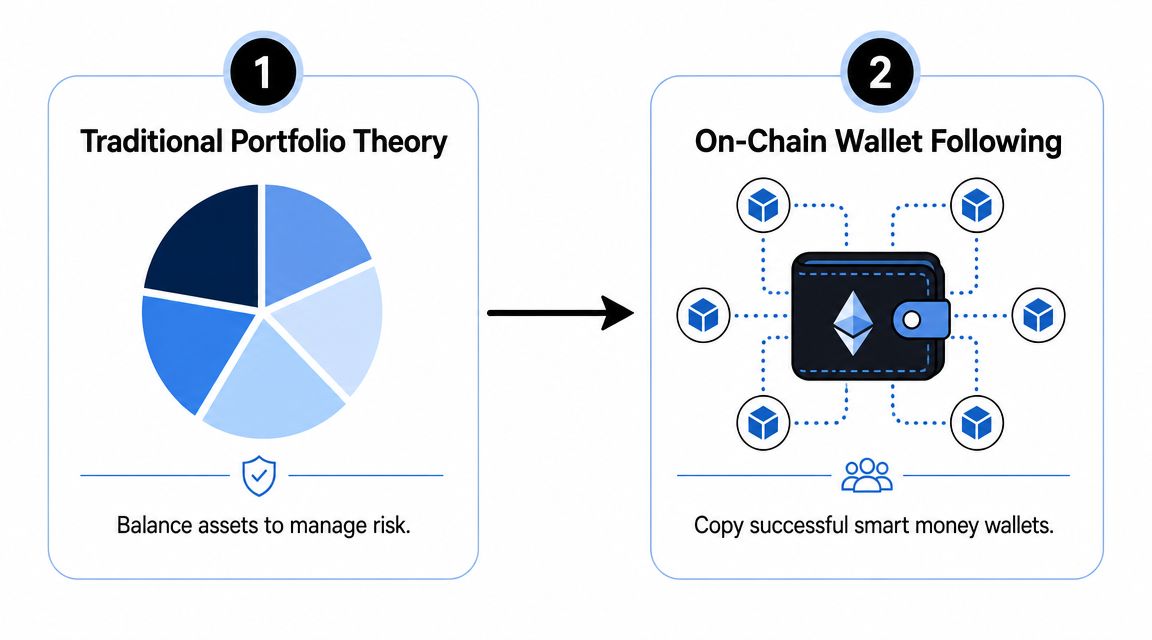
From Portfolio Theory to Wallet Following
Traditional portfolio theory sounds academic until you translate it into trader language. Then it becomes simple. You're building a team, not collecting highlights.
Strategic and tactical in plain English
Think of your copied wallets like a football squad.
Some players are your starters. They've shown durable skill across different match conditions. In allocation terms, that's your strategic layer. BNP Paribas notes that strategic asset allocation is typically built for a 5 to 10 year horizon, while tactical asset allocation is usually managed over a 6 to 12 month horizon (BNP Paribas on strategic and tactical asset allocation).
In DeFi copy trading, that maps well to:
- Strategic wallets: wallets you'd keep on the roster because their edge looks durable
- Tactical wallets: wallets you size up or down based on recent execution, momentum, and market fit
A strategic wallet might be a trader with disciplined entries, repeatable sizing, and evidence of surviving different market conditions. A tactical wallet might be a short-term momentum specialist who shines when meme rotation is active but becomes less useful when liquidity dries up.
Diversification is not copying more wallets
Many traders get sloppy at this stage. They copy five wallets and think they're diversified. If all five are chasing the same narrative, entering the same pools, and reacting to the same catalysts, that's not diversification. That's concentration wearing a disguise.
What matters is correlation of behavior, not the count of wallets.
A more useful wallet mix looks like this:
- A trend wallet: catches strong continuation moves
- A mean-reversion wallet: buys panic and exits fast
- A market-neutral or hedge-aware wallet: reduces directional dependence
- A selective high-conviction wallet: trades less, sizes harder when conditions fit
A portfolio of different-looking wallets can still be one bet if they all depend on the same market regime.
Risk and return at the wallet level
A wallet that prints high returns but swings wildly may deserve less capital than a steadier wallet with lower upside. That's not conservative for the sake of it. It's practical. The smoother wallet often gives you more staying power, which keeps you in the game long enough for compounding to matter.
The best allocation strategy for wallet following does three things at once:
| What you're managing | What it means in practice |
|---|---|
| Return potential | Back wallets with repeatable edge |
| Behavior under stress | Reduce dependence on one theme or one trader |
| Execution fit | Size according to liquidity, slippage, and your ability to mirror trades |
Start tracking smart money today
Join thousands of traders using WalletFinder.ai to find profitable wallets and copy their trades.
Start Free Trial →

